

























Technology companies are not ’doing enough in terms of preventing online scams’, says ABI’s chief fraud and financial crime officer
On 9 March 2026, the government announced that it was investing £250m to deliver its fraud strategy over the next three years.

The goal is to introduce a ”new system-wide approach that recognises the agility of criminals and the need for wide-ranging intervention”.
However, at the latest quarterly Fraud Charter roundtable on 25 June 2026, hosted by Insurance Times and sponsored by law firm Carpenters Group, counter fraud experts warned that the Home Office funding may fall short of the financial support needed due to estimates that fraud annually costs the UK economy over £14bn a year.
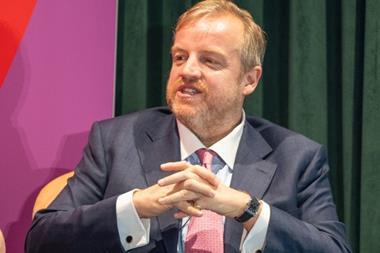
On top of this, Mark Allen, chief fraud and financial crime officer at the ABI, believes that technology companies are not “doing enough in terms of preventing online scams, taking down fraudulent content and ongoing funding of activity to combat this threat”.
Clare Lunn, head of counter fraud at Markerstudy, added: “The issue is that [the] banking and insurance sectors are the victims because it’s us that’s paying for [fraud].
“And then the enablers, [which are] the tech giants and the telecom sectors, get away with minimal impact. It does feel like it’s those two sectors that need to come to the table on data sharing and help us implement some of these strategy initiatives.”
Ghost broking
The limited data sharing across sectors has created “huge barriers” when it comes to tracing ghost brokers, Lunn raised.
Read: Insurance fraud sector exemplifies the ‘good and bad uses of AI’
Read: The growing problem of AI-enabled synthetic claims fraud
Explore more Fraud Charter-related content here, or discover other news analysis stories here
When insurers and brokers investigate ghost broking – fraudsters selling fake insurance policies – they are usually required to identify the culprit themselves and gather sufficient evidence to submit a case to the Insurance Fraud Enforcement Department (Ifed).
However, Lunn explained that this key information to “trace the cash and individuals” often sits with the banking sector, telecom providers and technology companies.
As part of the government’s fraud strategy, it has created an online crime centre (OCC), backed by £30m in funding, which aims to bring together specialists from the government, police, intelligence agencies, banks, mobile networks and major technology firms to drive coordinated action against fraud.
Christopher O’Donovan, detective inspector at Insurance Fraud Enforcement Department (Ifed), told charter members that the OCC could potentially “open up new doors and opportunities” for supporting insurers through this referral process.
He explained discussions were ongoing around how ghost broking referrals from the industry would work including “at what levels they should be coming in” and “how early or late” cases should be submitted.
“It’s very early days because the [OCC has] only just launched and they’re still trying to define their remit and parameters, but that is the hope [in terms of] how that would lay on to industry referrals,” he continued.
“I do feel [the insurance industry’s] pain about being able to get into UK finance and getting that data in early in order to [refer it] to us.
“One thing we introduced last year was to make sure that we do financial checks at the earliest opportunity to identify any assets [fraudsters have] to try and target them as a preventative measure.”
‘More pressure’
Meanwhile, Allen noted that fraud minister Lord Hanson has started to apply “more pressure” on the technology companies to show a greater contribution to counter fraud efforts.
He said that Lord Hanson has set up a new governance framework in the form of a ministerial-only group which includes Rachel Blake, economic secretary to the treasury, and a minister from the department for science, innovation and technology.
“They are meeting on a regular basis to focus on measures that are being taken by the tech and the telco sector,” he explained.
“The government has made it quite clear that if industry partnership and market incentives alone remain insufficient to drive improvements, then they will be looking to take legislative action within this parliament.”
He also said that ahead of the economic crime plan this autumn – which lays out public and private sectors action to continue to transform the UK’s response to economic crime – the ABI are “pressing very hard for a lot of the funds within the economic crime levy to be used to fund the fraud strategy”.
He told charter members that he is aware that the “government is now looking at diverting some of the funds” to meet this expectation.
He concluded: “We continue to believe that the technology sector should make a proportionate financial contribution, reflecting both its role in the online fraud landscape and the need for a fair, cross-sector funding model.”

She joined the title after completing a Master's degree in Journalism in 2025, having previously graduated with a degree in English Literature.View full Profile






























No comments yet