




















Although research demonstrates that drone usage can reduce a business’ net risk profile overall, risk professionals must think strategically about combating pilot errors as ‘the human in that chain is the weak link’ contributing to claims costs
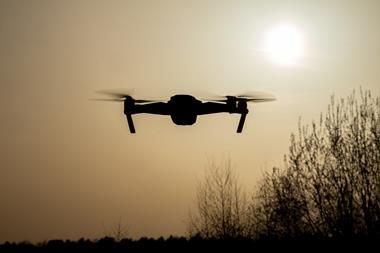
The use of drones – defined as remotely piloted aircraft by British regulator the UK Civil Aviation Authority (CAA) – has been increasing rapidly across commercial use cases over the last two years.
In fact, market report and statistics website Grand View Horizon has forecast that the UK drone market will enjoy an 8.2% compound annual growth rate (CAGR) between 2026 and 2033, reaching a projected estimated revenue of $9.5bn (£7.2bn) by the end of this reporting window.
Globally, Grand View Horizon thinks the drone market will have a CAGR of 9.5% over the next seven years, taking projected worldwide revenue to a lofty $182bn (£138bn) by 2033.
For risk managers, the uptick in drone usage is a trend that cannot be ignored as empirical evidence suggests that the introduction of drone-based operations within business functions will reduce organisations’ risk profile.
For example, a report published by professional services firm PWC in September 2025 – entitled UK drone regulations and net risk: Balancing risk to unlock growth and save lives in the UK – found that “drones reduce risk across multiple sectors” by working to “replace hazardous work with safer methods and take people out of high risk environments”.
It highlighted that “drones improve workplace safety” by “removing the need for work at height and confined space entry”, reducing the headcount of those involved in “hazardous tasks”, shortening “exposure times” and minimising potentially dangerous or time consuming site visits.
The report stated: “Commercial drones reduce overall risk. They protect workers by taking over tasks traditionally done at height, in confined spaces or from low flying helicopters.
“These activities have historically caused high numbers of injuries and fatalities. For example, in 2023/24, falls from height were the leading cause of work related deaths in the UK, killing 50 people a year and accounting for over a third of all workplace fatalities.
“Drones remove more risk than they introduce.”
Simon Ritterband, managing director at drone-centric managing general agent (MGA) Moonrock Insurance, was one of the collaborators that supported PWC’s report. He brought the study’s notes to life using delivery driving as an example.
He told Insurance Times: “There’s an inherent risk already in the market for deliveries. You’ve got white van drivers [and] Amazon drivers driving crazy speeds because they’ve got to hit certain timelines [and] get deliveries [completed. As a result,] you’ve got accidents on the road – there’s a risk already in the system for delivery [driving].
“What the drone delivery industry is saying is we can remove that risk. We’re not saying the risk from drones is zero, but you’ve got a much better safety record of a drone delivery than the inherent risk, the net risk that already is systematic in [the] deliveries that you see day-to-day.”
Despite the topline risk reducing benefits of tapping into commercial drone adoption, risk professionals must remain cognisant that implementing drones into business operations will still introduce new and different risks – as well as new and different risk transfer and regulatory requirements – into the organisation.
The cost of mistakes
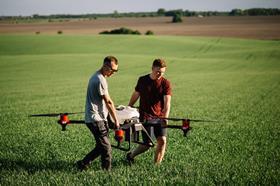
Drones are now being used across a range of market sectors – from the early adopters of photographers, surveyors and estate agents to new use cases being applied in agriculture, the oil and gas industry, facilities management, warehouse storage, security, as well as emergency services.
But what is the one drone related risk that is applicable across all industry sectors?
“Human error accounts for 95% of losses,” Ritterband says. “There’s no simple one threat that a business needs to be looking at. Complacency is the thing that will be the downfall. No matter how good the technology is, the human in that chain is the weak link.”
For Ritterband, this “complacency” includes “tiredness and distraction”, as well as “not following operational procedures”.
Andrew Heath, director at drone focused MGA Coverdrone, agreed – he commented that around 50% of claims submitted to Coverdrone are caused by “pilot error”.
He continued: “It’s all about pilots, how well they’re trained, how much flight experience they’ve got [and] how much experience they’ve got using the equipment that they’re operating on that particular day.”
Read: IUA calls for strong regulatory framework for automated aviation
Read: Cullum-backed investment vehicle invests in drone MGA
Explore more risk management related content here, or discover more news here
Scott Williams, director at commercial broker Clarke Williams, attributed this people-centric risk to “overconfidence”. He told Insurance Times: “The problem with drones is there’s a bit of an over simplification because it’s a technology that is cheap and people buy them in their private life. There’s this overconfidence with them.”
In terms of how to mitigate the potential of human errors, the experts agree that staff training is pivotal – however the length and detail of training varies greatly depending on planned flight hours, country of origin, the weight of the drone and also where the drone will be flying, meaning there is no one-size-fits-all rule in terms of preparing employees for drone usage.
For example, flying a drone over crowds of people outside of the drone operator’s control or organisational circle “adds a whole different level of risk and a different level of permissions that you need to apply for from the CAA”, Heath explained. For instance, the use of drone swarms over a public crowd attending a music concert.
In addition, whether drones are flying inside or outside is a further “hot topic”, Heath added.
Although drones are predominantly being used outside, indoor use cases are growing – for example, fire safety firms using drones in high rise buildings to check fire escapes and doors, or drones navigating safety or monitoring checks within chemical storage facilities.
Richard Webb, management consultant at Coverdrone, said: “Flying [a drone indoors is] far more difficult and, therefore, the drone is more likely to get different types of impact [and] different kinds of damage.”
Heath emphasised that “we can’t rattle on enough about firms undertaking the right pilot training, having enough experience on the equipment that they are using and being familiar with the equipment that they’re using”.
He continued: “We’ll have it where [a business will] hire a drone [for] a particular type of job, but if it’s not the drone that [staff are used] to flying, then it’s outside of their experience. It’s about experience and training.”
Although Ritterband concurred with his Coverdrone counterparts around the importance of training drone operators, he added that it is essential that individual market sectors take the lead by using the base standard training available to all and then develop sector-specific training on top of this – if pilot training is robust enough, it could even impact insurance premiums, Ritterband said.
He explained: “Once you’ve got those base standards of training and you go into your [specific] industry shoot, those industries will then start to have specialist trainings within them because the operations vary from industry to industry.
“We’re very much reliant on industry developing that training methodology and we’re quite heavily involved in helping some of these market sectors develop that out because if that market sector can mitigate [drone risks using] some of our historical data, it helps them provide better training.
“At Moonrock, if we are really happy with the training entity, we can then start to offer discounts on the insurance because we have [given the training] a seal of approval. If we’ve got confidence in that training entity, we’re happier to give discounts on that insurance.”
A more technological way to swerve human error risk, Ritterband added, is to explore “fully autonomous systems” for drone flights, “removing the human from the loop, or at least reducing the touch points where humans are interacting”.
He continued: “Then you’re looking at the [drone] operator more as a programmer operator, as opposed to a pilot operator. My view has always been about moving the needle forward [and] going to full automation.”
Proactive preparation
Aside from staff training, there are other risk mitigation steps companies can take around drone usage.
Webb, for example, highlighted the importance of regular services and audits on drones to maintain their physical quality. He gave the example of using a crane on a construction site to lift heavy weights – these vehicles would be regularly maintained to ensure safety and quality, so if a drone was now being used to perform the same task, then the same maintenance regime should also be in place.
Agricultural headache
One sector risk high on the agenda for both Coverdrone and Moonrock Insurance is the use of drones in the agricultural and farming industry to perform crop spraying.
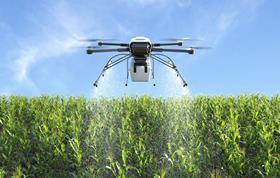
Simon Ritterband, managing director at MGA Moonrock Insurance, flagged that chemical drift – defined as the unintended movement and deposit of airborne pesticide, herbicide, or fertiliser away from a targeted application site to surrounding areas – is a “high concern”. So much so that his firm has actioned “endorsements for chemical liability” on its insurance coverages.
“There’s a concern of airborne particles causing respiratory issues in a local village, for instance,” he clarified.
Andrew Heath, director at Coverdrone, agreed, noting that using drones for crop spraying is “a fairly new application”, with the drones involved being heavier, more expensive and equipped with additional automated features like object detection – all of which adds to the risk profile.
Ritterband, meanwhile, emphasised that organisations should appoint “an accountable manager” to have ultimate ownership of all things drone related within the business – including audit trails and battery storage that reduces the risk of lithium polymer thermal runaway fires, such as keeping batteries and drones in separate warehouses.
He said: “[Organisations] should really appoint an accountable manager who may not be operating the drones, but is somebody who understands the regulatory environment [the company is] flying in, the training standards, the operational safety case, risk mitigation, the human element, ensuring that they’ve got checklists before each flight to make sure hardware and firmware updates are done regularly, battery maintenance [and] storage.
“Some companies [are] not big enough to afford [a separate job role for this accountable manager], but we always say there needs to be someone who’s signing off on the operation, the training, the maintenance, as opposed just to leaving it to [all] the individuals [operating the drones].
“The CAA [now conducts spot check audits]. If you’ve got an accountable manager, at least you’ve got an audit trail there, someone who’s keeping a log of all the flights, the activities, the incidences, the occurrences, the maintenance. That accountable manager is a vital part of drone usage because there could be audits at any point.
“[Companies typically have] a health and safety person, a fire person. There’s no difference. You should have an accountable manager if you are flying drones in the business.”
An accountable manager could be particularly useful to ensure companies conduct legal flights, an important risk flagged by Webb, who highlighted that varying regulations across different countries could hamper global businesses’ drone activities, with certain countries further ahead in terms of drone usage.
“It’s not one rule applies to every single country,” he noted. “Whatever you’re using the drone for, if you’re using it in the UK, you can probably get away [with] using it elsewhere in the world. But [if] you’re doing it elsewhere in the world, [this] doesn’t necessarily mean you could [use your drones] in the UK, for example.”
In addition, Williams advocated the use of drone specific risk assessments, while Heath suggested that risk managers keep up to date with drone market evolution by networking and tapping into associations like Arpas UK, a British non-profit trade association for the drone industry, and Unmanned Support, a UK trade body for drone operators.
Risk transfer requirements
Although understanding the possible risks and necessary risk mitigation around drone usage is an important first step to introducing this technology into commercial functions, organisations must also consider their risk transfer strategies and how to insure drone-based tasks appropriately.
This is especially pertinent considering that how drones are used commercially has evolved over time, Heath added, moving from simply being a means of data collection – such as photography or area mapping – to now being used as a tool or application that can complete tasks single handed, like window cleaning or crop spraying.
Read: Technology risks becoming increasingly present in construction sector
Read: Cyber risk takes root on the farm as agriculture goes fully connected
Explore more risk management related articles here, or discover more news analysis here
The primary cover required is public liability (PL), according to Williams. He noted that actually insuring physical drones themselves is still optional – however, without public liability cover for potential “bodily injury” or “property damage”, organisations can get “in a lot of trouble quite quickly”.
For example, although smaller drones can weigh only 250g, when falling from a height of 400 feet in the case of a mishap, the damage that can be caused to people or property hit by this fast falling drone is the same as if it weighed 400g.
Ritterband emphasised that drone insurance cannot “be rolled up” as part of a firm’s existing commercial insurance programme, but instead needs its own standalone policy because it is classed as an “aviation risk” – including war and terrorism aspects – and therefore needs to meet the EC 785/2004 insurance regulation that is also applicable for manned aircraft.
Webb agreed: “You’ve got a number of companies that have just started using a drone and they just thought ‘right, I’ll tell my broker, it’ll get added under my PL policy’. In the UK, that isn’t sufficient, that doesn’t cover you. People don’t appreciate [that drones are] actually an aviation vehicle.
“If you’re a risk manager and you’re bringing a third party in to do some work for you and that third party is going to use a drone, you want to make sure when you’re checking their insurances that they’ve actually got drone insurance that is effective because [if] they’ve just got a standard PL policy, that’s not going to cut it.”
Heath provides more detail here. He explained that under EC 785/2004, the International Monetary Fund has defined special drawing rights (SDRs) that set mandatory minimum third party liability insurance limits for commercial drone and aircraft operators.
Heath noted that commercial drone operators need to have 750,000 SDRs, which roughly equates to £900,000 worth of cover – this is why standard drone policies often have a minimum coverage of £1m.
Ritterband confirmed: “The CAA requirement requires a minimum of £1m worth of public liability [insurance]. But most operators in these environments are taking out between £5m and £10m on the liability, especially if you’re flying over urban [and] densely populated locations.”
Regulation as a growth lever
Drones are fast becoming a must-have business tool, however their introduction into operational use cases has to be well thought through and supported by dedicated internal resources – this can support the mitigation of both very specific drone related risks like flyaways, where drones drift off, or more generic risks like theft.
The commentators that spoke to Insurance Times confirmed that today’s drone landscape was not centred around increasing market sectors adopting drone technology, but more a case of the technology and use cases evolving alongside a global regulatory landscape attempting to keep pace.
Heath noted that most market sectors have “used drones to some degree for years” but that “the way they’re using drones has probably changed” to now include greater “automation, the drone in a box [and] beyond visual line of sight” flights.
For Ritterband, regulation is a key lever as to what drone-based activities organisations can deploy.
A UK-centric example would be the CAA’s 2024 extension to enable beyond visual line of sight flights (BVLOS), where previously there was strict guidance around maintaining visual line of sight or VLOS flights. This means that drone operators “can fly much longer distances and you don’t have to be on the ground looking at the drone – you could be in a control room miles away”.
Ritterband continued: “It’s not so much the [volume of] market [sectors using drones has increased]. It’s about what the regulators are now allowing.
“BVLOS is opening up a whole plethora of opportunities. The risk, then, is if it’s not the pilot on the ground, what are the procedures with the operator in the control room to ensure flights are being operated safely? That’s one of the key areas for us.”

Since joining Insurance Times, Katie has successfully obtained a number of industry accolades. At trade body Biba's 2025 Journalist and Media Awards, for example, Katie was named the overall winner and received the Journalist of the Year trophy, alongside the Best Thought Leadership Award for her briefing article on reproductive health MGA Juniper and how insurance can be used to positively impact taboo subjects.View full Profile
























No comments yet