























As AI platforms become a new route into insurance, the industry faces a critical question – when a chatbot recommends a policy, can customers tell where information ends, advice begins and commercial influence starts?
Insurance distribution has always had its gatekeepers.
Brokers guide clients through complicated risks. Comparison sites narrow markets into manageable choices. Insurers present their own products directly to customers.
Each plays a recognised role in shaping the customers purchasing decisions.
But what happens when the first conversation is no longer with a broker, comparison site or insurer, but with an AI chatbot?
As platforms such as ChatGPT and Claude become part of how consumers research products and make decisions, the insurance industry is confronting a new question – if AI becomes the front door to insurance, who is really making the recommendation?
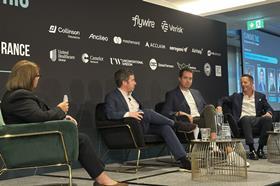
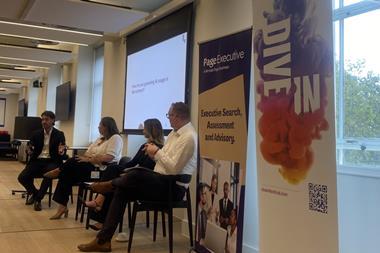
At Innovate This 2026, Howden global head of M&A and strategic advisor Peter Blanc put the concern rather bluntly.
“We can all come at this altruistically and think if we create a really good product, ChatGPT will naturally recommend it because it’s a really good product,” he said.
“But sadly, these organisations are all commercial entities. They will recommend the product that’s paying them the most money, I fear.”
His question was simpler still: “Where does the money flow?”
It is a question that goes beyond whether AI can sell insurance. It goes to the heart of who shapes customer decisions and what incentives sit behind that influence.
The ‘starting point’
AI does not necessarily have to replace existing distribution channels.
Read: TechTalk – Vibe-coding could leave insurers ‘crashing on the rocks’
Read: In Focus – Can cyber insurance keep up with AI?
Explore more artificial intelligence-related content here, or discover more news here
Aviva, for example, sees it as an additional route through which customers can access its products. Its ChatGPT app allows customers to obtain a quote before being taken to Aviva’s website, where they can review, amend and tailor the policy before purchasing.
The insurer said customers remain in control and that direct channels, comparison sites, brokers and partnerships all continue to coexist.
“Different channels will continue to serve different customer needs,” Aviva told Insurance Times, adding that brokers will remain important where customers require advice, expertise and support.
For Sahil Haider, insurance analyst at GlobalData, that could mean a “rebalancing” across existing distribution channels, rather than wholesale replacement.
“If consumers increasingly use AI platforms as a starting point to research insurance, we could see some rebalancing across existing distribution channels as insurers, brokers and comparison sites adapt to changing customer behaviour,” he said.
The phrase “starting point” may be more important than it first appears.
ManyPets chief executive Luisa Barile believes AI could become “a key part” of how consumers discover and buy insurance, describing it as the likely source of the “next wave of innovation in insurance distribution”.
The pet insurer recently launched on ChatGPT, allowing customers to explore its cover and obtain an indicative price through the platform.
But Barile is more cautious about AI becoming the decision-maker itself.
“AI might not be ready yet to make a recommendation – that’s a topic for regulators to decide,” she said.
“But what consumers see in AI chat will inevitably influence which products they consider.”
If platforms present consumers with a narrow set of options, she said, customers should understand how those options were selected and whether commercial relationships played a role.
That distinction between influencing a decision and making one may become increasingly difficult to maintain. If the first question a customer asks is, ‘What insurance do I need?’, the answer could shape every decision that follows.
That makes AI more than a search tool. It potentially becomes part of the decision-making architecture.
And that raises an important question – what sits behind the answer?
Alain Desmier, co-founder of Subcontext, described AI as a “new product discovery route”, rather than a fundamental change to the insurer-broker-customer relationship.
But Subcontext is developing technology intended to bring whole-of-market protection products into platforms such as ChatGPT and Claude.
A customer may therefore want to know whether the AI has considered the whole market, whether it is limited to a particular panel, which factors influenced the recommendation and whether a commercial relationship played a role.
Desmier argued that paid placement should be clearly identified as advertising, while existing disclosure, conflicts and fair value obligations should continue to apply.
Biba’s head of compliance Julie Comer takes a similar view.
“Where commercial relationships or remuneration arrangements could influence recommendations or outcomes, clear, transparent disclosure may help consumers understand how recommendations are generated and make informed decisions,” she said.
For brokers, however, the issue goes beyond commercial influence alone.
Comer said AI could become both a competitor and a tool within a broker’s own business.
Used as a “second opinion”, AI could potentially lead customers towards unsuitable cover if recommendations do not accurately reflect their demands and needs. Within broker firms themselves, transparency over how systems reach conclusions and the risk of embedded bias remain key concerns.
The intermediary in the machine
This is where the philosophical question becomes a regulatory one.
At what point does AI stop being a source of information and start acting like an intermediary?
Josh Bates, managing associate in financial services regulation at Freeths, a national law firm, said the answer depends on what the technology is actually doing and who is deploying it.
He said: “Explaining insurance concepts, answering factual questions or helping consumers navigate publicly available information is unlikely, on its own, to make the operator an insurance intermediary.”
But, he added, if an AI gathers information about a customer’s circumstances, evaluates products and produces a personalised recommendation, the distinction becomes considerably less clear.
“Traditional insurance journeys have generally involved relatively clear distinctions between information providers, comparison tools, intermediaries, and insurers,” Bates said.
“Conversational AI can blur those boundaries.”
The FCA’s position is that existing regulation is broadly technology-neutral.
Its spokesperson said: “AI can help people understand their options and make informed financial decisions. But if they’re looking for personalised advice, and the protections that come with it if something goes wrong, they should use an FCA-authorised intermediary.”
The challenge is that conversational AI can sound remarkably like an advisor without necessarily being one.
The FCA stated in their perimeter report, published in July 2026, that general-purpose AI tools are not regulated in the same way as financial advice, meaning consumers do not receive the same protections or routes to redress that accompany regulated advice.
As Bates noted, conversational AI is increasingly blurring distinctions that have historically been clearer across insurance distribution.
Where authorised firms deploy AI, responsibility remains with them. Bates said insurers and intermediaries are still accountable for complying with insurance distribution rules, financial promotions requirements, product governance obligations and Consumer Duty.
The more difficult question arises when the AI itself sits outside the regulated perimeter.
General purpose AI can generate advice-like answers without necessarily operating as a regulated advice service.
And if the policy proves unsuitable years later, the issue becomes more than a theoretical one.
Who made the recommendation? What information was considered? Which products were assessed? Was the customer’s situation properly understood?
Bates warned that regulators and ombudsmen are unlikely to accept a situation where accountability disappears into a “technological black box”.
ManyPets takes a similarly cautious view of where responsibility should sit. Barile said the company does not believe AI is currently ready to recommend insurance, adding that if it does reach that point, the regulatory framework would need to evaluate.
For now, she said regulated insurance entities remain responsible for ensuring customers receive the right information, whether the journey is AI-driven or not.
The accountability gap
AI promises to make insurance simpler. Customers can describe their circumstances in plain language, ask follow-up questions and receive answers in seconds rather than navigating lengthy forms or complex policy wording.
Yet the simplicity of the experience risks obscuring the complexity behind it.
Every recommendation reflects decisions about data, design, training, commercial relationships and product access. An AI system may draw from an entire market, a restricted panel or a single provider. Most customers may never know the difference unless that information is made clear.
Barile also argued that the quality of those recommendations will depend on the information AI platforms can access. AI could make insurance comparison “much richer”, she said, looking at price, cover and service against an individual customer’s needs. But that requires “comprehensive, accurate and up-to-date information”.
Otherwise, she warned, there is a risk that what AI presents could be influenced more by a brand’s historic prevalence online than by the facts about its products today.
That does not mean AI must be impartial.
Aviva’s model, for example, offers a new route into its own products. Brokers may use AI to extend their expertise and deliver better customer experiences. Commercial interests have always existed within insurance distribution.
The issue is not whether those interests exist, but whether consumers understand how they shape the answers they receive.
The future of insurance distribution may now be defined by AI becoming the front door through which customers encounter brokers, comparison sites or insurers, rather than replacing them.
If that happens, the industry’s defining challenge will not simply be what recommendation an AI produces. It will be whether consumers can understand why that recommendation was made, whose interests influenced it and who remains accountable when it goes wrong.

With a background in local journalism, she has previously worked as a freelance reporter covering community stories and gaining valuable on the ground experience.View full Profile

























No comments yet