




















‘We need to consider how we get quality hires because we’re going through this process of being able to recruit much quicker,’ says head of culture and talent
Artificial intelligence (AI) can help the insurance industry access a broader pool of candidates and improve the quality of hiring.
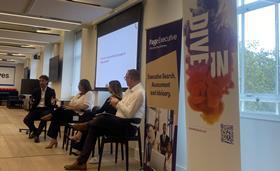
This was according to Alice Scott, head of culture and talent at Asta, who was speaking during the Lloyd’s talent-focused Dive In festival on 23 September 2026.
During a session entitled Smart Hiring or Hidden Bias? The Promise and Pitfalls of AI in Recruitment, Scott told delegates that early trials had shown AI could access a “broader talent pool” that may have been missed through existing recruitment searches.
In turn, while AI is currently being focused on improving productivity and time efficiency, Scott noted that her firm is starting to think about how to use it to reach candidates that its talent acquisition teams and recruiters “cannot access currently”.
Scott said: “We need to consider how we get quality hires because we’re going through this process of being able to recruit much quicker.
“How do we keep those people in our business? How do we make sure our process is clear, evidence-based and skill-testing? [How do we have] conversations where people really understand what they can expect when they join the firm? It’s not just about having a whizzy front end that’s quick and seamless.
“The [fundamentals] haven’t changed – AI shines a light on what already existed.”
Chairing the session, Jen Davidson, associate director at consultancy firm The Clear Company, explained that working with AI could also have an impact on improving the quality of hire data analytics, which is an area the industry has been “historically” limited.
“What we can do with this is start to think about how we [can use] all this hiring data,” Davidson said.
“We can then track [candidates] in terms of performance, engagement, how long somebody stays with us and start to tell a bigger story around how we hire and what the outputs of our hiring are.”
Bias concerns
While AI can be trained to improve the quality of hire data, Davidson also noted that it may have been fed with historic data that may not reflect current inclusive hiring practices.
Read: Insurance’s knowledge gap – ‘We lose personalities, we lose judgement’
Read: Trust and relationships remain London market’s core despite AI advances – Liiba
Explore more talent-related content here, or discover more news stories here
It is important when training AI models to not assume they are objective, she said, as “it will make connections” and there has been research to suggest that “AI has started to make its own stereotypes”.
Aaron Boyle, leadership and learning curriculum manager at Lloyd’s, said the marketplace’s current position is to not use it for candidate assessment and selection, scoring or screening.
He continued: “It’s very much an evolving piece.
“We’re always looking to see [whether] it [has] improved [or whether] we [have] got other opportunities. But, at the moment, we’re using it to help us be more productive as individuals.”

She joined the title after completing a Master's degree in Journalism in 2025, having previously graduated with a degree in English Literature.View full Profile



























No comments yet