






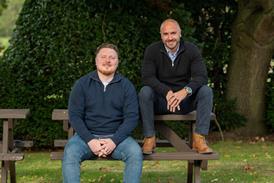


















’What we almost never talk about is how we stop people falling out of [insurance],’ says associate
Insurance is good at talking about how people fall into the industry, but it is less comfortable discussing how to stop people falling out of it.
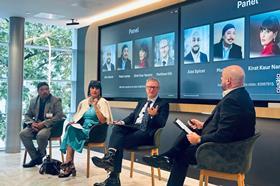
That was one of the starting points for the Chartered Insurance Institute (CII) New Generation Broking Cohort 2025/26, which has spent the past year examining what happens when experienced insurance professionals retire and what the industry risks losing with them.
The cohort included WTW’S George Ganellin, Thomas Carroll Group’s Alexander Spicer, McGill and Partners’ Becs Hill, Marsh’s Anisah Khan, NFP’s Jack Briggs, Everywhen’s Joel Kugachandra and Gallagher’s Josie Tsavalos.
Its research found that 84% of 204 insurance respondents expect upcoming retirements to negatively affect technical and client-facing capability.
Yet only 11% said their organisation has a formal, well-established knowledge-transfer programme.
Insurance Times was the only press outlet at last week’s Knowledge at Risk: What Happens When Experience Retires? event, where the cohort presented its findings before a panel featuring Kirat Kaur Nandra, co-chair of the Insurance Families Network and director of operations, Mark Lomas, head of culture, talent and communities at Lloyd’s, as well as CII chief executive Matthew Hill.
What gets lost
The cohort chose the subject because it resonated personally with all seven members.
Read: Beyond the D-word – does insurance still believe in diversity?
Read: New claims conference announced as talent concerns grow
Explore more talent-related content here, or discover more news stories here
Ganellin, account director at WTW, said everyone knew someone who had retired and learned from during the early stages of their career.
Initial research highlighted the scale of the challenge, with around 25% of the UK insurance workforce expected to retire within the next decade.
But Ganellin said the group quickly moved beyond the headline figure.
“What are we at risk of losing?” he said became the central question.
The answer included technical judgement, relationships and the reasoning behind decisions, things that cannot necessarily be replicated by putting information into a file or asking someone to study for an exam.
“We lose personalities, we lose judgement,” Nandra said.
Khan, corporate AVP at Marsh, added that the insurance industry was “built on trust”, saying “you can’t really replace that with systems or processes”.
In turn, Hill, associate for treaty reinsurance at McGill and Partners, argued the industry’s focus on attracting new talent also needs to be matched by attention to retaining experience.
“Most people in insurance are quite guilty of saying that they fell into insurance,” she said. “And while we’re very good at talking about that, what we almost never talk about is how we stop people falling out of it.”
What is needed
Lomas argued that organisations need more mature succession planning, including deliberately exposing mid-career talent to senior networks, negotiations and strategic decision-making.

The research identified a potential “middle experience gap”, with concerns that the pipeline of professionals in their 30s and 40s may not be deep enough to replace the experience of those approaching retirement.
Lomas suggested firms should be more flexible about retirement, including part-time arrangements that allow experienced professionals to coach the next generation.
The cohort found there is appetite for this. While only 12% believed their late-career peers would be very willing to take on formal knowledge-transfer roles, 48% said they themselves would be very willing.
The biggest barriers were structural, including a lack of clear pathways for junior employees, insufficient time and budget and a lack of leadership priority.
Risk management
For Lomas, the answer lies in applying a skill insurance already possesses – risk management.
“What is it that the insurance industry does better than absolutely everybody else in the world? Understand and effectively manage risk,” he said. “Why don’t we turn the skill of what we do day to day?”
The cohort has proposed an Industry Legacy Framework that includes structured succession planning, phased retirement, a knowledge-capture toolkit and recognition for mentoring and knowledge transfer.
The researchers say they are not claiming to have solved the problem, but they do want to make it impossible to ignore.
There are signs the conversation is gaining traction. Khan said industry leaders approached the group after the presentation to ask about applying the findings within their own organisations.
But perhaps the most effective challenge comes from the question at the heart of the research, “what do you know that isn’t written down anywhere”.
For an industry facing a wave of retirements, finding the answer may be less important than making sure someone is there to hear it.

With a background in local journalism, she has previously worked as a freelance reporter covering community stories and gaining valuable on the ground experience.View full Profile

























No comments yet