
















The Insurance Museum has opened its first public exhibition, showcasing how the Great Fire of London helped drive the creation of modern insurance and reshape the City of London
The Insurance Museum has opened its first public exhibition exploring how the Great Fire of London helped spur the development of modern insurance and transform the capital’s financial landscape.
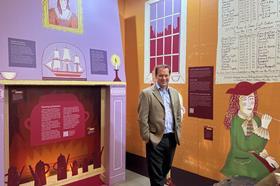
Called After the Fire: Insurance, Finance and a Rebuilt City, the exhibition focuses on the year 1702, 36 years after the fire devastated much of the City of London.
It showcases the people, businesses and innovations that emerged in the aftermath of the disaster and laid the foundations for today’s insurance market.
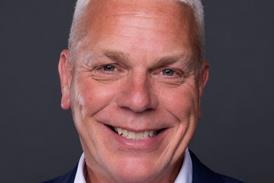
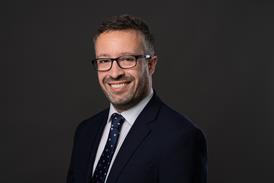
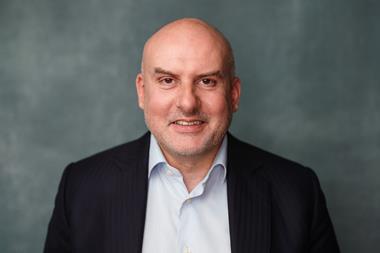
Speaking to Insurance Times at the exhibition, Insurance Museum director Howard Benge said the fire had been a defining moment in the industry’s history.
“It was a catalyst. As every catastrophe is, it was a catalyst for change,” he said.
The exhibition examines how property developer Nicholas Barbon began selling fire insurance alongside newly built homes before establishing the Fire Office, widely regarded as the first dedicated fire insurance company.
“This really was a turning point,” Benge said. “This is the first time an insurance company was established. Something, an organisation that sold fire insurance.”
Recreating Lloyd’s
Among the exhibition’s centrepieces is a recreation of Edward Lloyd’s Coffee House, where merchants, brokers and underwriters met to exchange information and arrange business deals.
Read: PPL promotes for new chief product and technology officer
Read: Legacy acquirer gets court permission to transfer two insurance portfolios to UK
Explore more London market-related content here, or discover other news stories here
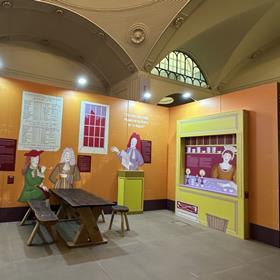
The replica includes a fireplace, a pulpit from which news would have been read and representations of the people who would have frequented the venue.
Benge said coffee houses played a critical role in London’s commercial life.
“It was a way of networking. It was a way of catching up on gossip, on news and it was a way of carrying out business,” he said.
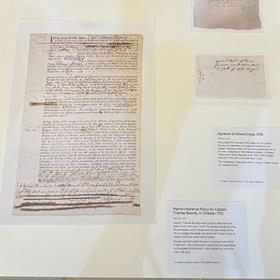
The exhibition also features reproductions of historic insurance documents, including a 1702 marine policy taken out by merchant Captain Thomas Bowery for his ship, the Worcester.
According to Benge, the policy offers an insight into the origins of underwriting, showing how multiple individuals subscribed to portions of a risk and had their names struck through once claims were settled.
Lessons from history
The exhibition also explores how early insurers provided more than financial protection, operating fire brigades that worked together to tackle blazes across the city.
“The insurance wasn’t just protecting houses. You had a fire brigade as well,” Benge said.
“All those different companies, their fire brigades would work with each other to put fires out. So it was a collective responsibility.”
Benge added that the exhibition offers lessons for today’s insurance market as it responds to evolving risks and changing urban environments.
“Insurers have to still work, very much still work, with builders and developers,” he said.
“Nothing stands still. Everything’s always changing.”
He argued that understanding past catastrophes could help insurers prepare for future challenges.
“We have to put the tools in place to learn from history,” Benge said.
“Bring this history, this heritage, into the present and just say, ‘Look what happened here.’”
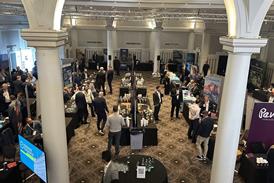
After the Fire: Insurance, Finance and a Rebuilt City is now open to the public at the Insurance Museum, located in the Bank of England Museum. The exhibition runs until 27 November 2026.

With a background in local journalism, she has previously worked as a freelance reporter covering community stories and gaining valuable on the ground experience.View full Profile

























No comments yet