



















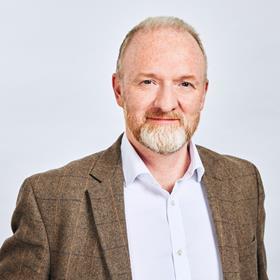
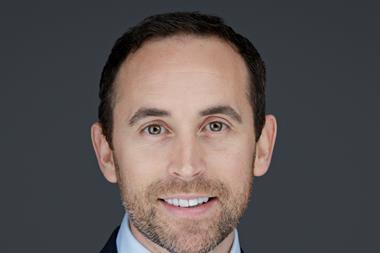
Lee Anderson, group deputy chief executive at SRG, discusses the benefits of prioritising action and not overcomplicating business decisions
There is a particular type of conversation that happens more frequently as businesses scale.
Someone identifies a problem, everyone agrees it needs fixing and then, rather than fixing it, we begin designing the perfect solution.
A working group is formed. A strategy is commissioned. Dependencies are identified. A presentation appears with more pages than the problem probably deserved in the first place and, three months later, remarkably little has actually happened.
I have become increasingly convinced that one of the most underrated competitive advantages in business is simply the ability to get things done quickly.
That shouldn’t be confused with being reckless. Speed without judgement is just haste. But equally, thoughtful decision-making shouldn’t become an excuse for inactivity.
There is a point at which additional analysis stops improving a decision and simply delays it.
I learnt a version of this lesson many years ago working for one of my insurance heroes, Peter Cullum, at Towergate.
Peter had a wonderfully simple philosophy for tackling projects and decisions. He once told me almost anything, however complicated, should be capable of being distilled onto three single landscape sheets of A4 paper, with no more than ten bullet points on each.
Each piece of paper in turn was headed ‘Where are we?’, ‘Where do we want to be?’ and ’How do we get there?’.
Simple, but quite difficult to master in reality.
The real skill wasn’t putting ten bullet points on a piece of paper. It was understanding something well enough to strip away the noise, complexity and competing opinions and reduce it to its purest form.
Amanda Blanc, Another Towergate luminary, taught me the value in execution. I never left the room without knowing what she wanted from me and by when. She didn’t need to chase up to see that things got done – they just got done.
Those two lessons have stayed with me. Knowing what you’re trying to achieve is one thing. Making it happen is another.
Inverse efficiency
There is a strange inverse efficiency that can appear as businesses grow. Logically, recruiting more people should create more capacity and allow an organisation to move faster. Yet, quite often, the opposite happens.
Read: The power of gratitude in recognising continuity
Read: AI will not replace specialist brokers – but it will define the exceptional ones
Explore more broker-related content here, or discover more briefing articles here
More people create more interactions. More interactions create more meetings. More meetings create more stakeholders. And eventually a decision that two people could once make over a coffee requires six diaries to align, three layers of approval and a steering committee next Thursday.
This isn’t an argument against middle management – good managers are enormously valuable when you find them. But management should exist to accelerate decisions, not become part of the journey every decision has to make.
Our industry has no shortage of grand visions. We talk about transformation, operating models, data strategies, artificial intelligence and the future of broking. Much of it is important but complexity can very easily start masquerading as sophistication.
And in an industry like ours, where responsiveness and good judgement matter, we should be partially conscious of that.
Of course, some decisions need careful consideration. We’re in the business of managing risk, after all. But not every decision needs to be treated as though the future of the organisation depends on it.
Some of the best people I have worked with have an instinctive bias towards action. They understand the issue, make a judgement and move. If the decision turns out to be imperfect, they adjust.
We sometimes behave as though every business decision is irreversible. In many circumstances, making an 80% decision today, learning from it and correcting course is considerably more valuable than reaching the theoretically perfect answer six months later.
People notice this too. When a colleague raises a problem and sees it fixed quickly, it creates confidence. When a client asks for something and receives an answer rather than an acknowledgement and a promise to “come back”, it builds trust.
And I suspect most of us can think of occasions when we’ve made something far more complicated that it needed to be. I certainly can.
I am not arguing against ambition as every great business needs a vision. But I increasingly think we overestimate the importance of having the perfect map and underestimate the importance of actually moving.
Which brings me back to Peter’s three questions. Where are we? Where do we want to be? How do we get there?
Answer those questions properly – and then get moving.
Vision gives you a sense of direction, but execution creates momentum – that’s a great habit to have.




















No comments yet