





















Drought is becoming a more visible feature of the UK’s risk landscape, driving rising subsidence losses, raising wildfire concerns and putting growing pressure on businesses and infrastructure. But while insurers are adapting their view of risk, evidence suggests awareness may be moving faster than action when it comes to buying new forms of protection
For a country better known for rain than water scarcity, drought has historically sat at the margins of the UK’s insurance conversation. The peril has been associated primarily with agriculture, reservoirs and temporary restrictions on water use, rather than as a risk capable of affecting property, infrastructure, supply chains and business operations.
But that perception is becoming harder to sustain. While recent rainfall has eased immediate drought conditions in parts of the UK, the risks created by prolonged dry periods do not necessarily disappear.
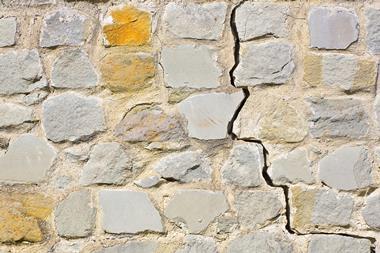
The insurance consequences of drought can emerge weeks or even months after dry conditions abate through shrinking soils, structural damage, business disruption and the increased risk of flooding when heavy rain falls on hardened ground.
For insurers, drought therefore presents a more complex challenge than simply adding another peril to a policy. Its consequences can, often indirectly, emerge across multiple lines of business.
And there are further complicating factors. While much of the industry agrees drought is becoming a more material risk, far less evidence shows that businesses are fundamentally changing how they buy insurance.
More than a dry spell
Swiss Re’s chief executive of P&C reinsurance for the UK and Ireland, Jason Richards, said the UK had “tended to treat heat and drought as uncommon and temporary summer problems”.
Read: Average subsidence claim reaches £20,000 as record spring drives surge
Read: Just one in 10 fully prepared for floods despite rising risks
Explore more risk management-related stories here, or discover more news here
“That is becoming harder to justify as these conditions become more frequent,” he added.
Richards argued the challenge extended beyond the weather itself. Much of the UK’s housing, transport and public infrastructure, he said, was built for “cooler, wetter weather”, leaving those systems under growing pressure from longer periods of heat and drought.
These consequences are already visible in property claims. Woodgate and Clark’s head of subsidence claims, David Hession, said 2025 had been “a particularly bad year for subsidence” following a dry spring and summer, with pressure continuing into 2026.
The ABI’s latest figures showed insurers paid £72m for domestic subsidence claims in the second quarter of 2026, while the average claim reached a record £20,000.
Furthermore, LexisNexis Risk Solutions’ analysis of property claims data identified two clear spikes in subsidence activity linked to prolonged hot and dry conditions, in 2022 and 2025. August 2022 generated around 4.7 times the five-year median volume of subsidence claims, while claims severity was around 45% higher than in 2021.
Caroline Elliott-Grey, senior product manager at LexisNexis Risk Solutions for the UK and Ireland, said claims typically emerge one to two months after periods of extreme heat, with the full cost of losses often taking even longer to materialise.
As Descartes Underwriting commercial director for the UK and Ireland Matthew James put it: “Drought often doesn’t lead to damage. It’s a stressor which causes economic disruption further down the line.”
One risk, many consequences
The impacts of drought conditions are clear to see, but its definition as a single insurance peril may be misleading.
Allianz UK’s head of property and casualty account management, James Redford, told Insurance Times the insurer did not view drought, subsidence, wildfire and flooding as “separate issues”.
“There is a clear link between them,” he said.
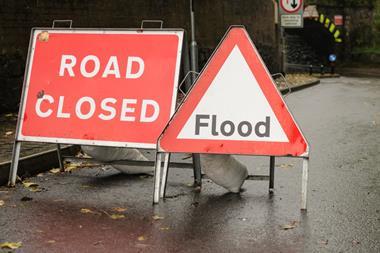
Surface water flooding is one example. Following prolonged dry conditions, Redford explained, “torrential rainfall may not soak away easily”, contributing to localised flooding.
For the International Underwriting Association (IUA), the challenge is similarly one of interconnected risks. Tom Hughes, director of underwriting at IUA, said insurers had “no choice but to think carefully about how risks are interlinked, are very much correlated and how one key loss driver can lead to other secondary implications”.
Those implications include subsidence, wildfire and flooding – and they can create a significant aggregation problem when multiple policyholders are affected by the same conditions.
Not yet the main event?
There is, however, a danger of treating greater industry concern for drought as proof that it has already transformed the UK’s insurance market.
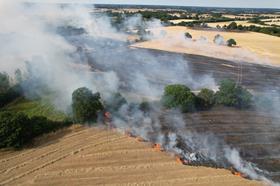
Wildfire offers a good example. Descartes’ James said businesses were increasingly asking: “Can I protect myself against UK wildfire?” – something he said would have been far less likely 10 years ago.
Data from LexisNexis showed UK wildfire detections reached a record 4,659 in 2025, nearly five times the 951 recorded in 2024. Elliott-Grey noted that summer wildfires often occur closer to towns and cities, increasing potential exposure for homes, commercial property and infrastructure.
But visibility does not necessarily translate into claims.
Redford said that while wildfires had been “highly visible in the news”, they had not translated into “a significant volume of commercial claims” for Allianz to date.
Similarly, James cautioned against overstating drought’s position within the UK’s wider natural catastrophe landscape.
“Flood is still the biggest headache for most people in the UK,” he said. “It’s our main peril.”
That tension runs through the market. Drought and its secondary consequences are clearly moving up the agenda. However, the industry is still trying to establish whether recent conditions represent a fundamental shift or a risk that is becoming more prominent without yet displacing the UK’s established loss drivers.
Awareness versus uptake
The clearest divide between awareness and uptake, however, emerges when the conversation turns to insurance buying.
Alice Glenister, head of parametrics at Miller, said: “We are certainly seeing increased interest in water-related risks.”
The nature of that interest has changed, she argued. Historically, drought had been viewed primarily as an agricultural risk, but businesses were now thinking more broadly about the consequences of both “too little and too much water”.
That could create opportunities for parametric insurance, where payouts are triggered by metrics such as rainfall levels or river height, particularly where businesses face losses without physical damage.
But increased interest has not necessarily translated into increased demand.
Allianz’s Redford said: “We haven’t seen increased demand for drought, water-risk or parametric cover at this stage.”
Descartes paints a similarly cautious picture. “There is not a huge culture of people buying parametric drought insurance in the UK,” James said. “It is still not commonplace at all.”
Glenister said adoption was still constrained by the need for client education and basis risk, with businesses first needing to “fully understand and quantify the exposure”.
Responding, not adapting
The market’s eventual response to drought may therefore be evolutionary – rather than revolutionary.
LexisNexis analysis suggests climate change could significantly expand the UK’s subsidence exposure. Drawing on British Geological Survey data, the company estimated that an additional 1.2 million homes in England could face subsidence risk by 2050, representing a 27% increase on the 4.5 million properties already exposed today.
Redford said prolonged dry periods already fed into “subsidence modelling and risk acceptance terms”, while also influencing how insurers viewed sites with greater wildfire exposure.
That suggests drought may increasingly change underwriting, pricing, excesses and policy conditions without necessarily creating a mass market for standalone drought insurance.
But Swiss Re’s Richards warned that insurance innovation had limits.
“Insurance helps households and businesses recover while pricing risk can inform decisions about where to invest,” he said. “But it cannot make up for avoidable damage.”
That is perhaps the industry’s central tension. Insurers can model changing weather patterns, price exposures and develop new products. They can also provide liquidity after a loss.
What they cannot do is stop clay soils from shrinking, prevent drought from affecting water supplies, or make infrastructure built for a cooler and wetter climate resilient on its own.
As the UK adapts to more frequent periods of heat and drought, the question for the insurance market may not simply be whether the risk can be insured. It is whether the industry, businesses and government can reduce the underlying exposure before the secondary consequences of dry weather become another routine source of loss.

With a background in local journalism, she has previously worked as a freelance reporter covering community stories and gaining valuable on the ground experience.View full Profile



























No comments yet