


























‘Wildfires are an increasing risk for the UK insurance market and can no longer be confined to hotter climates,’ says senior product manager
This summer’s record-breaking European heat has brought with it a slew of wildfire outbreaks, culminating in the recent evacuations of nearly 330,000 people from disaster-stricken areas across France, Spain and Italy.
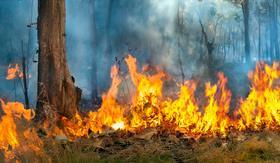
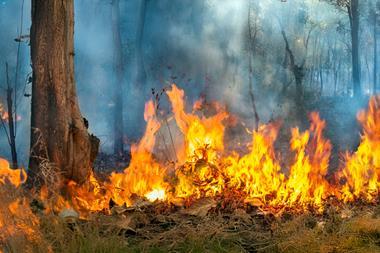
According to data from the European Commission’s Joint Research Centre, 434,000 hectares have already been burned across Europe in 2026. And while the UK has traditionally been fortunate enough to avoid the extent of damage seen on the continent, increasingly apparent changes to the country’s climate may be heralding the end of that distinction.
Caroline Elliott-Grey, senior product manager at LexisNexis Risk Solutions, explained that “wildfires are an increasing risk for the UK insurance market and can no longer be confined to hotter climates”.
“Last year, England had its driest spring in over a century and 2026 saw the hottest June on record. That same month, the government confirmed teams of specialist firefighters will be positioned in key areas and ready to respond to wildfires across England as the number of incidents continues to grow,” she added.
Elliott-Grey’s concerns are backed up by recent research from LexisNexis, revealed exclusively by Insurance Times, which found that the UK experienced 4,659 wildfire incidents across 2025 – a year which, according to the Met Office, was the hottest and sunniest since record keeping began in 1884.
The firm’s research – which analysed satellite data from the Suomi National Polar-orbiting Partnership, while excluding industrial fires and low-confidence detections – found that 2025’s figure stood nearly 41% higher than the 3,305 fires seen in 2018, the preceeding decade’s prior high-water mark.
More pressingly for insurers, wildfires proved not to be a purely rural phenomenon. Last year, some 39 incidents were detected within 5km of London’s city limits, while Crawley reported 15, Bournemouth saw 14 and Swansea experienced 12.
The increased risk of wildfires affecting urban areas will be driving many insurers to revisit the risk analysis methods they use when pricing policies across their housing books.
“As multiple heatwaves continue to hit the UK, understanding risk at an individual property level is becoming essential,” Elliott-Grey explained.
“Historical wildfire data captured via satellite technology helps identify when and where fires are most likely to occur. When combined with geospatial intelligence data like weather patterns, terrain and infrastructure – such as proximity to fire stations – it creates a clearer, location-specific view of risk.”
Springtime risks
The research also indicated that, counter to conventional wisdom, wildfires are not solely a summertime concern. Dry winters were found to raise the risk of springtime wildfires, notably those related to gorse-burning practices.
Read: Is wildfire risk an ‘underestimated’ peril spreading to the UK?
Read: LMA report reveals fundamental shift in climate transition assumptions
Explore more risk management-related stories here, or discover more news here
Indeed, in 2025, some 2,635 wildfires were detected in spring alone, compared to the 1,606 seen during summer months. Springtime fires were, however, found to be associated with lower value rural land, compared to the higher urban impact seen in summer.
As such, summer fires remain the greater concern for insurers, with LexisNexis explaining that non-rural fires increase “exposure to property and infrastructure, as well as the potential for higher claims severity and greater operational and reputational risk”.
Elliot-Grey concluded: “Integrating this insight into underwriting and pricing enables insurers to better assess exposure and manage portfolios. Understanding wildfire risk across properties and regions also helps identify risk accumulations and supports more informed decision-making as climate risks continue to evolve.
“As climate change reshapes the risk landscape for property insurance providers, robust data and analytics will become increasingly important in assessing wildfire exposure at both property and regional levels, helping to reduce losses and ensure pricing more accurately reflects risk.”

He graduated in 2017 from the University of Manchester with a degree in Geology. He spent the first part of his career working in consulting and tech, spending time at Citibank as a data analyst, before working as an analytics engineer with clients in the retail, technology, manufacturing and financial services sectors.View full Profile






























No comments yet