





















With the threat of wildfires spreading globally, industry experts tell Insurance Times what the risks are to properties in rural urban interfaces and HNW structures in the UK if the industry is unprepared
The green, luscious landscape stereotypically associated with the UK does not usually conjure up fears of wildfires.

This specific risk is more likely to be associated with countries known for scorching climates and wide, open spaces such as the US and Australia.
It was only in January last year that a series of devastating wildfires in Los Angeles and San Diego displaced thousands of residents, causing up to $30bn in insurable losses .
But, while Europe has not been as affected by out of control fires, commentators have begun to sound the alarm about growing risks.
Judith Neumann, global head of industry advisory for sustainability and climate resilience at Guidewire, noted that wildfires have been gaining “more traction” across Europe – including the UK.
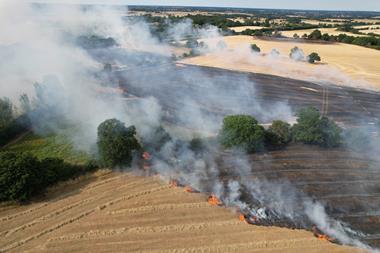
The increased risk of this peril for the UK market is clear to see, especially across 2025. The Global Wildfire Information System estimated that by the end of summer in November 2025, UK wildfires had burned 116,204 acres – the largest annual area affected since monitoring began in 2012 and over double that of summer 2022.
And, according to data from the European Forest Fire Information System, by 18 July 2025 the UK’s total wildfire burn area was double the size of the respective burn areas from Spain, Portugal, Italy, Cyprus, Greece and France – nations much more closely associated with fire risk.
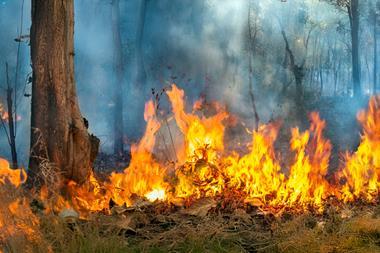
Wildfires can be sparked by a range of causes – such as discarded cigarettes or strongly focused beams of light – but require plentiful, dry vegetation to burn.
As the average temperature in summer creeps up in the UK, this creates the conditions needed for fires to become a risk the industry must be aware of.
Lessons from the US
Neumann explained that, as the issue is only expanding globally, a lot can be learned from the behaviour of US wildfires on how to mitigate and respond to the risk.
Read: Is countering rising flood risk an ‘impossible task’ for UK insurers?
Read: LMA report reveals fundamental shift in climate transition assumptions
Explore more ESG-related stories here, or discover more news analysis here
Notably, she said that the Los Angeles wildfires last year showcased a change in typical behaviour as they spread into wildland urban interfaces (WUIs), with fires jumping from vegetation into built up areas.
This enabled fire spreading between properties – increasing damage, pollution and clean up costs.
In the UK, WUIs are named rural urban interfaces (RUIs) and refer to areas on the boundary between woodland and civilisation.
The National Fire Chiefs Council warned that the changing fire seasons in the UK would accompany more frequent incidents in these RUIs, with the risk worsened by a lack of long-term investment, funding and national wildfire strategy.
For example, in an east London heathland area called Wennington in 2022 a fire broke out in a residential garden and spread onto adjacent grassland.
Over 17 properties were destroyed in the blaze.
Nick Hall, head of health and safety at Woodland Trust, told Insurance Times that one of the issues fire and rescue had when they arrived to deal with this incident was that they did not have hoses long enough to reach the hydrants.
This comes down to the planning design of the housing estate itself, he explained.
Including a “buffer zone” where the vegetation, or “fuel load”, is managed, he continued, enables fire and rescue to access and attack the fire to keep it away from the properties.
He stressed that these are areas Britain should start thinking about more carefully to prevent further damage, noting that wildfires are an “underreported” and “underestimated” risk in the UK.
And, with more developments being built in UK RUIs over the next few years, Hall said wildfires were a “growing risk” – one that the industry should be keeping an eye on.
Mitigating the threat
With densely packed residential properties at risk in rural areas, there is a growing push to introduce more comprehensive wildfire mitigation procedures across the UK.
According to Guidewire’s hazardhub study in the US, adopting basic wildfire mitigation measures can reduce the risk of damage by 20%. Meanwhile, comprehensive strategies can reduce it by up to 74%.
In RUIs it is particularly important that wildfire risk management is collaborative.
This is according to Caroline Elliott-Grey, senior product manager for UK and Ireland at LexisNexis Risk Solutions, who stressed that the more recent extreme fluctuations in weather have been creating “ideal conditions for increased fire risks”.
Elliott-Grey explained that “milder and wetter winters encourage plant growth” and greater amounts of vegetation which can “act as a fuel for fires when conditions dry out”.
Alongside erratic climate predictability, she said that stronger data sharing between organisations was needed to improve wildfire preparedness.
For example, she noted that fire and rescue services can provide operational incident data and ground level intelligence, while satellite systems offer broad geospatial verification – all helping to identify patterns and vulnerable zones.
She added that “shared intelligence would allow insurance providers, emergency services and policymakers to move from reactive response to proactive risk planning”.
Speaking to Insurance Times, Glyn Brookes-Humphrey, director of property operations at Woodgate and Clark, stressed that as most wildfires occur as a direct result of human activity, it is “very difficult to effectively strategise risk reduction measures”.
Brookes-Humphrey said that if the trend for increased numbers of wildfires continues, he anticipates that properties located in wildfire prone areas “will become more expensive or even impossible to insure for wildfire risks”.
He continued: “We have seen it already in the US market where a separate policy for wildfire risk can now be purchased following standard policy exclusions.
“We are not aware of any market shift in policy terms and exclusions at this time. However, if the trend for wildfire continues and the cost of property damage starts to rise, this will change [in the UK] and, much like flood mapping, wildfire mapping will become common practice.”
A high net worth, high risk?
The California wildfires last year had a heavily reported impact on celebrity neighbourhoods and high HNW homes located in the affluent Los Angeles valleys.
Dawn Blazier, head of HNW at NFU Mutual, noted that HNW properties in the UK are more likely to be in remote rural urban interfaces as well as potentially having large gardens or grounds of their own.
Blazier told Insurance Times that the hot and dry conditions seen in recent British summers “could increase their potential exposure to wildfires”.
She explained that HNW or heritage homes may use “more non-standard building materials or have unavoidably lower standards of fire safety compared to newly built properties, with unusual layouts and greater likelihood of outbuildings”.
These additional risk factors make it “vital” that HNW homeowners carry out risk assessments to keep safe from fires, she added.
For Claire Wilkinson, managing director of alternative risk transfer solutions at WTW, the importance of reviewing long-term climate risk by considering where developments are located should not be underestimated.
She explained that planning regulations could reduce risk “by limiting development in high hazard areas, such as flood plains or close to vegetation”.
While homes in attractive areas close to water or vegetation often command a premium, Wilkinson said higher flood and wildfire risks could ultimately render them “uninsurable”.
She said: “Flooding is a recognised risk in the UK and flood insurance is often more expensive or subject to large deductibles or a total exclusion for properties located in flood plains.
“If wildfire becomes a similarly recognised and high risk peril in the UK, the concept of ‘fire plains’ might exist and be treated in a similar way to flood plains for insurance purposes, such that properties located in these areas have exclusions or other restricted terms for wildfire.
”I just don’t think we’re there yet.”

She joined the title after completing a Master's degree in Journalism in 2025, having previously graduated with a degree in English Literature.View full Profile




























No comments yet