























‘If you’re in an area of low risk, there is a limit to how much you’re going to cross-subsidise for someone who is in a high risk area – that is a circle that’s hard to square,’ says partner
With clouds finally parting to reveal blue skies, it is safe to say that this week has heralded a welcome change to the monotonous drizzle the country has become accustomed to.
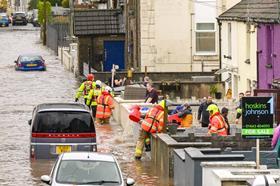
Indeed, the Met Office reported that rainfall was a ’defining feature’ of January 2026.
The national meteorological service revealed that the UK recorded 117% of its long‑term average rainfall – with Cornwall experiencing its wettest January on record.
But, as those in the flood insurance sector will be aware, having to get the umbrella out more frequently is the least of the industry’s concerns.
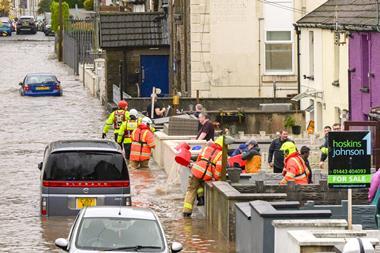
As Daniel Bernet, associate director of insurance solutions at Moody’s, explained, prolonged and heavy rainfall leads to saturated soils and increased river flows, with flood plains in Devon, Somerset, South Wales and Northern Ireland having observed local flooding.
He added: “Flood risk is rising as winters grow wetter and stormier. More frequent, back‑to‑back storms keep soils saturated and rivers elevated, so even modest rainfall can trigger significant flooding.”
The toll of this increasingly severe weather on homes and businesses is significant across the UK. In 2025, there were a record £6.1bn worth of property claims, according to Chris Bose, director of general insurance policy at the ABI.
The ABI also revealed that the cost of domestic flood claims rose by 38% to a total figure of £312m – with the average flood payout to a homeowner rising by 60% to reach £30,000.
Building resilience
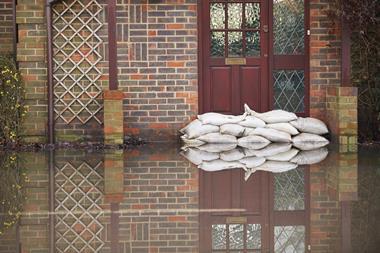
In the wake of the recent flooding, promoting resilience has once again become a topic that the industry is being urged to support.
Kelly Ostler‑Coyle, director of corporate affairs at Flood Re, told Insurance Times that the devastating impact of flooding could be mitigated if “the insurance market seizes the opportunity, at the point of claim, to inform and support customers to install property flood resilience (PFR) measures”.
Read: Global economic losses from natural disasters reach $260bn
Read: Midlands flooding impacts over 7,000 buildings – Iceye
Explore more risk management-related stories here, or discover more news here
She said: “In reality, homes that have already benefited from PFR often avoid the most severe damage to floors, kitchen units, electrics and white goods.
“Crucially, these households are able to return home far sooner, sometimes in days rather than months.”
These measures are further supported by the Flood Re Build Back Better, scheme launched in 2022, which enables participating insurers to be reimbursed for installing flood resilience measures following a flood claim.
However, with Flood Re’s government defined contract set to expire in 2039 as flood and storm claims continue to rise year-on-year, whether the industry can meet the challenge of tackling flood risk independently has been called into question.
For Tim Johnson, insurance sector lead and partner at Browne Jacobson, insurers are faced with “an impossible task”, for which the industry is not yet fully ready to meet.
Whereas insurance relies on the concept of risk pooling, competitive pressures mean that the costs of insuring properties against flood damage fall on those properties most susceptible to damage – such as homes built on areas that have previously experience flooding.
Johnson explained : “On the one hand, there is pressure on insurers to provide fair value and yet, at the same time, there is also a focus on customers [and] ensuring that financial services products generally are available to everybody who needs them.
“People being able to insure their assets is important. Yet, there is a limit to cross-subsidising and risk pooling. If you’re in an area of low risk, there is a limit to how much you’re going to cross-subsidise someone who is in a high risk area – that is a circle that’s hard to square.”
How are insurers adapting?
According to JBA Risk Management, its climate adjusted flood models indicate that around one in five homes in the UK could face materially higher flood risk by 2050, depending on the climate scenario and location.
Watch: Insurance Times flood readiness webinar in association with Iceye
Read: Install simple flood defences to save the UK £740m – Flood Re
Explore more risk management-related stories here, or discover more news here
As the planned transition away from the Flood Re scheme approaches, Judith Ellison, climate change commercial lead at JBA Risk Management, noted that “risk reflective pricing” was key “to ensure the long‑term availability and sustainability of flood insurance”.
She explained that this was “particularly critical for new homes, which are already excluded from Flood Re”.
“Despite this, recent industry analysis indicates that around one in nine new homes continue to be built in areas at risk of flooding, reinforcing the need for stronger planning controls, more resilient design standards and clearer signals around risk,” she continued.
“Insurance availability and pricing can play an important role in discouraging inappropriate development in high risk locations.”
At a firm which has drafted over 3,000 bespoke policy endorsements for insurers per year, Johnson told Insurance Times that he has noted a revert to “to good old-fashioned property specific underwriting” involving climate risk.
He continued that there are more building or location specific endorsements being built into products in a move away from set general policy clauses.
These granular risk assessments which provide more durable protection for properties, as well as insurers, are also a product of greater access to advanced data, he explained.
“Fortunately, alongside the negative development in terms of the environment, we have got positive development in terms of the access to information, and there is now more data around flooding than we’ve ever had before and on climate risks generally,” he added.
“There are AI tools that will help interpret and analyse in ways that make that easier than they have been.”
‘Valuable opportunity’
For Ian Gibbs, national technical manager at Sedgwick, building preparedness for flooding starts with understanding both the nature of the risk and how homeowners or businesses perceive that risk.
Read: Biba urges ‘sensible politics’ as homes keep being built in flood-prone areas
Read: Industry responds as Reeves unveils £4.2bn flood defence pledge
Explore more risk management-related stories here, or discover more news here
Gibbs said that he believes this presents “a valuable opportunity for insurers”.
He explained: “Encouraging customers to sign up for official flood warnings or providing flood alerts directly as part of the service can significantly improve readiness.
“Just as important is communicating simple, no‑cost steps that policyholders can take to reduce damage. Actions like moving a vehicle to higher ground or lifting household belongings off the floor cost nothing yet can substantially benefit both the insurer and the insured.”
Gibbs also noted that for commercial premises, “investment in property level resilience remains essential” as they will not be funded by the Build Back Better scheme, which is “critical” to communicate to customers.
Based in Newquay, Cornwall, Ian White, client partner at Partner&, predominantly represents commercial business insurance within the flood risk area.
With hospitality traders in Cornwall tending to perch near sea views, White explained that these properties “suffer on occasions from storm and flood”.
He said: “The vast majority of those business owners already know what to do if a storm is coming.
“A lot of them these days will close the premises so there’s no injury to any members of the public for whatever amount of time is required, so they tend to mitigate their potential losses and damage themselves.”
A world of pure mitigation
As the Cornish commercial sector proves, successful risk mitigation in high risk flood areas has the potential to feasibly meet the growing flood threat without dependence on government schemes.
To see a world of pure mitigation, Johnson has noted that insurers are looking to develop and sell more “imaginative” products.
He explained that the legal firm had observed a trend of insurers collaborating with customers to develop products, such as using satellite data and geospatial technology to provide policyholders with risk updates.
To further improve flood resilience adoption, Johnson noted that underwriting can be leveraged to reward customers with strong flood resilience through better terms via a “carrot and stick” approach.
Where gaps are identified, Johnson said that firms should incentivise improvements using a combination of “restrictive policy terms” unless resilience efforts are made and “lower excesses and premiums” follow the mitigation.
For when resilience efforts do fail, Johnson has also noted a flood of insurer investment in claims response teams, which has a value “one should not overlook”.
He concluded: “Investing in those response networks is important and ensuring they’ve got the people and the equipment on the ground to respond quickly and efficiently and in a way that’s sensitive to the customer’s needs.”

She joined the title after completing a Master's degree in Journalism in 2025, having previously graduated with a degree in English Literature.View full Profile




























No comments yet