






















The intelligent use of captive arrangements could be ‘a means to a solid risk management strategy, actually moving the lines of insurance’ and driving ‘a structural shift in how international insurance programmes are designed, operated and valued’, says chief markets officer
“Captive cell solutions” are rapidly becoming the “centre” focal point and “default consideration” for multinational risk transfer strategies actioned by global businesses of all sizes as risk managers seek to “create insurability” and retain “control over how their insurance works”.
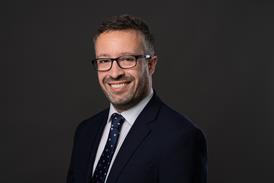
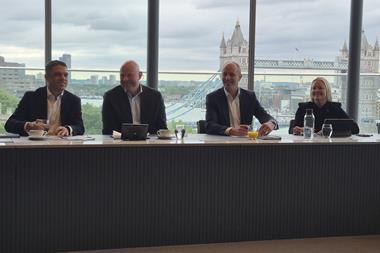
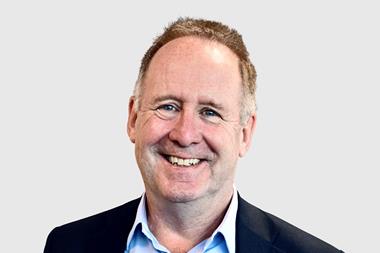
This was the overarching view shared by Alexander Mahnke, chief markets officer at commercial insurer MSIG Europe, who was speaking at the Axco Global Insurance Summit in London on 16 April 2026, in a session entitled ‘Five‑year predictions for global programmes: Captives, technology and international capability’.

Addressing delegates at the Leonardo Royal London St Paul’s, Mahnke explained how the uptick in captives – a form of self-insurance where an organisation creates its own licensed insurance subsidiary to cover its own risks, rather than purchasing policies from an insurer – has driven “a clear structural shift in how international insurance programmes are designed, operated and valued”, in turn “fundamentally reshaping expectations around control, transparency and execution”.
He explained: “This is by no means a minor evolution. It affects the very core of how multinational programmes are structured, financed and delivered.
“Historically, multinational insurance programmes were dominated by large corporates and followed relatively standard risk transfer models. That’s no longer true.
“Today, smaller and mid-sized multinationals are actively bypassing traditional [insurance] structures and moving into captive cell solutions and alternative risk transfer (ART) models. Uptake is especially strong among mid-sized and regionally diversified multinationals.
“This is largely driven by clients’ dissatisfaction with slow policy issuance, insurance premium and cash flows and heavily manual, often local, workflows. At the same time, emerging risks – such as cyber – place additional strain on local programme models, [while] centralised limits, local regulatory requirements and the need for real-time claims responses often provide immediate structural weaknesses.
“Many international programmes still rely on fragmented local systems, email-based workflows and heavy manual intervention, including expensive reconciliation of premiums and claims.”
For Mahnke, businesses’ risk functions are turning to captives as a “default consideration” in risk transfer conversations because they “increasingly want control over how their insurance works and how value is created”.
He continued: “They want control over capital and [they are doing] that by accelerating the use of captives, allowing them to decide how much risk they retain, where the margins sit and how volatility is absorbed – particularly in hard market conditions.
“Clients want to control the overall design and they reject the inherited structures. Instead, they prefer modular designs. Control over execution speed has become critical for them.”
Demonstrating insurability
Mahnke believes that a useful function of captives is to “create insurability” – which is perhaps why captives have historically been more prominent during hard insurance market cycles, when capacity can be scarce and offered premiums high.
Read: Aon appoints new EMEA captives leader
Read: New London-based ART MGA launches with ex-Allianz leader as boss
Explore more risk management related content here, or discover more news here
He explained: “I really believe that captives are not a threat for the insurance industry, not a threat for the carriers because clients consistently demonstrate [that] if they use captives intelligently, it’s a means to a solid risk management strategy and also a means [of] actually moving the lines of insurance across [its] traditional borders.
“If you use a captive intelligently in areas where the insurance market is hesitant to go into, you can actually create insurability by running retentions and capacity through your captives. That’s demonstrating, first of all, [that] it’s an insurable risk because you can do it on your own balance sheet, but [it is] also creating the data that you need. Captives are a wonderful means and by no means a threat to our industry.
“Increasingly, captives move to the centre of the [risk transfer] programme, acting as coordination hub that reshapes the role of insurers and providers.
“As captives become more central, they fundamentally reshape service expectations. Clients now expect faster programme implementation and, in particular, fast and reliable issuance of policies.
“They expect seamless interaction between the captive, the leading insurers and local policies, as well as the ability to move their risk financing strategy smoothly between retention, fronting and reinsurance depending on the market.”
Retaining risk
However, Mahnke warned that organisations must be cognisant of the fact that they “run the same risk as an insurer” when they operate a captive and may “potentially to have to recapitalise” in response to claims or financial market movements.
“That is something that needs to be understood because every chief executive would ask the question ‘why would I put my own capital into an insurance structure? It’s not part of my core business’,” he added.
“[Companies] need to understand that there’s a remaining risk.”

Since joining Insurance Times, Katie has successfully obtained a number of industry accolades. At trade body Biba's 2025 Journalist and Media Awards, for example, Katie was named the overall winner and received the Journalist of the Year trophy, alongside the Best Thought Leadership Award for her briefing article on reproductive health MGA Juniper and how insurance can be used to positively impact taboo subjects.View full Profile



























No comments yet