















With flight disruption escalating after Middle East airspace closures, an intelligence consultant warns that this marks an imminent ’threat of fraudulent claims against travel policies’
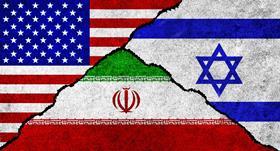
Since the US and Israel cooperated in military drone and missile strikes against Iran on 28 February 2026, prompting retaliation, several Middle Eastern countries have closed all or parts of their airspace.
This has resulted in disruptions, delays and cancellations for travellers, whether journeying for business or pleasure.
The conflict has also impacted travel insurance. Insurer Axa said that war coverage within travel policies remains limited because ”most exclude war, especially if it was declared at the time of booking” – not having such exclusions in place can prove costly for insurers.
These exclusions have created significant uncertainty for those travelling or planning to travel to affected areas in recent months – with some passengers viewing conflict caused disruption as a lucrative open goal to commit opportunistic fraud, seizing the chance to inflate or exaggerate genuine situations for financial gain.
One such trend concerns influencers targeting low cost airlines to maximise margins of speculatively delayed or cancelled flights.
This tactic has been seen by Kate Abrahams, intelligence consultant at law firm Weightmans, who told Insurance Times that the fallout from the conflict in the Middle East presents an imminent “threat of fraudulent claims against travel policies”.
While airlines have direct exposure to flight delay or cancellation claims, Abrahams explained that travel insurance policies “may be called upon to deal with losses arising from reroutes or delays”.
She said: “Although such policies are likely to include exclusions for losses arising from war or armed conflict, these are not always watertight and may contain exceptions.
“Opportunistic fraudsters will take the chance on securing a payout, so insurers need to remain alert and willing to challenge suspicious claims.”
A grey area
As with any surge event, Jamie Hersant – head of travel claims at Admiral – said there is “potential for opportunistic fraudsters to exaggerate claims”.
He explained that situations such as the Middle East conflict can cause an increase in fraudulent claims from perpetrators hoping that insurers will be “so busy they may overlook evidence”.
According to ABI data, released on 17 November 2025, exaggerated claims remained the most common fraudulent activity across all sectors – with a 10% growth in occurrences year-on-year.
The trade association further revealed that application fraud – the practice of hiding or supplying misrepresented information on policy applications – grew to 684,800 prevented cases last year, up 7.4% on 2023.
Speaking to Insurance Times, Chris Rolland – chief executive at travel insurance broker AllClear Travel Insurance – stressed that the real risk during such surge events is the growth of “grey area” claims.
When customers face cancelled travel and uncertainty around organised plans, Rolland said claims are usually exaggerated rather than outright fabricated.
He continued: “These often start as legitimate claims but drift beyond the original loss, particularly where policy coverage isn’t fully understood.
“That’s why clarity of cover, especially for more complex customer needs, is so important and dealing with a broker specialist gets the best outcome.”
He explained that at his firm, this dynamic is most clearly seen in cases where customers are trying to “understand how evolving travel advice or disruption interacts with their medical cover”.
In these scenarios, he continued, claims can evolve over time as details change in line with current circumstances or the link to an insured event can become “more stretched”, distorting claims patterns and confusing fraud thresholds.
Seeing a similar trend, Abrahams added that there are “early indications that borderline claims and more distorted claims patterns may emerge” following the disruption caused by the Middle East conflict.
But, as the social media promotion of speculative flight bookings reveals, the travel industry is wary that not all borderline claims are likely to be innocent customer exaggerations.
Abrahams noted that the proliferation of shallowfakes is contributing to this type of fraud, with manipulated evidence being used to support claims linked to travel disruption and wider instability.
Shallowfakes are manipulated media including images, videos or documents, typically created using basic editing tools – rather than artificial intelligence (AI). Shallowfake content can mislead consumers.
Therefore, fabricated travel insurance claims are becoming harder to spot.
Hersant added that there is a risk that fraudsters may “attempt to claim twice” – once with the insurer and another time with their holiday operator.
He explained that using “sophisticated detection models and technology to identify suspicious cases” will enable the protection of genuine customers during this unpredictable period.
Abrahams said it may be some time before the full impact of borderline, conflict linked travel insurance claims is reflected in litigation – or associated opportunistic fraud may simply be missed altogether if insurers are not actively screening for these risks.
She continued: “Challenging suspicious claims in the current environment is difficult.
“The need to process and settle claims quickly means that issues can slip through the net, especially where claim values are relatively low.
”Fraud detection increasingly needs to be built into technology driven screening tools capable of intercepting suspicious claims at scale. Identifying repeat claimants through common email addresses, telephone numbers or other data points is also crucial in flagging potential fraud.”
’Driven by perception’
While Hersant told Insurance Times that it is too early to fully disclose the impact seen from this year’s Middle East conflict on claims, the insurer has its eyes on the potential fraud risk.
Read: The Big Question – What is the potential impact of the Middle East conflict on UKGI?
Read: How insurance is helping prevent own goals at 2026’s World Cup
Explore more personal lines related content here, or discover more news analysis here
For Rolland, opportunistic fraud behaviour is “often driven by perception”.
He explained that if customers believe a situation should be covered, then “they’re possibly likely to stretch a claim to fit”.
As a result, he stressed that fairness across all customers is necessary to “prevent price spirals”.
He continued: “We’re unlikely to see wholesale changes to policy structures, but we will see refinement. Events like this test how wording performs in practice and insurers will continue to tighten areas where ambiguity has led to challenge or dispute.”
Abrahams warned that Weightmans does expect to see an increase in claim disputes arising from the disruption caused by the Middle East conflict filtering through over the coming months.
These will cover areas such travel, business interruption and supply chain disruption, she predicted.
“Given the length of the litigation cycle, some of these disputes are likely to run for a considerable period,” Abrahams said.
“This means the legal impact of the conflict will continue to play out well beyond the immediate crisis.”

She joined the title after completing a Master's degree in Journalism in 2025, having previously graduated with a degree in English Literature.View full Profile






















No comments yet