























Insurance Times asked industry figures to consider the risks arising from the ongoing Middle East conflict and what it could mean for the UK insurance market
On 28 February 2026, the US and Israel carried out coordinated military strikes on Iran, triggering retaliation – missiles and drones have since been launched across the region.
With supply chain disruption and energy market volatility causing shockwaves across the market, what could the potential impact be on UK general insurance?
Michael Hird, chief operating officer at W K Webster and Co

The ongoing conflict in the Middle East is likely to have significant ramifications for the UK general insurance market, most acutely affecting marine and cargo insurance, with reverberations more broadly felt throughout the manufacturing and logistics industries.
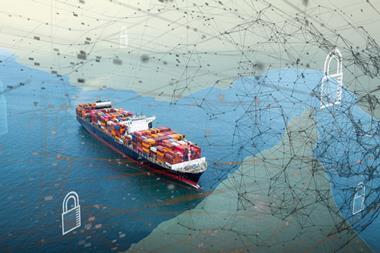
As vessel owners avoid high risk regions, cargoes in transit or awaiting shipment are likely to be delayed and alternative trade routes will increase both transit times and costs.
This shift has already resulted in the implementation of additional freight surcharges and, in more severe cases, the invocation of deviation and force majeure clauses.
Consequently, shipments are arriving at unintended ports, involving a greater number of stakeholders and requiring complex onward transport arrangements.
For UK insurers, these developments translate to more frequent claims for time-sensitive cargoes and production downtimes, albeit loss caused by delay is generally excluded from cover under most cargo policies.
The longer the conflict continues, the more likely we are to also see stock accumulation or shortages.
The widespread cancellation of war risk insurance, paired with a considerable rise in war premiums, has made voyages through impacted regions economically challenging.
An elevated risk environment amplifies the importance of effective claims management, especially in marine insurance, as deploying surveyors or experts to conflict zones becomes more challenging.
The rerouting of cargo to new jurisdictions also adds layers of complexity, with longer transit times, increased documentation requirements and more multifaceted liability and recovery disputes.
Proprietors navigating this volatile global trade environment face heightened business interruption risks, prolonged wait times to resolution and the possibility of revenue loss.
Tristan Fletcher, chief executive and founder, ChAI Protect
My firm’s insurance enables price risk mitigation for the commodities manufacturers use to make everything from super cars to chocolate bars. So, we are heavily involved in helping our clients deal with the consequences of a hydrocarbon addicted global economy experiencing a blocked shipping artery.

Food supply chains deal in perishable goods, so they move fast. Consequently, they are one of the first areas to feel impacts, many of which come from unexpected directions.
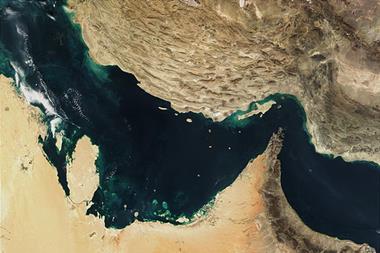
Consider the supply of raw materials such as polyethylene and polypropylene. These materials may sound esoteric, but they are the building blocks for a huge range of plastics and associated packaging including films, bottle caps and tubs. They are all essential to the food industry and they all pass through the Strait of Hormuz – or should.
Cut them off from supply chains and first, the prices of everyday staples like a loaf or a pint go up and then, you will see gaps in supermarket shelves because ultimately no packaging means no product.
In the food sector, insurers will see a vast range of similar domino effects, not least because global fertiliser production depends on the Gulf.
Yet, just 18 months ago there would not have been any comment here about price risk in commodities and food – it was just uninsurable. The difference is AI, its extraordinary power to calculate and forecast risk supercharges UKGI’s world leading capabilities to create resilience in challenging times.
We have dealt with centuries of crises – this time we have a game-changing technology in our corner.
Shaan Burton, partner, Kennedys

The Middle East conflict presents considerable challenges for cargo insurance due to disrupted shipping routes and heightened uncertainty regarding contractual and insurance protections.
Major container lines are cancelling or rerouting voyages, with some invoking force majeure clauses and others issuing more general notifications.
Crucially, under English law, force majeure clauses are not implied and must be expressly included in a bill of lading or contract of carriage. Courts interpret these provisions strictly and mere inconvenience or increased costs is rarely sufficient to relieve a carrier from its obligations.
Carriers may alternatively rely on diversion clauses to discharge cargo at different ports when the original route is impossible, yet the contractual wording must be clear to excuse performance.
Despite diversions, carriers retain an ongoing duty of care for goods in their possession, as required by the Hague and Hague-Visby rules. Regional legal frameworks, including Gulf civil codes, similarly demand that only circumstances genuinely beyond the parties’ control make contractual performance impossible, not merely more difficult or costly.
From an insurance perspective, delay exclusions are significant – clause 4.5 of the institute cargo clauses typically excludes losses caused by delay. Diversions may increase risks like temperature deviation and while frozen food extension clauses can remove some delay exclusions, they still exclude loss of market.
Increased forwarding costs may be covered by clause 12 of ICC(A) if directly caused by insured risks, but when diversions result from war, the institute war clauses for cargo offer no similar protection.
Ultimately, the outcome depends on the precise wording of contracts and policies, especially regarding war cover.
Alexander Beaton, kidnap and ransom team leader, CFC

A concern for the kidnap and ransom (K&R) market, as with the wider insurance sector, is cost pressure resulting from the Middle East war.
In the short-term, losses from the conflict are yet to clearly materialise, but given many territories involved are historically stable and developed, these exposures are unlikely to have been fully reflected in pricing, potentially creating headwinds over time.
At the claims end of the product, K&R is somewhat insulated from traditional inflationary drivers as many costs sit within a grey economy.
In resolving incidents the market faces familiar cost pressures, whether in expert fees, medical bills or helping to keep an insured entity running in a crisis.
As the world continues to become a more complex place, the frequency of operationally intensive and cost‑heavy incidents is likely to rise.
More positively, the current environment may encourage a greater appreciation of the value K&R can bring to an insurance programme.
Among smaller organisations in traditionally stable territories such as the UK, buyers have often overlooked the breadth of cover available. Sections such as wrongful detention, disappearance, extortion and evacuation and repatriation are often far more relevant.
Recent events highlight the importance of these lesser‑known elements, particularly for travellers who may not consider themselves kidnap risks.
Relatedly, organisations that may have previously relied on travel or personal accident policies to address K&R exposures may increasingly be drawn towards fully fledged solutions.
Cover under those policies is already limited when compared to specialist products and recent events may prompt further appetite contraction given the increasingly fractious geopolitical outlook.
Marcos Alvarez, managing director of financial institutions, Morningstar DBRS

The Middle East conflict is likely to affect the UK general insurance market mainly through London’s role as a major underwriting centre for terrorism, political violence, marine and aviation risks – rather than through large direct domestic losses.
For UK insurers and Lloyd’s syndicates, the immediate effect is likely to be greater underwriting volatility, more selective risk appetite and firmer pricing in specialty lines exposed to geopolitical events.
In terrorism and political violence, the main issue for the UK market is that underwriters may reassess exposures to iconic commercial properties, transport hubs and other high-profile assets.
In marine and aviation, the impact on the UK market is likely to be more immediate, as many of these risks are written in London.
War risk premiums for Persian Gulf transit have already been repriced and aviation underwriters are facing higher uncertainty linked to airspace closures, rerouting and the risk of large hull or liability losses.
A prolonged conflict could lead reinsurers to tighten terms, which would feed back into UK pricing and capacity.
The US government’s announcement to provide war risk insurance for transits through the Strait of Hormuz can also undermine the strategic position of the London market in the global marine insurance industry.
From a UK perspective, the issue is less about direct local claims and more about London’s central role in underwriting global specialty risks tied to the conflict.
For the UK market, the pressure point is not frequency but accumulation – if terrorism, political violence, marine and aviation losses move together, a scenario that seems unlikely in the short-term.
Chris Rolland, group chief executive, InsurEvo Group

Our thoughts are with our customers and everyone affected by the situation in the Middle East. It’s a concerning time, creating uncertainty for those travelling or planning to travel.
Events like this can cause huge disruption across insurance markets. We see shifts in travel demand, more cancellations and much closer scrutiny of risk in certain regions.
There are broader economic implications too – rising fuel costs will start to affect travel and daily life. This doesn’t help an industry still finding its footing after Covid-19.
During the Covid-19 pandemic, we saw how important it is for customers to know their insurer will still be there – answering the phone, supporting them and paying claims when uncertainty is at its highest. That expectation still holds true.
Travel insurance policies generally exclude claims arising directly from war or conflict. However, customers remain protected for unrelated events, such as medical emergencies or medical repatriation.
For AllClear Travel Insurance and InsureandGo, the focus is on how we respond. With over 25 years’ experience supporting customers, that counts.
If customers cannot return home due to disruption, we’ve decided to automatically extend their cover by up to 30 days at no extra cost. If plans change before departure, trip dates can be moved by up to 30 days.
Additionally, we’ve expanded stopover cover, ensuring protection during alternative connections. It is about doing the right thing when customers need help.

She joined the title after completing a Master's degree in Journalism in 2025, having previously graduated with a degree in English Literature.View full Profile



























No comments yet