





















’As humans, we do not naturally like going to that worst case scenario and so when an event as devastating as this occurs, it is often a wakeup call,’ says managing director
Last Sunday afternoon (8 March 2026), an uncontrollable fire broke out at a B-listed Victorian building in the centre of Glasgow, destroying several independent businesses.
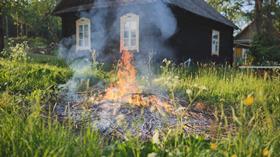
Sitting next to Glasgow Central Station, the Union Corner building dates back to 1851 and was befit with traditional masonry construction, including a highly combustible timber floor infrastructure.
The fire at the 175-year-old building is reported to have started in a vape shop occupying the four-floor building. Scottish Fire and Rescue said the cause will be investigated by a multiagency team.
Speaking at the Scottish National Party conference in Edinburgh on Saturday, First Minister John Swinney promised a £10m support package for “the council, businesses and agencies” to aid rebuilding.
He also announced that the Scottish government would cover the £1m cost of demolition.
The sheer damages caused by the fire were noted by Lorna Harrington, managing director of the fixed asset advisory service at Kroll, who warned that underinsurance and the risks posed by non-existent or out-of-date valuations are only confronted after a severe loss.
Harrington told Insurance Times that there was not a lack of awareness around risk management and underinsurance in the industry, but rather “there isn’t a structured approach to mitigating their impacts”.
Harrington added that correct valuation and risk assessments are important ”beyond just the financial impact” as the ”cultural loss tied to underinsurance risks” should not be underestimated.
She also explained that a reinstatement cost assessment (RCA) can gather information on construction, occupancy, exposures and protections to be used by underwriters to price risk.
“Without adequate insurance and if there is no fund for reconstruction, historic buildings can face total demolition,” she said.
“The scars they leave on towns and cities show just how pivotal the role of insurers are in preserving their long-term protection.”
Claims complexity
When these historic buildings do face total demolition, it results in complex heritage claims that typically take years to settle and reinstate.
Read: In Focus – How can HNW insurance policies help manage risks related to high value or risky hobbies?
Read: QBE’s plea as lithium-ion battery fires surge by 93%
Explore more HNW related content here, or discover other news analysis stories here
To ensure that coverage aligns with the true value and complexity of reinstatement, Harrington said that site visits to the heritage properties remain “irreplaceable”.
She added: “If [the] sums insured reflect today’s true replacement costs and you are able to avoid punitive underinsurance clauses in the event of a claim, these are the signs that you’ve had a comprehensive valuation.”
Echoing this sentiment, Bill Keith, regional operations director for Scotland’s major and complex loss at Crawford and Company, believes that the insurance policy including a sum insured that reflects the heritage status of the building is vital.
He said: “The heritage status does have an impact on the building reinstatement process, the extent of which depends on the factors being debated – this can impact the tenants of the building as their re-entry times can be longer.
“In terms of business interruption cover, if the building reinstatement period is prolonged, it could extend beyond what would normally be considered a reasonable period under the coverage terms.”
In the case of the Union Street fire, the added complexity is the structure was home to several independent businesses which have all been left without a trading place following demolition. The public has donated over £150,000 to fundraisers via Go Fund Me to compensate the financial impact of studio and equipment losses from the fire.
Keith was keen to stress that it is important for any tenant or business in a “mutitenure to have in place a single building insurance policy for the entire structure”.
Without it, there is the risk of the landlords or businesses owners having inadequate building insurance coverage, which “has a knock-on effect” by delaying building reinstatement.
‘Wakeup call’
Feeling the knock-on effect is Squared Brokers’ managing director Donna Robertson.
Based in Greenock in Scotland, Robertson currently has her hands full as she works to support business owners and clients with trading connections to the Union Street incident.
Robertson told Insurance Times that she would expect reinstatement to span multiple years, as the reinstatement of listed buildings naturally takes longer and requires additional statutory consents and specialist building trades.
For example, the Glasgow School of Art burnt down following two fires in 2014 and 2018, with Robertson expecting work to be completed in 2030. As the Union Street fire also has multiple insurers dealing with the claim, she predicted this claim to face similar challenges in its reinstatement.
For Robertson, this lead her to question whether business interruption indemnity periods are sufficient.
She explained that she would “not be surprised if many indemnity periods are exhausted” before the building is made safe, demolished, approved and rebuilt.
“As brokers we have known for a long time that a 12-month indemnity period is often not sufficient and this will be communicated in different ways to clients,” she said.
“However, the final decision is with the client and whether they want to pay the increased premium for an event that may or may not affect them. Perhaps as an industry it is time to set minimum standards and if a business is located within a listed or heritage property then it must have a minimum of 24 or 36 months maximum indemnity period.”
Similar to the Covid-19 pandemic, she added that brokers should also review BI cover extensions for nearby businesses affected by shutdown rather than the fire itself.
This includes extensions such as “denial of access and loss of attraction” for businesses that are caught up in the vicinity of the fire.
“We often have an optimistic view that, if the worst was to happen, we would be able to continue to trade in a relatively short period of time,” she reflected.
“As humans, we do not naturally like going to that worst case scenario and so when an event as devastating as this occurs, it is often a wakeup call.”

She joined the title after completing a Master's degree in Journalism in 2025, having previously graduated with a degree in English Literature.View full Profile



























No comments yet