























Sponsored content: Richard Toomey, vertical market manager for the UK and Ireland at LexisNexis Risk Solutions, discusses the need for accurate data in commercial property underwriting
The commercial property market is showing cautious signs of recovery. Activity towards the end of 2025 brought renewed optimism as CBRE UK figures showed that investor demand for office and industrial space rose by 30% in Q3 2025 – bringing with it an uptick in premium writing.

ETraded commercial property business has also grown significantly, signalling that brokers and insurers focused on this line could see real opportunity in 2026.
But optimism in commercial property always comes with a warning label. The market may be stabilising, yet the risk environment is becoming more volatile. Weather-related claims totalled £124m in Q2 2025, while UK insurers paid out a record £4.6bn in commercial property claims, the highest annual total on record.
To maximise the opportunities ahead, pricing professionals need a fast, comprehensive view of risk. That means accessing all the data they need from one trustworthy source, embedded directly into digitised quote and underwriting processes, rather than stitching together insight from multiple sources.
Relying solely on postcode-level assessments or broad assumptions about a building’s construction is no longer sufficient.
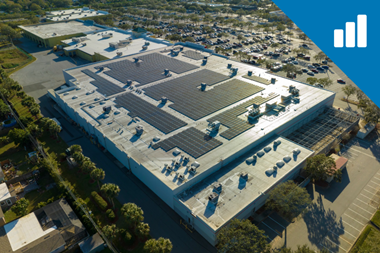
Underwriters need strong location intelligence alongside bespoke, granular data to understand the risk in totality – inside the building and beyond it. This includes clarity on construction type, age, roof material, height, number of floors, basements or extensions, local topography and exposure to all perils, not only today, but over time.
Importantly, these physical factors cannot be viewed in isolation. Commercial property risk is also driven by what happens inside the building – the nature of the business activity, the operations being carried out, supply chain dependencies and even the risk profile of the employees behind the organisation.
A warehouse, office block or manufacturing site may look similar externally, but their underlying risk dynamics can differ significantly.
Operationalised data
Of course, data is only valuable if it can be operationalised. Whether it’s an MGA trying to attract capacity, or an insurer managing exposures during a severe weather event, the ability to visualise environmental risk factors like flood, subsidence, fire and windstorm, in real time, is critical. That could be down to a building outline or across an entire portfolio.
Pinpointing accumulations, identifying concentrations of risk and making more informed pricing or reinsurance decisions becomes much easier when exposures can be visualised in map form. Accumulations can be identified either at the point of quote or through map-based visualisation, giving underwriters both immediate and ongoing insight. They can also continuously monitor zones, tracking changes automatically throughout the underwriting lifecycle rather than relying on static snapshots taken at the point of quote.
Taken a step further, visualisation of commercial property risk could also include richer data on the property itself, the business activities within it, and the people behind the organisation. The result should be faster quoting, more accurate pricing and products better aligned to the true exposure – reducing the risk of underinsurance.
2026 will almost certainly bring further volatility in rates and claims costs. In this environment, we need to question whether patching together fragmented data to understand commercial property risk is the best way to calculate a quote and deliver a great customer experience. The time has come to evolve the data visualisation solutions already in play to ensure commercial property providers can build a complete, joined-up view of risk in a single, seamless process.