




















‘What we see now with agentic AI is that in the same way it helps any UK business run better and have more scale, it gives the threat actors faster scale too,’ says managing director
In May, MGA Coalition announced a deal with Allianz that will see it become the insurer’s exclusive global partner for cyber insurance across all commercial segments.

The agreement – which also sees Coalition gain primary responsibility for product development, pricing, risk mitigation and claims management – highlights how the cyber market is continuing to evolve as digital threats begin to occupy more headspace among firms of all sizes.
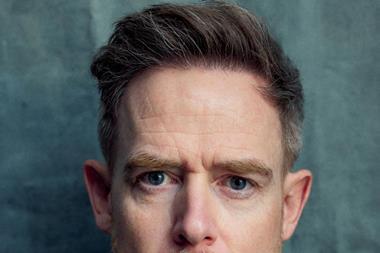
Tom Draper, UK managing director at Coalition, told Insurance Times that the deal was accelerating the firm’s plans, providing greater bandwidth and more opportunities to support customers.
However, although the new deal provides increased scale and capacity, Draper felt that the firm retains the benefits of the small-scale approach it was founded under.
He explained: “Most other insurers have started at the large risk end, then they’re trying to design products that work for the smaller scale.
“Our original focus was how can we support small and mid-market businesses, who were getting no support on cyber. So, we have a very scalable solution and one that is designed to be there supporting non technical people.
“There’s a lot of learning that we’ve developed over the last eight years that can be applied at scale to larger companies.”
Preventative measures
That range of expertise means that the firm can, according to Draper, write risks of £0 revenue to £1tn, an ability he says is unique in the market.
Read: Biba 2026 – Evolving AI capabilities present both cyber risks and opportunities
Read: The industry needs to stop treating cyber insurance as optional
Explore more cyber-related content here, or discover other news stories here
The firm’s proposition of active insurance – by its own description a “unified approach to help protect against cyber threats” by combining comprehensive insurance and security services – also remains front and centre of its growth strategy.
Indeed, he explained how the premise of preventative insurance is growing in importance with the continued rise of artificial intelligence (AI).
“The thing that throttles the bandwidth [of cyber attacks] is actually the ability for threat actors to do all the attacks – it’s a very human problem, there’s only a certain number of nasty people doing this type of thing,” he said.
“What we see now with agentic AI is that in the same way it helps any UK business run better and have more scale, it gives the threat actors faster scale too.”
Coalition’s own figures suggest that some 827 businesses – including Change Healthcare, the victim of a high profile cybersecurity breach in 2024 – had security concerns identified by Coalition, declined to purchase a policy with the MGA, then subsequently suffered a cyber attack.
These events, Coalition estimated, cost the businesses in the region of £232m. Ultimately however, Draper feels that the industry is moving in the right direction and cyber cover is gaining much needed traction.
“[The Biba Conference 2026] has been really good for awareness,” he finished.
“There’s more helpful noise this year. Unlike previous years, we are seeing more and more leadership teams and brokers saying, ‘here’s our strategy for supporting this’, or ‘can you help us with our strategy’.
“I think there’s a lot more people thinking this sounds very scary, we should probably be supporting it.”

He graduated in 2017 from the University of Manchester with a degree in Geology. He spent the first part of his career working in consulting and tech, spending time at Citibank as a data analyst, before working as an analytics engineer with clients in the retail, technology, manufacturing and financial services sectors.View full Profile


























No comments yet