

















The situation in the Middle East proves that appearances can be deceiving, with the complexity of today’s risks still clearly keeping the insurance industry on its toes – or the back foot
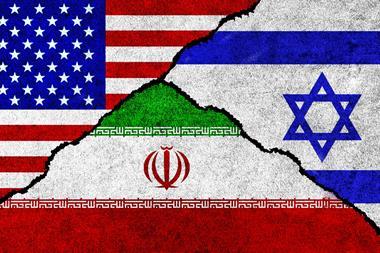
At the time of writing, in early March 2026, I am stranded in the United Arab Emirates’ Dubai while Iran is being bombed by the US and Israel – and we are catching the belligerent flak.
A family holiday quickly gone wrong, this experience has been a sobering reminder of how quickly situations can change and how risks have the ability to cascade and develop like author Ernest Hemingway’s famed quote on bankruptcy – with this occurring usually slowly and then suddenly, all at once.
Until recently, Dubai had such an evocative power that the mere mention of the city evoked a certain glitzy future – influencers lounging beside infinity pools, cranes permanently etched onto the skyline, superabundant supercars fostered in a tax-free oasis that seemed to have materialised out of the desert in a scant few years.
Yet, in just 10 days, Dubai now evokes all sorts of other feelings thanks to missile alerts, kamikaze drones, incomprehensible geopolitics and the uncomfortable realisation that despite everything, this gleaming metropolis still sits in a precarious neighbourhood.
Of course, the fundamental risks were always there. Arguably, like many things, we chose to overlook them.
Dubai lies among some of the world’s more combustible fault lines. It sits uncomfortably on the wrong side of choke points, perilously close to a truculent adversary only too keen to lash out when it is struck.
Obviously, we have all known these facts in abstract. But like many risks, it is easy to ignore when the sun is shining, the champagne is flowing, money is rolling in and the skyline grows taller by the week – all signs of continuing, but arguably misplaced, confidence.
And that is where the insurance industry could probably pay a bit more attention to the nature of inherent and thereafter cascading risks – certainly something I need to sharpen up on.
Historical lessons
Insurance, by its nature, considers and prices risk accordingly. Yet even our own industry is not immune to the same cognitive dissonance and blind spots as everyone else.
Read: Briefing – Shockwaves will be felt in London as missiles fly in the Persian Gulf
Read: Briefing – What does the Q1 2026 Middle East conflict mean for travel insurance?
Explore more risk management related content here, or discover more briefing articles here
We convince ourselves that the scale of investment, the sophistication of modern economies and the sheer weight of capital deployed into a place somehow mean that someone, somewhere must have everything under control – and, therefore, it will likely be alright.
History has a horrible habit of suggesting otherwise.
Think back to the Covid-19 pandemic in 2020. The UK general insurance (UKGI) industry suddenly found itself urgently revisiting business interruption (BI) wordings and arguing in court about what exactly had been intended when policy terms and conditions were written. Yet a pandemic was number one on the national risk register for decades.
Or consider the wildfire risks in parts of California’s Los Angeles. Wealthy, rational individuals happily built spectacular homes in areas where the natural environment periodically combusts.
The views were magnificent, some tax dollars were saved by axing some forestry control measures and, therefore, the risks were overlooked.
I bet overconfident, selling sunset types did not even consider the possibility of an event like January 2025’s wildfires, which have been linked to more than 400 deaths. Seemingly, no one did.
The point is not that people are foolish. It is simply that human beings are remarkably good at ignoring uncomfortable probabilities and, by extension, so are the industries they work in.
Understanding risk
Which brings us back to Dubai and to a broader point about how interconnected and fragile the modern world can be.
A regional conflict is not merely a war risk for the energy and marine markets, or for aviation insurers. It has cascading implications for infrastructure, supply chains and basic utilities that we rarely think about.
If ports are bombed, if undersea cables are cut, if desalination plants are targeted, entire cities could become uninhabitable with startling speed.
These are not theoretical scenarios dreamed up in a Lloyd’s of London box. They are entirely plausible consequences of geopolitical conflict.
Cyber risk offers another example.
We speak somewhat confidently about modelling cyber catastrophes, about artificial intelligence (AI), about quantum computing and about the potential scale of losses. But do we truly understand the second and third-order effects?
A coordinated attack on critical infrastructure, or something as seemingly mundane as the cutting of a few key undersea cables, could have financial consequences that ripple across continents.
The uncomfortable truth is that we live in a world where complexity multiplies risk. The more interconnected our systems become, the more astonishing the chain reactions can be when they start to unravel.
As a former owner of an insurance company, I grumbled about the regulators’ insistence on Solvency II’s dreaded “one-in-200-year” event calculations, which have a habit of forcing eye-watering capital allocations.
But sitting here in Dubai, watching how quickly an apparently stable situation can shift into the precarious, I find myself feeling rather grateful those calculations exist. I even find myself sympathising with the reinsurers that provide the backstops.
Those upper indemnity layers suddenly look like they might be troubled – and now represent value for money.
On a lighter note, the main benefit of my current situation is that – writing from a conflict zone – I find myself inadvertently becoming Insurance Times’ first war correspondent. Hopefully not a role I will need to reprise too often.
























No comments yet