























The situation around the Persian Gulf remains fluid, but insurers and their customers are likely in for a sustained period of supply chain shocks and increased costs
While April 2025’s Twelve Day War between Iran and Israel could be categorised as a limited exchange, the resurgence of the conflict that began on 28 February certainly seems more significant – with economic shockwaves already being felt across the world.

Intelligence-led bombing raids on the Islamic Republic of Iran have targeted state leadership, with significant numbers of the country’s military and political leaders – including head of state Ali Hosseini Khamenei – killed in strikes carried out by Israel and the US.
In response to the elimination of its leadership, Iran’s military has pressed the red button, activating what it calls its Mosaic Defence Doctrine. This strategy, as cited by Iranian foreign minister Abbas Araghchi, invests individual military units with strategic autonomy to attack targets at will, with dire consequences for the wider Middle East and global economy.
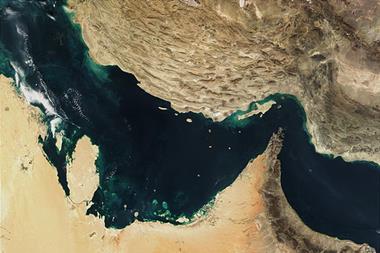
Iran lies across the Persian Gulf from the Arabian peninsula, placing globally important oil producing states such as Saudi Arabia, Kuwait and the United Arab Emirates (UAE) easily within rocket and drone range.
In a move seemingly designed to cause maximum carnage for these US allies and the global economy – thus putting pressure on the US and Israel to end the war – Iranian military units have attacked both civilian targets and vital economic infrastructure with explosive drones and missiles.
Israel and US military bases in the region have also been targeted, but attacks on sites such as Saudi Aramco’s Ras Tanura refinery and export facility and Qatar’s liquefied natural gas (LNG) production show that Iran’s decapitated military has decided to wage economic warfare in its desperation.
What is more, Iranian military activity across the Persian Gulf has effectively closed the Strait of Hormuz, a key transit route for worldwide shipping responsible for nearly 20% of global crude oil supply.
Insurance in the limelight
Outside of the direct insurance impacts, with leading marine cover providers like the London P&I club cancelling war cover for ships operating in the Persian Gulf, this economic warfare is already having ripple effects on the global economy – with the insurance sector downstream of wider shocks.
Read: What does the Q1 2026 Middle East conflict mean for travel insurance?
Read: Brokers warned as Middle East tensions push war risk premiums up 60% – GlobalData
Explore more London market-related content here, or discover other briefing articles here
In a strange turn of events, however, the strategic importance of the insurance sector has been thrown into the limelight by this conflict. As London market insurers pulled back from insuring assets in the gulf due to high costs, Donald Trump issued a statement on Truth Social.
The US president said: ”Effective immediately, I have ordered the United States Development Finance Corporation (US DFC) to provide, at a very reasonable price, political risk insurance and guarantees for the financial security of all maritime trade, especially energy, travelling through the gulf.”
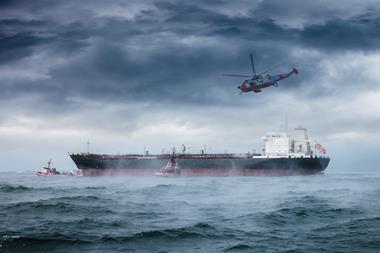
In support of this, Trump added that the US navy would begin escorting tankers to protect them from attack, if necessary. The US government certainly has deeper pockets than most insurers – and can offer the protection of the world’s premier naval force to protect its insured assets – but it remains to be seen whether there is appetite to take up this coverage.
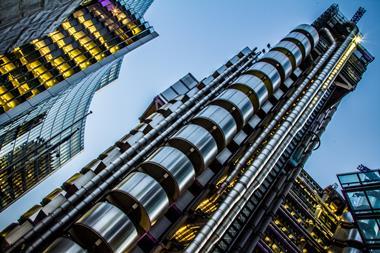
It is also unlikely, as some bombastic commentators on X – formerly Twitter – said, that “Lloyd’s will be displaced as the big dog in the world’s marine insurance game”. But I do admit that it’s fun to see the market’s importance debated so hotly on my timeline.
The London market has been a world leader for so long precisely because it responds to risks sensibly – that the market has decided to remove coverage simply reflects the real risks of the situation and, ideally, should serve as a powerful, useful message to shipping firms. There is, understandably, little commercial appetite for sailing ships through warzones where adversaries are directly threatening to sink them.
But, even despite this, the London market is responding to those customers.
Indeed, Marsh’s UK head of P&I Peter Huyler, explained: ”A majority of the International Group clubs have given notice of cancellation for their non-poolable war covers. In most cases, the clubs will be offering to reinstate war coverage at terms to be agreed, with mutual P&I cover offered by the clubs unaffected by the above.”
More widely, commentators expected that insurers could feel the pressure at reinsurance renewals, as global reinsurers experience “additional uncertainty and earnings volatility” from this conflict, particularly within specialty lines.
S&P Global, which published a report on the reinsurance impacts of the conflict on Monday 2 March, added that the global reinsurance sector had entered 2026 with excellent capitalisation, meaning that its view for the sector remained stable.
The real economic shocks to the UK insurance sector, at least in personal lines, are most likely to be felt in claims inflation – especially if limited resources push up the prices of goods and slow down global shipping.
It remains to be seen how long the conflict will drag on for, but gas prices in the UK have already seen significant rises, hitting three year highs on Tuesday before dipping slightly yesterday. Freight costs have also heightened, reflecting the increased time and fuel required to avoid the Persian gulf.
The situation remains fluid, but insurers and their customers are likely in for a sustained period of supply chain shocks and increased costs.

























No comments yet