

























’The broker also has to play a role as an advisor to the insurance buyer so that they understand the threats,’ says senior vice president
Brokers must evolve from intermediaries into advisors if they are to navigate the shift in cyber risk, according to panellists speaking on Insurance Times’ Top 50 Broker report webinar.

The discussion, held in association with Cowbell, suggested that cyber insurance was not a standalone product, but part of an ongoing advisory relationship between brokers, clients and insurers.
Cyber insurance has grown over the years, with the ABI revealing in November 2025 that insurers paid out £197m in cyber claims to UK businesses in 2024, a 230% year-on-year increase.
The association called for cyber insurance to “become a part of every organisation’s modern risk management strategy”, given the role it can play in both preventing and remedying cyber incidents.
Matthieu Chan Tsin, senior vice president and general manager for Cowbell’s resiliency services, said cyber insurance may be a somewhat new product, but its implications are stretching far beyond risk transfer.
He argued that brokers must guide clients through an increasingly complex threat landscape, as well as place cover.
“Cyber as an insurance product, of course, is fairly new, so brokers play a double role,” Chan Tsin said.
“The broker also has to play a role as an advisor to the insurance buyer so that they understand the threats.”
And the pace at which vulnerabilities are exploited reinforces the need for advisors who understand and can explain risk, the webinar heard.
“The average speed of compromising a known exploitation point in the code today is less than five minutes,” Chan Tsin said. “It was 11 minutes just a few years ago.”
A helping hand
Smaller businesses remain a concern. Hiscox research from October 2025 showed that 59% of UK SMEs suffered a cyber attack in the past year, many linked to artificial intelligence (AI) vulnerabilities.
Read: Cyber premiums fall 11% in 2025 despite rising incidents, Lockton report finds
Read: Top 50 Brokers 2025 digital edition | Insurance Times
Explore more cyber-related content here, or discover other interview stories here
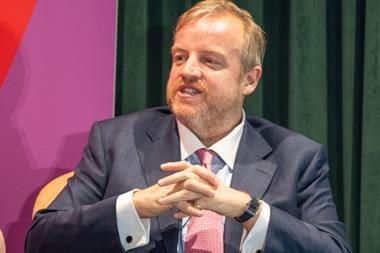
“It is incumbent upon our role as brokers, as advisors, to help clients understand the risk profile of their business,” Robert Organ, group chief executive at Jensten, said.
“It’s perfectly understandable for a client to think that it’s not going to affect them. Helping them understand the risks is fundamental.”
Meanwhile, the cyber threat not only affects clients, with brokers themselves targets, the webinar heard.
“Brokers, just like any other business, are exposed,” Chan Tsin said. “Holding that information [and] using technology makes brokers a target. Brokers in the west are going to be a target just because they are in the west.”
In June 2025, Google warned that the Scattered Spider hacking group was actively targeting insurance firms with social engineering led attacks.
In turn, AI has emerged as a priority. Traditional underwriting methods using spreadsheets and historical experience are, panellists said, no longer sufficient.
“Without AI or high level computing capabilities right now, assessing cyber risk properly in the old way, using Excel sheets and experience, is no longer feasible,” one expert said.






























No comments yet