






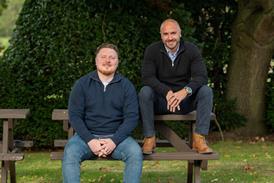


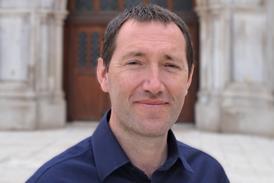














Insurance Times speaks to the trade body’s directors of claims and underwriting, who have spent more than two decades between them at the International Underwriting Association – and have no plans to leave.
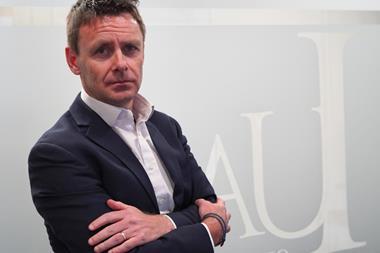
When Joe Shaw joined the International Underwriting Association in 2013, he “didn’t know a huge amount about the insurance market”.
But, twelve years later, he is the trade body’s first dedicated director of claims, steering the direction of an organisation that now counts 81 commercial members.

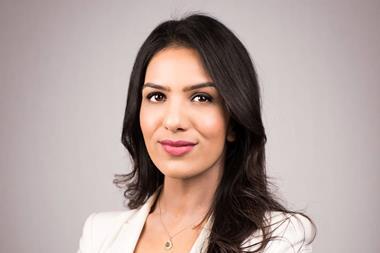
His colleague Tom Hughes, who became director of underwriting in June 2025, took an even more unconventional route. Hughes turned down a place at UCL to try his hand at work – and never looked back.
“I didn’t go to university,” Hughes says.
“I had an offer to study at UCL and I thought I’d defer it for a year and see what the world of work had to offer. Frankly, I enjoyed it so much that I stuck around and didn’t end up taking up the university offer.”
Hughes became the IUA’s first apprentice. Eleven years on, he is responsible for overseeing the trade association’s underwriting strategy.
Both men were promoted internally when new chief executive Chris Jones split his former role into two distinct positions – a move designed to sharpen the IUA’s focus at a time when the London market faces what Hughes describes as “one of the broadest emerging risk landscapes that we’ve encountered”.
A different vantage point
The IUA occupies an unusual position in the London market. It is neither insurer nor broker, but rather the connective tissue between them – running committees across business lines, publishing model clauses and conducting research that shapes industry practice.
Read: IUA calls for strong regulatory framework for automated aviation
Read: IUA appoints new chair as McDonald steps down
Explore more London market-related content here, or discover other news stories here
For Shaw and Hughes, this positioning offers something rare in an industry where professionals typically specialise in a single class of business.
“As an association, we do get that unique vantage point,” Shaw says. “We can speak to what is happening on a cross-class basis in a way that I think only chief underwriting officers or heads of claims are seeing.”
That perspective, Shaw believes, has given both men a holistic understanding of the market that would be difficult to acquire elsewhere.
“It’s a different type of job,” he explains. “I liked having that overarching view and being able to really get a holistic view of the market.”
For Hughes, the appeal is similar. “It’ll be the breadth of work that’s kept me here,” he says.
“We get to be right at the forefront of emerging risks, innovative solutions for clients who are looking at new distribution models, brand new products.”
Navigating risk in an uncertain world
The IUA’s emerging risks white paper, published in February 2025, identified AI alongside geopolitical unrest, climate extremes and cyber attacks as the defining challenges facing insurers.
When the IUA undertook a chief executive survey in December 2025, respondents ranked this emerging risk “absolutely at the top of the list” of concerns facing underwriters, Hughes notes. This point has been proven by recent news of intensified conflict within the Middle East.
“We are in a very testing environment,” Hughes says. “We have one of the broadest emerging risk landscapes that we’ve encountered.”
Cyber risk exemplifies this complexity. Shaw describes it as “potentially the biggest risk for most firms” – yet one that remains difficult to quantify and communicate.
“Most businesses are far more reliant on software,” Shaw explains. “Getting firms to try and value what is a non-physical risk to them. Advertising the potential perils and getting firms to understand that risk is a challenge.”
According to the Association of British Insurers, UK cyber insurance claims tripled in 2024 to £197m, with malware and ransomware now accounting for 51% of claims.
Yet market dynamics are pulling in the opposite direction. Analysis from Lockton published in February 2026 found that cyber premiums had fallen around 11% in 2025 even as severity increased – a disconnect that underlines the difficulties of pricing emerging risks.
Hughes sees an opportunity here for the industry to redefine its relationship with clients. “We’re starting to see a shift towards clients expecting insurers to be their strategic risk partner from the outset,” he says. “Cyber is the perfect area to talk about in this regard.”
Looking to 2030
When asked what success looks like by the end of the decade, Shaw and Hughes offer visions that balance institutional ambition with broader market health.
Shaw’s focus remains on elevating his discipline. “We want to see a notable increase in the visibility and influence of claims,” he says. “We want to see the IUA being at the forefront of those changes.”
Hughes’ aspirations encompass both the IUA’s standing and the London market’s competitive position. “A healthy, competitive, innovative London market,” he says. “Providing new solutions to the most complex risks.”
For the trade association itself, Hughes wants to build its reputation further. “I’d hope that we are seen as an authoritative voice around underwriting matters,” he says. “We have a strong presence both within London and on the international insurance stage.”
It is a fitting ambition for two professionals who arrived at the IUA by accident and discovered they had no reason to leave.
As Shaw puts it, reflecting on his own journey into the industry: “Once you’re in you kind of think, why would I want to work anywhere else?”































No comments yet