










Post-Covid-19, risk managers have had to ‘rethink risk frameworks’ to shift ‘prediction’ focus to a ‘preparation’ mindset, says expert panel
“Dynamic scenario planning” is a vital tool in a risk manager’s arsenal when it comes to “capturing opportunities” and identifying “blind spots” associated with today’s “interconnected” geopolitical landscape, according to thought leaders from S-RM and Moody’s Analytics.

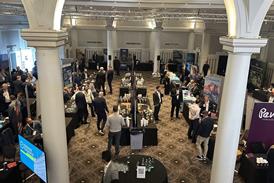
Speaking at The Risk Forum event – organised by trade association Airmic and hosted by Swiss Re – on 11 February 2026, Barbara Teixeira Araujo, a senior economist at credit ratings and research firm Moody’s Analytics, explained that because “the world is not going back to the way it was before”, it is imperative that risk management teams and businesses “rethink risk frameworks all together” to better reflect that geopolitical risks are “more probable and more interconnected than ever”.
She continued: “We have to rethink our partnerships, our alliances, the way we do business. We really have to look deep into the tail risks that in the past we didn’t pay much attention to. We really need to rethink the world [versus how] we knew it two years ago.”
Describing the current global geopolitical landscape as presenting “hard times” for risk managers, Teixeira Araujo advocated the use of “dynamic scenario planning” to help risk professionals “understand what happens if all those risks happen at the same time”.
She added that Moody’s Analytics is a “really big fan of risk scenarios”, with the economics team producing these on a monthly basis.
A ‘powerful tool’
Gala Riani, head of strategic intelligence at consultancy S-RM, agreed that risk scenarios are “one of the most powerful tools” that risk managers have at their disposal because they can “be utilised in so many different ways to lean into the crisis management principles of risk management”.
Read: Property payouts to cross £6bn for second year running
Read: SME firms are ‘the sector that needs the most advice’
Explore more risk management-related content here or discover other news stories here
She explained that risk management of yesteryear was heavily focused on making risk predictions, however – since the Covid-19 pandemic in 2020 – this emphasis has moved to instead home in on preparedness and strategically considering “the range of different outlooks and different futures that could happen”.
For her, therefore, the use of risk scenarios are really important to help risk managers identify unexpected “blind spots”.
Giving an example from the Middle East, she told delegates: “I don’t think a lot of people in October 2023 thought that the Houthis in Yemen [were] going to be one of the key players and stakeholders in [the country’s civil war, having] an enormous impact on the global economy. And they did. So, these are the types of things that [risk scenarios can help with].
“What are the blind spots, what are the moving parts? Who are the actors that could influence and what are their interests?”
Lack of investment
Riani added that a “challenge”, however, was that many organisations were still displaying a “reluctance in investing in these types of things because they take time”.
This is because the ultimate scenario assessments should be based on initial risk landscaping, she explained, which considers an organisation’s “concentration of risk”, scenario mapping and “then [making] sure you’re doing continuous monitoring and horizon scanning against trip wires relating to the external environment”, reviewing how these factors could connect and relate to a particular company.
“The thing that I think sometimes [is] missing is that investment from an executive level to ensure that intelligence teams, risk management teams, security team and so forth have the resources necessary to engage in these exercises.
”These are exercises that actually are very much also around capturing opportunities, not just the negative side of things. I just don’t think that you can get around it.”
A global review
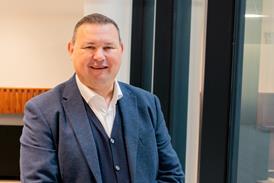
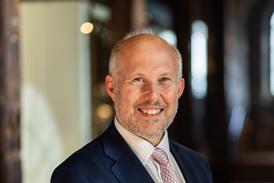
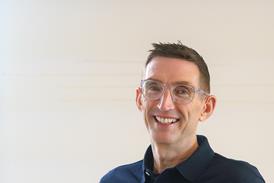
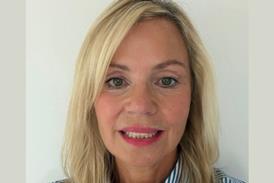
Riani and Teixeira Araujo were speaking as part of a panel discussion entitled ‘Beyond the headlines: What geopolitics and geoeconomics mean for you today’. The conversation was chaired by Airmic’s head of research, Hoe-Yeong Loke, and also featured Alex Frost, chief commercial officer at Airmic.
As part of the discussion, Frost presented a comprehensive analysis of the political situation in the US, particularly focusing on the trade dynamic between Canada and president Donald Trump’s America, stating that this relationship was a litmus test for how the US could develop its relationships with other countries moving forwards.
Riani, meanwhile, clearly explained the current dynamics in the Middle East – again with influence from the US – and Teixeira Araujo outlined the state of play in Europe. For her, Europe’s economy has been struggling for some time, with the region now entering a “new era” where economic policy is “weaponised”.















No comments yet