


















Employees shunning common ground with co-workers could hamper productivity – but businesses are well placed to re-establish trust as they are viewed more positively than governments, research finds
A global “retreat into insularity” has the potential to create a new employee related risk for business leaders, with possible mistrust between staff members impacting team productivity and “operational cohesion on the ground”.
This was the consensus reached by a panel of leading risk management experts speaking at trade association Airmic’s The Risk Forum conference on 11 February 2026, hosted by Swiss Re in London.
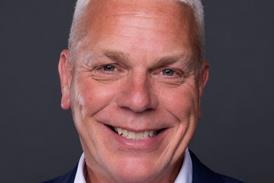
At the event, Aidan Holloway – senior director and UK head of financial services at global communications firm Edelman Smithfield – dissected his firm’s latest research publication, the 26th edition of the Edelman Trust Barometer, published in January 2026.
This annual, global report explores public trust – scored as a combination of competence and ethics – across business, government, media and non-governmental organisations (NGOs).
The 2026 report homed in on the idea of “insularity”, noting that individuals today were reluctant to trust anyone who presented as being different to themselves.
Holloway explained: “A couple of years ago, we saw unmitigated fears such as cost of living challenges, geopolitical tensions, [the] rise of misinformation [and] disinformation, [as well as] a global pandemic.
“[This] led to this belief that the country we’re in is divided and [that] these divisions are now entrenched. This drove a sense of anger and resentment towards a system that people feel is rigged against them, [creating] that [previous] grievance stage.
“And then what we’re looking at now is insularity – a reluctance to trust anybody who has a different opinion or is different from you.”
In terms of how this ideology can filter through into real world applications, Holloway noted that employees may decide to switch departments, for example, rather than work with a manager or colleagues that have different values to themselves. This could impact team productivity.
“One in three [employees] in the UK, they’d rather switch departments than report to a manager with different values,” Holloway continued.
“There’s a productivity impact. Over a quarter [of UK respondents said] that if [a] project team leader [has] different beliefs than me, I put less effort into helping them and succeeding as a team.”
Trust brokering
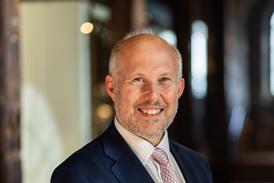
This finding raised a red flag for Matt Reeves, client relationship leader at Axa XL, who featured as a panellist in this session alongside Holloway.
Read: ‘Diffusing responsibilities for risk management’ supports real-time risk reactions
Read: Rising threats and political evacuations shaped 2025 crisis management landscape – Willis
Explore more risk management-related content here, or discover other news stories here
He told attendees: “[One thing] that jumped out from the report [for] me is around the implications of insularity on the workforce and the idea of people so reluctant, potentially, to work with each other and how that’s going to translate for all of us in terms of operational cohesion on the ground.
“It’s one of the conversations I’m going to have with our own human resources (HR) and workplace teams internally to see are we aware of this as a potential risk and a potential threat coming down the line? And if so, what are we going to do about it?”
For Holloway, the solution lies in “trust brokering” – a mechanism he described as “a set of practices and behaviours” that strive to facilitate trust “across different groups”.
He explained: “It’s not trying to change people or change people’s minds. It’s actually surfacing the commonalities, the things that we’ve got in common. Rather than trying to mend everything, it’s actually [about] trying to translate the needs of different parties within a forum.”
Edelman Smithfield’s findings further suggested that businesses are in a prime position to action trust brokering, with 2026’s scores showing that both high and low income individuals ranked business as a more trusted segment than government.
Holloway continued, addressing delegates: “As a trusted advisor, you’re in a position to do [trust brokering]. There is [an] onus on business to lead and to help build trust effectively because they’re the only group that people believe in, particularly if they’re domestic companies.”
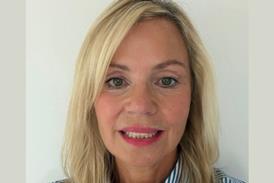
Gala Riani, head of strategic intelligence at S-RM – a further panellist unpicking Edelman’s report – added that the world of work has changed post-Covid-19 pandemic. For example, the oft quoted ‘Great Resignation’ movement, where employees voluntarily leave their firms to seek roles with better work-life balance, is still in full swing.
She told attendees that post-pandemic, work is no longer solely about finances, with individuals typically wanting to serve longer tenures – this feeds into Holloway’s point on insularity, she noted, because this closer working relationship between employer and employee contributes to business being more trusted than government because it is a bigger constant in people’s lives.
Reeves agreed: “People accept that businesses are here to make money and that’s ok, whereas political motivations are often seen with a lot more scepticism.
“One of the reasons why businesses are seen as being this potential lead [in terms of public trust] is because of the effective way that they manage risk, fundamentally. Risk management equals trust.
“[The report’s results present] tangible evidence of the value of risk management and how it’s playing through into becoming a more societal expectation.”

Since joining Insurance Times, Katie has successfully obtained a number of industry accolades. At trade body Biba's 2025 Journalist and Media Awards, for example, Katie was named the overall winner and received the Journalist of the Year trophy, alongside the Best Thought Leadership Award for her briefing article on reproductive health MGA Juniper and how insurance can be used to positively impact taboo subjects.View full Profile

























No comments yet