























Artificial intelligence has the potential to define what great broking of the future looks like, with powerful use cases bolstering productivity
Recent headlines have revived a familiar fear in insurance distribution – that technology will finally disintermediate the broker.
US insurance broker stocks fell sharply on Monday 9 February 2026 after online insurance shopping platform Insurify announced a new artificial intelligence (AI) driven tool using ChatGPT, triggering investor concern about potential disruption.
The sharp sell-off in listed broker stocks resulted in some large US brokers suffering their worst market price fall since 2008.

Yet a closer look suggests that, for commercial insurance brokers, AI is far more likely to be a profound opportunity than an existential risk – one that will widen the gap between winners and laggards.
Has UKGI overreacted to AI?
The immediate market reaction to AI enabled insurance apps reflects anxiety. Similar fears accompanied the arrival of price comparison websites, tech company Google’s ventures into insurance and successive waves of insurtech initiatives.
In each of these cases, personal lines distribution evolved and margins tightened – plus, brokers did not disappear. In commercial insurance, the structural barriers to disintermediation are even higher.
Multiple sources point to the same conclusion. Most AI driven insurance tools today encompass enhanced front end marketing and workflow engines rather than being full substitutes for advisory led broking.
Even where AI can collect information, surface quotes, or summarise coverage options, customers are still typically routed back into conventional underwriting, placement and advisory processes. This mirrors the experience of aggregators – transformational for efficiency and transparency, but not a replacement for complex, relationship-based advice.
Insurify’s new ChatGPT-based app is focused on providing relatively simple personal lines motor quotes – yet the insurance market reaction impacted most of the large US brokers, even where their footprint is heavily biased towards more complex, commercial risks.
The risk of broker displacement following AI implementation is impacted by complexity.
Small commercial risks and commoditised personal lines products sit closer to the danger zone. Middle market, upper middle market and enterprise commercial risks – where risk understanding, coverage of risk exposure, insurer engagement and negotiation, claims advocacy and ongoing risk advice matter – remain far more defensible.
The real AI opportunity
AI represents a step change in broker productivity. Commercial brokers operate in an environment dominated by unstructured data, document heavy workflows and significant administrative friction. Generative AI is uniquely suited to combat this reality.
Read: MGAs ‘not quite as digitally sophisticated as they portray’
Read: UK car insurance quotes available on ChatGPT as MoneySuperMarket launches new app
Explore more artificial intelligence related content here, or discover more news here
High impact use cases are emerging – more so within the insurer community, but increasingly by brokers too. For example:
- The analysis of loss and claims history.
- Faster drafting of tailored proposals, renewal packs and product coverage comparisons.
- Meeting preparation and real-time broker support.
- Enterprise knowledge management.
AI tools augment brokers rather than replace them. They free senior producers from low value administrative work and allow greater focus on understanding risk, structuring propositions and negotiating outcomes.
From an economic perspective, this is powerful.
Broking remains a people led, margin rich model constrained primarily by capacity and talent. AI relaxes that constraint by increasing the effective reach of each high quality advisor.
Commercial brokers can better benefit from AI
Commercial brokers start from a position of strength. They possess assets that are difficult for AI native entrants to replicate quickly, including deep client relationships built on trust, proprietary data across cycles and sectors, institutional knowledge of risk and claims and access to underwriting markets.
When combined with AI, these assets become an even stronger advantage.
Commercial clients do not simply buy insurance. They are outsourcing risk thinking. AI may inform decisions, but accountability still rests with a human advisor – particularly in regulated environments where errors carry financial, legal and reputational consequences.
AI usage is not, therefore, risk free. If AI influences coverage recommendations, brokers remain accountable. Strong governance, auditability and clear human in the loop controls are needed to successfully manage AI.
There is also the risk of advisory commoditisation if brokers deploy AI superficially. Generic outputs can erode perceived value rather than enhance it. AI must be trained on proprietary data that is embedded in broker workflows and aligned with a clear value proposition.
Read: ‘Mandate to dictate whether AI should be covered or not’ via insurance on the cards – Lockton
Read: New insurance marketplace app launched on ChatGPT
Explore more artificial intelligence related content here, or discover more news here
Over reliance on AI also carries cultural and professional risk. Judgement, creativity and ethical responsibility cannot be outsourced to models.
Threat or opportunity?
For commercial insurance brokers, AI is not an existential threat – it is a strategic inflection point. It will not eliminate the broker, but it will redefine what great broking looks like.
Productivity will rise, client expectations will increase and differentiation will depend on how effectively firms combine human expertise with AI enabled insight.
The firms that move early, invest deliberately and embed AI into the core of their operating model will deepen their competitive moat. Those that hesitate risk being outperformed not by machines, but by better equipped peers.
In that sense, AI does not kill the commercial insurance broker. It makes excellence more visible and mediocrity harder to hide.

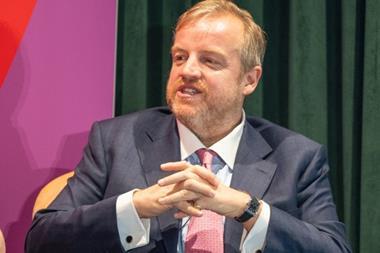
Before entering the insurance world, Edgeley spent 17 years in the military. Following that, he was chief operations officer and managing director at A-Plan, managing director at Capita and held various leadership roles at BGL Group prior to joining Clear Group.View full Profile



























No comments yet