

























A lack of interim payments and email only communication is having a direct impact on haulage firms’ cash flows, argue commercial brokers – with some demanding changes to ‘one size fits all’ claims processes
A number of commercial lines brokers representing clients in the road haulage sector have issued a call to action to revamp claims processes for this market as current “inefficiencies” are having a “devastating impact” on SME haulage companies – with some reportedly nearing bankruptcy or going out of business because of “the additional strain from the insurance side”.

The road haulage industry is responsible for transporting a wide range of goods – such as post or food – via the UK’s motorways and roads, typically using heavy goods vehicles (HGVs) that weigh a minimum of 3.5 tonnes or articulated vehicles, which have a trailer attached.
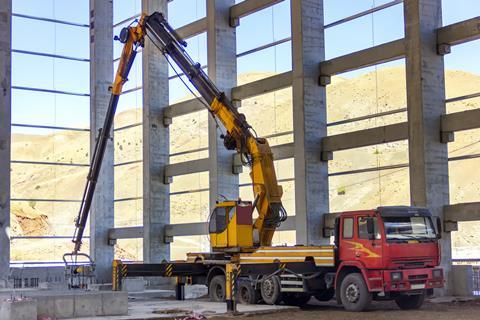
The sector also includes hiab vehicles – a specialist truck equipped with a hydraulic crane, named after Swedish firm Hydrauliska Industri AB, which invented this particular type of crane.
Statistics published on the Road Haulage Association (RHA) website – the trade body for HGVs, large goods vehicles and coach firms, with around 8,500 members – state that around 58,262 road freight enterprises in the UK contribute £13.5bn to the country’s economy each year. The RHA estimated that there are around 625,800 HGVs on the UK’s roads.
Sacha Clarke, head of claims at specialist broker Direct Corporate Risks and RHA Insurance Services – which provides cover for the RHA’s members – explained that the road haulage sector is “really key” because it keeps “our community running and we need to keep them on the road”.
However, for her, current claims “processes are inefficient” for this clientele following road traffic accidents, subsequently bumping claims costs up by 25% to 30%.
“Process is sometimes the priority over putting the client’s needs first and there needs to be a shift in that regard,” she said. “Some claims can have a devastating impact on smaller haulage clients.”
Claims ‘complacency’ leaving clients out of pocket
Donna Robertson, managing director at Scotland-based broker Squared Insurance Brokers, told Insurance Times that she has seen firsthand the ramifications of “very inefficient” claims processes for hauliers, which often leave these clients between a rock and a hard place.
For example, Robertson detailed a client case involving a hiab vehicle, where her client had dash cam footage of the incident, had submitted the required claims paperwork early and the third party insurer had already acknowledged liability.
However, she said the client had “shot themselves in the foot” by being proactive and sourcing their own hire hiab vehicle “because they didn’t want to affect business operations”. Now, the client is out of pocket to the tune of at least £30,000 for hire costs, with the third party insurer refusing to make an interim payment to help the company’s cash flow.
“I was shocked that the third party insurer [that] has admitted liability wouldn’t give any interim payments,” Robertson added. “That seems unusual to me. They’re not giving us interim payments to ease [the client’s] financial burden and cash flow.”
Robertson explained that hauliers with smaller fleets of around 10 to 20 HGVs might only have one specialist vehicle such as a hiab, meaning that having it off the road while being repaired can cost firms contracts. Equally, different vehicles have different licenses, again impacting the contracts hauliers can accept if one of their specialist vehicles is with a repairer.
She said: “A lot of insurers [are] saying ‘you’ve got one vehicle off. Have you not got capacity in the other ones?’ And that’s what we’re saying – unfortunately, the vehicles that have been hit, they’ve all got their unique parts. That means that other vehicles can’t compensate, so [clients are] having to turn down contracts because they don’t have the same capability.
“This client had [a] hiab. She had it authorised for entering into London.”
Clarke agreed: “You see a lot of haulage policies that don’t entitle [clients] to a hire vehicle. So yes, a client will go and hire a vehicle to continue trading. Time off the road is money. But that process can sometimes impact them quite severely and it will be questioned if it’s a non-fault claim.
“Sometimes with insurers, they go ‘this is a process, one size fits all’ and one size doesn’t fit all.”
Communication crunch
The frictional see-saw between hire costs and interim payments is exacerbated by poor insurer communications, Robertson added. In her experience, many insurers are refusing to accept phone calls, with all communication being done via email.
Read: Most brokers’ clients continue to see claims delays
Read: Over 80% of brokers worried about capacity levels in commercial motor
Explore more commercial lines related content here, or discover more news here
This lengthens claims lifecycles, she noted, and leads to escalating hire costs, “a loss ratio that looks far worse than it truly should” and “a rate increase to premiums”. Squared Insurance Brokers has claims in its portfolio that are now up to three years old, for example, with Robertson observing that even claims that have reliable dash cam footage taking around a year to conclude.
She continued: “All the information was submitted to our insurer two days after [the road traffic accident], but [the insurer] sat on it for five weeks before [it] went to the third party insurer to accept liability on a very clear cut case.
“It seems to be a bit of complacency in the claims sector. I feel like [there is] complacency [and acceptance that claims] take a long time and I don’t see why they should have to take so long. A lot [of] time is just spent chasing insurers [to do] what they’re meant to do in a timely manner.”
Clarke agreed with Robertson’s sentiment. She added: “We don’t see calls coming into us unless we’ve specifically asked for one, which really – in this day and age – you shouldn’t have to do. Email should be used for audit, not for the main thread of communication.”
Clarke added that standard, small incidents can have a three-month claim lifecycle. Claims that her team have been able to close within a month have been the result of “dedicating every minute [of] your day to getting that over the line”.
How insurers are structured internally is also affecting communications, Clarke continued – she explained that “insurers are segregating” with different teams handling distinct, individual components of a claim. This leads to brokers having to explain circumstances repeatedly. “It’s not an efficient process,” she said.
Terry Marshell, chief executive at Anthony Jones Insurance Brokers, added that “there is still hybrid working out there and it can be very difficult to actually speak to somebody at the end of the phone unless you’ve got dedicated contact”.
Real challenge or ‘urban myth’?
However, for Marshell, “delays and problems” in haulage claims processes are “an urban myth” and he is not seeing the same challenges as Robertson and Clarke. He noted that interim payments, for example, are not the norm for these types of claims and questioned “why it would come up in conversation”.
He explained: “It’s all about the relationship you’ve got [with insurers] and how fleet of foot you are.
“It’s the role of the broker to ensure that the claims process is as smooth as possible, especially around making sure the vehicle gets to where it needs to [in order] to be repaired, [that] the right estimates [are] provided, getting authorisations done as quick as possible, so things can commence.
“I don’t sense that there is a trend of things getting worse. Technology over the past couple of years has helped things out. You will get the odd experience where there’s a question mark over whether the vehicle is repairable, but if you’ve got a dedicated repairer – and most composite insurers [and] specialist insurers will have access to one of their designated repairers – and provided it stays within that community, things tend to move along fairly quickly.
“When you’re dealing with a claim, it has to be a tripartite relationship – so you’ve got the broker, the insurer and the client – and providing those three elements work together, then you can normally move the process on fairly quickly.”
Clarke conceded that interim payments on these claims are “pretty much non-existent, even if they’ve got an admission of liability from an at fault party”.
Despite taking an overall opposing view, Marshell did agree that “one of the big problems in the industry is credit hire” and that challenges exist when clients are looking to replace commercial vehicles.
He explained: “If [a client feels] very strongly that the third party’s at fault, they can go and get a truck and it might cost them X amount a day – but then you’ve got to justify it to a third party insurer and that’s not so easy.
“You have to be sensible about these things because the third party insurer will be turning over all sorts of stones to try and establish why [the client] decided to go and hire a truck for say £500 a day when [they] might have a spare truck in the yard. What’s the profit from that vehicle? How much would [the client] earn from that truck if it was on the road? [A client could] make £100 a day profit – [then] that’s all [they are] entitled to. [If they] want to go and spend £500 hiring a truck, that’s [their] problem.”
Mitigating measures
According to Robertson and Clarke, the main way that commercial lines brokers are striving to help haulage clients with road traffic accident claims is by bringing claims in-house to hopefully have more control over the overarching process to support clients’ cash flow.
Read: UK regulation driving commercial insurance away from London, Zurich tells Lords
Read: Commercial lines rates fall by 11.7% as market softening reasserts itself
Explore more commercial lines related content here, or discover more news here
Robertson, for example, has hired someone “to solely chase claims”.
She said: “From my business point of view, it’s not an income generating task – it is somebody that’s a pure cost [to] the business. We’ve got her continuously chasing claims, chasing insurers, moving things forward. We’ve relied on insurers to do things like get the admission of liability – I think we’re going to have to take that part of the process in-house as well.
“Something has to give at some point because the delays are horrendous. That’s all I can do, take more of the process [in-house]. Though it stretches us because I don’t want to put more financial pressure on this client, so I’m not charging a higher fee, but I am going to incur more costs during the year.”
Clarke, meanwhile, directly heads up an in-house claims team within a broking business. The prime lever in her team’s toolkit is a “really strict escalation process”.
She continued: “Not a lot of brokers have [an] experienced claims team, so they’re relying on the insurer’s claims team, which really you should be able to do. We’re in a very rich situation in that we have a claims team because that’s the kind of service we want to provide to manage the inefficiencies with insurers. That’s how we’ve been able to drive down our lifecycles [by 25%].
“This is very impacting [for the business because it] drives up [our] costs, but that’s what sets us apart. It’s extra cost for everybody, [especially] the client who should be put first in accordance with Consumer Duty.”
Clarke additionally fed back that some insurers use the same internal team to handle commercial haulage claims and personal car claims, but she feels that insurers should “separate personal and commercial – they’re not the same”. This is particularly pertinent when it comes to understanding how HGVs drive, such as roundabout road positions, because this can differ vastly compared to the average car, she noted.
Furthermore, she has seen situations where insurers “don’t have a commercial vehicle approved repairer list” – this means that eight tonne haulage vehicles are being sent to repairers where “they can’t even fit it in the workshop”.
“They don’t segregate the business for the needs of the individual policyholders they’ve got,” she argued. “I know everyone needs a process, but don’t be ruled by the process. Handlers need to be trained to look at the needs of the client.”
Lastly, Robertson recommended that haulage policies move to use Plain English, to improve transparency.
Who’s happy with the status quo?
Insurance Times approached five insurers for comment on these trends, contacting carriers that were referenced by UK general insurance (UKGI) brokers as working in this line of business handling hauliers’ cover.
However, the majority of this cohort declined to comment or did not respond at all to interview requests. The one insurer that did agree to speak to Insurance Times had to pull out of the interview due to a personal situation.
Insurance Times also reached out to the ABI to try and get an insurer perspective on this broker feedback, however the trade association declined to comment, signposting further brokers to speak to on the issue – rather than the requested carrier view.
Whichever side of the fence brokers sit when it comes to question marks over claims efficiency for haulage clients, the crux of the matter comes down to a long-established status quo in terms of dealing with this demographic’s claims.
Some brokers, like Marshell, see no problems in current processes. Meanwhile, Robertson and Clarke are advocates for change, suggesting that the way these claims have always been done no longer aligns with the FCA’s Consumer Duty mindset. In turn, broking businesses themselves are having to evolve to incorporate claims functions – adding an element that is “not income generating” onto their balance sheets.
Robertson issued a call to action on this subject.
She said: “The haulage sector is really tough right now. [There have been] national insurance increases, [high] fuel costs, there’s [a] lack of drivers in the industry. It’s just really tough and it’s like we’re doubling down to make it even harder.
“This is the fastest time that we’ve seen hauliers go out of business because they’re struggling, [with] additional strain from the insurance side.
“Could we as an insurance community come together and see how can we make this better? What solutions can we put forward, no matter how radical they are?
“Let’s get away from how things have always been done and [consider] what new ways [we can implement] to speed things along and deliver better results for clients. We seem to be very stuck in accepting how it is, whereas I would rather see if there’s a way that we can push forward. What solutions can we bring to make [claims] faster, cleaner, more efficient?”
Time for UKGI to get its thinking cap on.

Since joining Insurance Times, Katie has successfully obtained a number of industry accolades. At trade body Biba's 2025 Journalist and Media Awards, for example, Katie was named the overall winner and received the Journalist of the Year trophy, alongside the Best Thought Leadership Award for her briefing article on reproductive health MGA Juniper and how insurance can be used to positively impact taboo subjects.View full Profile































No comments yet