





















Direct Line Group contributed £174m to Aviva’s operating profit for 2025’s second half, supporting a 50% uptick in the insuer’s personal lines GWP for last year
Within its 2025 full-year financial results, published on 5 February 2026, insurer Aviva confirmed that “earnings are starting to come through” for Direct Line Group (DLG), which achieved £174m of operating profit for H2 2025 versus a target £150m – and despite 400 staff exiting the business so far post-acquisition.
Aviva announced in December 2024 that it had agreed to buy personal lines focused insurer DLG for £3.7bn, with the deal formally completing the following year in July 2025. The figures published last week by Aviva mark, therefore, its first full-year trading update that includes DLG’s input.
Prior to its purchase, DLG reported in its 2023 full-year financial results – published in March 2024 – that it obtained an operating loss of £189.5m in the 12 months to 31 December 2023.
In line with the appointment of former Aviva staffer Adam Winslow as DLG chief executive in March 2024, the insurer managed to improve its financial figures in subsequent months, confirming in May 2024 that it had secured double digit gross written premium (GWP) growth across its motor, home and commercial businesses during the first quarter of 2024.
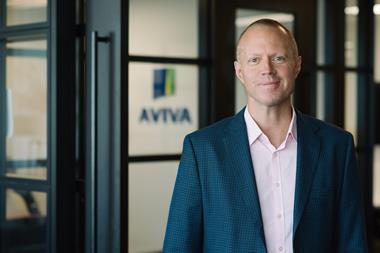
This upwards trajectory has continued within Aviva, noted Jason Storah, chief executive of UK and Ireland general insurance at the insurer.
In an exclusive conversation on 5 February 2026, Storah told Insurance Times that Aviva’s UK and Ireland general insurance premiums were up 27% year-on-year to £9,787m and that “a healthy amount” of this growth can be linked to “the Direct Line acquisition”.
This view was supported by Greg Neilson, group corporate development and investor relations director at Aviva. Speaking on DLG’s £174m operating profit for H2 2025, Neilson said: “What you can take from that number is actually the earnings are starting to come through. And that was slightly ahead of our expectations that we gave in November 2025. We gave a guidance it would be £150m, it came in £174m.”
Neilson confirmed that moving forward, Aviva would not be splitting out any of DLG’s distinct financial results within its year-end reporting, with the figures instead sitting as part of the insurer’s usual UK general insurance tally.
Personal lines powerhouse
Storah added that within Aviva’s personal lines book, GWP had improved by 50% year-on-year – with the firm’s acquisition of DLG contributing to this accelerated growth.
He explained: “Direct Line has given us a lot more scale. It’s given [Aviva] a lot more customers. It’s given us some new products and brands. It’s given us the ability to expand our brands [available] on the price comparison websites.
Read: Aviva broking talent programme welcomes largest ever cohort
Read: Aviva’s 2025 tech investment drives increased service speed – Rebecca Gambrell
Explore more insurer related stories here, or discover more news here
“It’s given us access to the Motability Operations partnership, which is fantastic. The pet business, we didn’t have. Direct Line for Business and Green Flag [too].
“Aviva is now the only personal lines insurer in the UK that has its own motor repair network because Direct Line had DLG Auto Repair Services, we had Solus. So, bringing those together gives us more scale. And the stat that we give is that when we use our repair network, we save £500 per repair in cost and we have better customer outcomes, satisfaction outcomes, etc.”
Upon purchasing DLG, Aviva gained its six million customers – 4.4 million of which were new customers for the insurer.
Storah added that Aviva is still exploring the various nuts and bolts that comprise DLG and analysing how best to combine and broaden its market offering. However, high on the agenda for 2026 is relaunching DLG’s pet insurance proposition, which will give Aviva a new string to its underwriting bow.
Another piece of the DLG puzzle that Storah has further up his to-do list is Direct Line for Business. “That’s new for Aviva – that small, direct to consumer commercial offering,” he said. “The team are working out what that means and which brands we use for which products.”
Storah continued: “The key thing about Direct Line is that we always knew there was improvement that we could make in that business and we have started to see the underlying performance of that business and those trading brands improved thanks to the work between the teams, thanks to the scale advantages that we have, things like claims transformation that we’d already done that we’re now doing in Direct Line. We’re starting to see those positives in the underlying performance.”
Integration update
Integrating DLG into the Aviva fold is going well, Storah commented. For example, the insurer has recently started the Transfer of Undertakings (Protection of Employment) Regulations process – colloquially known as Tupe – to bring “employees over” legally to sit under a new employer.
Not all DLG staff have made the leap to become Aviva employees, however.
Storah added that there has been around “400 departures from that business since we took it on” as the insurer has sought to take “cost out of the business” and recognise “some synergies and overlap” between Aviva and DLG.
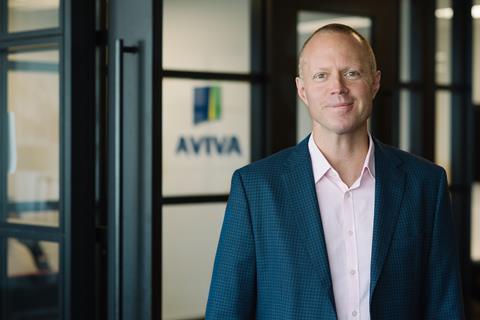
He continued: “We’ve worked through plans for things like platform IT integration, [but] we’re trading the brands in a very unified way. We’re sharing data across the business.
“A few years ago, Aviva started a claims transformation journey that took £100m out of our claims cost. We’ve started that claims transformation in the Direct Line side of the business as well.”
Today’s integration work is being led by a united personal lines leadership team, Storah confirmed, with DLG and Aviva senior staff quickly forging together in July 2025 into “a single leadership team” under UK personal lines chief executive Owen Morris – Aviva’s former personal lines managing director. This was a “day one” post-acquisition change, Storah added.
“While there’s still a lot of integration work happening, a lot of what’s happening is business as usual within the teams,” Storah continued. “So, the claims teams, the pricing and underwriting teams, the customer service teams, they’re all pretty unified.”
‘Plenty to do’
Storah told Insurance Times that Aviva has no further M&A plans in the short term, with the insurer instead directing its focus to organic growth opportunities, “embedding” its existing businesses and brands further, “as well as just sensibly managing through where we are in the market cycle at the moment”.
He cited Aviva’s £249m purchase of insurance platform Probitas in July 2024 as an example here.
He explained: “If I look at Probitas, we launched eight new lines [over the last year]. We’re using Probitas in the Lloyd’s market for high net worth business [and] there’s so much to go after.
“We don’t need to do anything more in the inorganic space to be able to capitalise on the opportunity. It’s more just leveraging the capabilities and the products that we launched.
“Since we can offer the Lloyd’s capability now in [the] high net worth space, we’ve written the largest high net worth account we’ve ever written earlier this year, so there’s plenty for us to go after there.
“It’s just looking at sensible growth opportunities with a longer-term view, not getting too hung up on where the market is and the challenging rates in some segments.
“So, plenty to do.”

Since joining Insurance Times, Katie has successfully obtained a number of industry accolades. At trade body Biba's 2025 Journalist and Media Awards, for example, Katie was named the overall winner and received the Journalist of the Year trophy, alongside the Best Thought Leadership Award for her briefing article on reproductive health MGA Juniper and how insurance can be used to positively impact taboo subjects.View full Profile



























No comments yet