

























’We think that will be a great customer experience because they’re going to be waiting for less and get their answer,’ says director
Aviva is using artificial intelligence to introduce a “virtual agent” that can handle claims journeys that start on the phone.

In its 2025 financial results report, published 5 March 2026, Aviva said it was “well positioned to win over the long-term capturing growth opportunities across our businesses and transforming with AI”.
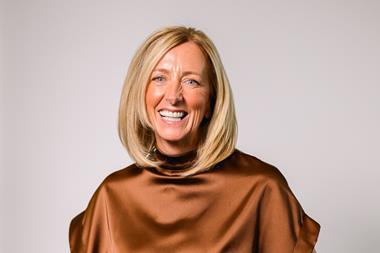
Speaking during a media call following the release of the results, Aviva chief executive Amanda Blanc highlighted how the firm was going to use AI to handle claims journeys over the phone.
She said: “We’re sort of using [AI] right across the business.
“We’ll talk today about a virtual agent, so agentic AI, where most of our claims start on the phone.
“The plan is, by the summer, we will have a virtual agent able to take a more simple claims call from beginning to end.
“We are really excited about that and we started seeing the benefits of that already.”
Better customer experience
According to research done by technology advisor Ensono, 56% of UK consumers prefer to speak to someone over the phone about their insurance.
Read: Aviva chief executive Blanc invited to meet chancellor at Treasury
Read: Aviva restructures GCS leadership team as Probitas chief executive exits business
Explore more artificial intelligence-related content here, or discover other news stories here
Carried out in 2023, the research surveyed 500 UK insurance customers, asking them to rank their preferred channels for interacting with their insurer.
Speaking to Insurance Times about the autonomous claims agent, Greg Neilson, group corporate development and investor relations director, said: “Telephone-based, so it’ll be voice enabled, which is the big difference.
“So, it’s not a chat bot at the bottom right hand corner [of a webpage] because most claims start with a telephone call.
“[This] will enable over 90% of simple claims to be processed and dealt with fully autonomously. We think that will be a great customer experience because they’re going to be waiting for less and get their answer, but also [bringing] more efficiency into the process.”
Jason Storah, chief executive of UK and Ireland general insurance at Aviva, added: “We’ve done so much in claims.
“Over the last 10 years, we’ve been using AI, machine learning and various large language models in our pricing, underwriting and fraud detection. [But the prioritisation of using AI for] claims triage has been a really, really big win for us in the past.”

His career began in 2019, when he joined a local north London newspaper after graduating from the University of Sheffield with a first-class honours degree in journalism.
He took up the position of deputy news editor at Insurance Times in March 2023, before being promoted to his current role in May 2024.View full Profile































No comments yet