























In his first interview since his promotion, a chief executive outlines his priorities to build out specialism and ’technical specialty services’ as the firm’s central growth lever in an increasingly cost-conscious market
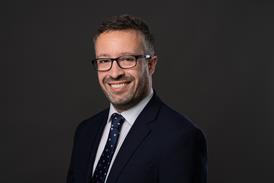
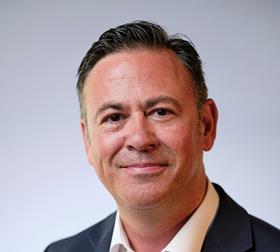
After 22 years serving as director at loss adjusting firm and claims management firm QuestGates, Greg Laker has stepped up to lead the company in a move that, for a man who helped build it, “doesn’t feel that much different”.
Unphased upon entering this leadership role, Laker has already begun moving the firm into its next stage of growth by prioritising its specialist claims offering – a vital move in the face of a soft market defined by “rising claims costs”.
Late last month (30 January 2026) it was announced that QuestGates had promoted Laker to the position of chief executive as part of a senior leadership shakeup.
A part of the furniture at the firm, Laker joined QuestGates at its launch in April 2003 under the guiding hand of former chief executive Chris Hall, who has passed on the mantle to take up the group executive chair position after 23 years .
The c-suite transition was accompanied by a major restructuring, through which the firm streamlined its 19 operating divisions down into four business units – loss adjusting, claims management, building consultancy and legal services.
In his first interview since his promotion, Laker tells Insurance Times that the restructuring was, in essence, “put in place ready for the future growth of the business”.
With increasing claims costs due to “inflation and post-Brexit pressures” pushing indemnity control up insurers’ agendas, Laker explains that building out a specialist claims service proposition will become a primary growth lever for QuestGates in the soft market.
He explains: “When you look at why we’ve been successful with clients – whether it’s retention or new business – it’s service.
“In terms of future growth, we’re looking at acquisitions or organic growth where we can add new services, including looking at technical specialty services that we can bring into the business and grow.
”One of our clients, that we won back end of last year, want us to deliver a service that we don’t currently provide. As a result, we are looking at how we can introduce a new service that is very specialist and people-led.”
Unnoticed potential
With 175 operatives across its service including 14 counter fraud lawyers, an intel team, property and motor fraud investigators and a surveillance team, QuestGates is a big player in the in the UK and Ireland counter fraud market.
Read: QuestGates hires new head of intelligence for counter fraud services
Read: Chris Hall – QuestGates’ new investment will accelerate growth plans
Explore more M&A-related content here or discover other interview stories here
However, Laker says he is “not sure the market is fully aware of its potential” capabilities.
With fraud identification increasingly becoming a prominent focus for insurers looking to control inflating costs, Laker notes that the firm’s recent restructuring also aims to bring its legal and counter fraud disciplines together under a “collective strategy”.
The two biggest growth parts of the business over the past few years, he says, have come from investing in building consultancy and legal services.
Indeed, last week (18 February 2026), QuestGates-owned QGLaw acquired specialist law firm Miles Fanning Legal, marking its first acquisition of 2026.
He says: “What we’re looking to do is effectively develop this one-stop-shop solution. We’ve got claims management and we’ve got loss adjusting, which can go into our engineering and surveying piece. We have then also got our legal services that can support that broad recovery.”
With capabilities from field investigation to legal services, Laker explains that building out these specialist services ensures greater attention will be drawn to QuestGates’ counter fraud capabilities.
Having overseen the technology side of the business for the past decade as operations director, Laker is eagle-eyed about investing in technology to automate claims management and support new specialisms.
Going into the first year of his appointment, Laker adds that this will take the form of a technological “evolution, rather than revolution”.
He says: “Our focus is very much about future investment in tech – how we can support our technical resource.
“In terms of counter fraud, it’s helpful for using artificial intelligence (AI) to mine the data and look for the information, but ultimately you still need that human involvement for analysing the data, interviewing the customer and using the data to support that.
”Rather than spending two or three days trawling through various databases looking at data, you can get that within an hour using AI. It’s just speeding up the process and it’s getting more quality data.”
‘Ticking time bomb’
Paramount to the firm’s core principles, alongside client service and investment in technology, Laker believes professional development is one of “the foundations for the future growth of the business”.
Part of this is addressing the “move away from loss adjusting firms expecting staff to deal with professional qualifications” by themselves.
He explains: “When I started I had to do [the] Associate of the Chartered Insurance Institute (ACII) and the Chartered Institute of Loss Adjusters (Cila) qualification, which was a bit of a given to be a loss-adjuster. But that’s diluted quite a lot in the last 10 to 15 years, so we’re moving back to expecting and supporting our staff to do professional qualifications.”
Laker acknowledged that this pillar of his strategy is also particularly influential when considering the long-standing “ticking time bomb” of the talent shortage in the loss adjusting sector.
For example, he notes that many engineers have moved out of the insurance and loss adjusting market in recent years, as insurers changed how subsidence claims are handled.
In the event of a surge in this type of claim, he explains, the shortage of engineers and subsidence specialists in the sector could be problematic.
To try and combat this, Laker notes that the firm bought Structural Survey in 2023, which changed its “operating model to move away from that outsource of subsidence claims to an [in-sourced] engineer-led solution”.
He says: “When there’s a subsidence surge, they deal with the subsidence engineering claims and, because it’s an engineering firm, we can attract engineers rather than a loss-adjuster to try to attract engineers into the business. That’s one way we’re trying to tackle the talent shortage.”
While Laker says that looking at “the product and solution” has a role to play in targeting specialist talent, in 2024 the firm also developed the Vector loss adjuster pathway.
“We put the adjusters of the future within [that team] and they learn the different disciplines across the business, from commercial property to liability,” he explains.
“They’re developed to become pathway adjusters, [and then] they’ll move out of that into commercial adjusting and we’ll look to identify the major loss adjusters of the future through our general pool of adjusters.”
Fast forward
Setting out a new phase of growth at QuestGates, Laker explains that the firm has not strayed far from the original objectives set when it was founded in 2003.
“It’s been an evolution,” he muses.
“The day one strategy of the business was always very much designed around flexibility, service and the culture of the business – and that was 23 years ago.
“If you wind forward, you could say we’ve been successful.”

She joined the title after completing a Master's degree in Journalism in 2025, having previously graduated with a degree in English Literature.View full Profile
































No comments yet