












Expert panellists concur that culture is an important backbone to effective risk management that is embedded across an organisation’s workforce
To ensure risk management “frameworks aren’t making things more difficult” for employees, corporate risk professionals should look to expand and diffuse “responsibilities for risk management” across internal expert teams, embedding risk considerations into day-to-day organisational processes to achieve real-time reactions and responses.

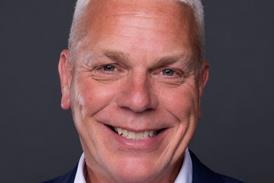
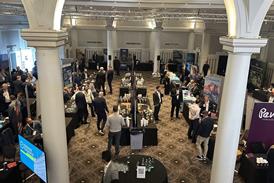
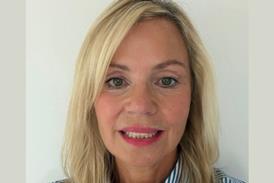
This is according to Sally Starr, group risk manager at independent inspection, analysis and consultancy business Alfred H Knight (AHK). She was speaking at Airmic’s The Risk Forum event on 11 February 2026, as part of a panel entitled ‘In a world where risks are increasingly complex and interdependent – How will the risk profession rise to the challenge’.
Addressing attendees, Starr explained that AHK had sought to navigate today’s multifaceted risk landscape by making sure to “lean really heavily on existing expertise within the business”, recognising that it is unrealistic for risk professionals to have high levels of know-how in every field their organisation may deal in.
She said: “As a team, we work with a lot of specialist functions – like laboratories, overseas offices – but as much as it can feel like we’re expected to, we can’t be experts in all of those areas.
“The key for us is making sure that we get the right people in the right room in the first place. Because we’re such a technical business, we have a lot of experts and these people love to talk about what they do, so we can count on them to know what their risks are and how best to manage them.”
With this in mind, “diffusing responsibilities for risk management” across these experts is an important strategic lever for Starr.
She continued: “Rather than expanding the size of the core team, we’re looking to expand responsibility for risk management, so that we’ve got people out there on the ground, identifying, responding to risks in real-time, in a way that works with their day-to-day, but in a way that feeds back into the risk team’s framework, so that we retain oversight.”
This integration with “relevant teams and processes across the business” ensures “that risk management becomes just part of what we do day-to-day, rather than a separate add on process”. Starr believes this thinking is “so relevant” considering the level of “interconnected risk” impacting businesses worldwide.
She added: “What always strikes me is how many of these risks could be avoided or at least lessened if people just talk to each other a bit more and work together more closely.
“As governance, risk management and compliance (GRC) professionals, we need to practice what we preach and make sure that our frameworks aren’t making things more difficult for our colleagues than they need to be.
“What [underlines AHK’s risk management approach is that it is] centred around people and behaviours. Our frameworks enable good risk management, but it’s the culture that determines whether or not [that] actually happens.”
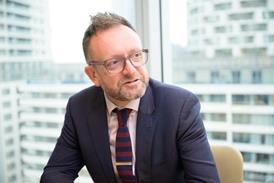
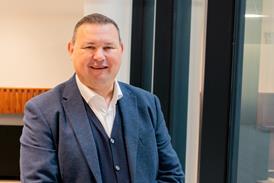
Starr’s fellow panellist Matthew McEwan, risk management director at Coca-Cola Europacific Partners, agreed that the “tsunami of information” being thrown at risk professionals today is “one of the biggest challenges” the sector faces in terms of maintaining relevancy.
For him, what was once an “insurance orientated” role has pivoted into a function that has got to learn about topics such as biodiversity, geopolitics and geoeconomic security.
“There’s a plethora of different subject matter expertise that you’ve got to be able to at least touch on, make sense of and take forward,” he explained. “How you prioritise that sea of information is really hard.”
Sector specific
But what are the primary risks that Coca-Cola Europacific Partners and AHK are experiencing right now?
Read: Property payouts to cross £6bn for second year running
Read: SME firms are ‘the sector that needs the most advice’
Explore more risk management-related content here or discover other news stories here
For McEwan – alongside the short and mid-term challenges around meeting financial metrics and stakeholder expectations – the “chronic risks” Coca-Cola faces include climate change and the availability of water.
He explained: “We can’t produce any Coca-Cola unless we have water. And there’s a lot of talk about water scarcity [and] drought. Sometimes in the UK, we can say ‘what drought?’ [We have] too much water. But that water that we’ve got at the moment, for example, is leading to soil degradation. So, what impact does that have to future crops?
“We’re seeing a lot of farmers, for example, in Somerset, saying that they’re 90% [or] 100% underwater. What’s that going to do to their crop yield this year? We might [end up being] dependent on sugar beet in the UK because [Coca-Cola is] the world’s biggest buyer of sugar. What does that do to our supply of stocks?”
McEwan additionally mentioned the risk arising from Coca-Cola Europacific Partners acquiring the Coca-Cola Company’s Philippines operation two years ago – this “completely transformed our whole portfolio of property”, McEwan said.
He continued: “It’s got typhoons, earthquakes, tsunamis, you name it. Every day there’s something going on there. That was the single hardest thing I had to do in 30 years of being a risk manager, trying to integrate that into our programmes.”
For Starr, however, AHK and its peers are “particularly vulnerable” to “operational fraud” because, generally speaking, these firms are analysing “very high value materials” in “remote or border territories, sometimes with some political instability”, while relying on “manual and paper-based processes”.
One of the most common types of operational fraud within the testing and inspection industry, which testing, inspection and certification (TIC) companies uncover or identify while carrying out their services, is “sample substitution”.
Starr explained: “[This] is where a sample is essentially swapped out, whether that’s in transit or in storage, so that the sample that’s analysed isn’t representative of the larger cargo.
“Now, the reason that companies like mine exist in the first place is to provide independent verification. We provide assurance to global supply chains, so we rely really heavily on our reputation and if we have a high profile fraud in one area of the business, it can have a really big implication for the entire group. In fact, the reason that the risk team was formed [in AHK] in the first place was in response to a large scale fraud in the industry.
“With the increase in metals prices over the last few years and the economic downturns that we’re seeing globally, we are seeing an increase again in fraud within the industry. Then, with the new failure to prevent fraud regulations that came in last year as an industry, we are now tightening our controls yet again.”
The failure to prevent fraud requirement for organisations was introduced via the Economic Crime and Corporate Transparency Act 2023, which was effective from September 2025. This holds firms criminally liable for fraud committed by employees or agents that benefits the company.
Although Starr acknowledged that “fraud isn’t something we can ever fully prevent as a business, where we have illegal actors involved”, she confirmed that AHK is attempting to not “fall too many steps behind” by implementing “policies, training” and “moving towards technology and away from manual processes”.
She added, however, that “by far our most effective control” against the risk of fraud “is our culture”.
‘Trajectory of the positive’
Although risk management teams may feel as if they are simply putting out fires or homing in on pessimistic and gloomy global challenges, McEwan emphasised that risk professionals should not “get too disheartened thinking about the negative nature of risk”.
Instead, he encouraged peers “to look at the trajectory of the positive”.
He explained: “Wherever there’s a risk, there’s a flip side. What can we do to [gain] competitive advantage through resilience? There’s competitive advantage you can [take] through scenario planning, looking at plausible alternatives in the future.
“If you have that mindset embedded in your company, that’s where you can get that long-term sustainability, resilience and competitive advantage.”

Since joining Insurance Times, Katie has successfully obtained a number of industry accolades. At trade body Biba's 2025 Journalist and Media Awards, for example, Katie was named the overall winner and received the Journalist of the Year trophy, alongside the Best Thought Leadership Award for her briefing article on reproductive health MGA Juniper and how insurance can be used to positively impact taboo subjects.View full Profile



















No comments yet