

















‘We’re seeing an increasing number of horse owners choosing to self-insure, however, this approach carries significant financial risk,’ says equestrian schemes underwriting specialist
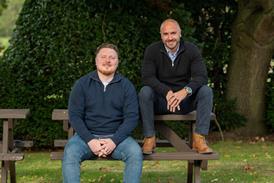
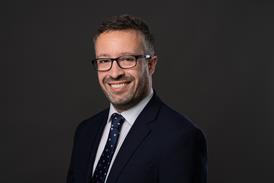
Like many insurance professionals in the equine market, specialist broker KBIS’ executive director Lawrence Gill grew up with horses. And even when his family encountered financial difficulties during his childhood that left them with “nothing”, they “still kept the horses”.
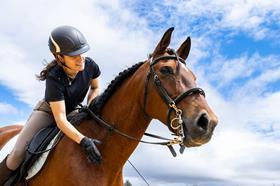
Gill’s experience reflects how far equestrians will go to keep their horses, which are seen as “part of the family”, but also reveals a risk – when budgets are squeezed, owners “will get rid of everything else”, including insurance.
As the cost of horse ownership continues to grow, with livery, feed, hay, vet costs and insurance premiums all rising, the equine insurance market is finding that horse owners are looking to reduce costs wherever possible.
This is a view shared by Anthony Burnett, equestrian schemes underwriting specialist at SEIB Insurance Brokers, who told Insurance Times that the “value of leisure horses have certainly increased over the years”.
And, as most leisure horse insurance policies are written on a fair market value basis, he explained that “the increase in values can result in higher premiums”.
He continued: “We’re seeing an increasing number of horse owners choosing to self-insure. However, this approach carries significant financial risk.
“If a major loss occurs early on, there may not have been enough time to save up a sufficient sum to cover the loss. Also, if multiple issues arise within a short period, owners could quickly find themselves without the funds needed to meet those expenses.”
This is even more of an issue given that, as may be expected, the cost of equine veterinary treatment is often expensive.
For example, SEIB horse insurance claims data from 2025 revealed that the average claim cost £1,385.49, with the most common claims coming from external accident or trauma, including violent accidents, kick, cuts, wounds and fractures when horses were either stabled or out in the field.
The data also showcased that the average cost of an external accident or trauma claim from a horse being ridden rose to £2,357.24.
As a potential result of the rise in self-insuring, Burnett noted that the broker has seen “a number of insurance providers exit the leisure horse insurance market over recent years”.
Sharing these concerns, Gill said that this is a “scary” shift, especially as 18 months ago his broker began to see “a lot of people moving away from insuring horses”.
He stressed that the current problem is larger than simply losing business, because clients poached by competitors can always be acquired again at the renewal date. But, if insurance firms “lose customers to self-insuring” that means the market has “lost them forever”.
Cover concerns
The impact of vet inflation on the rise of self-insurance has not gone unacknowledged by the equine market.
Read: Are pet insurance claims keeping pace with customer expectations?
Read: ManyPets initiative will support customers to ’take control’ over pet healthcare – Luisa Barile
Explore more claims-related content here, or discover other news stories here
Speaking to Insurance Times, Gill said that, following Covid-19, there was an “influx of horses into the market” owned by people who had not owned one before and with little equine knowledge.
While this was a positive shift for business in the short-term, he explained that it also “resulted in the cost of vet prices and claims going up”, which inevitably pushed up premiums.
David Ashby, chief underwriter and managing director of equine insurance business at Dual UK, also told Insurance Times that this challenge was heightened, since there are no published figures regarding veterinary fee increases for the equine market.
The Competition and Markets Authority’s (CMA) provisional decision on the market investigation into veterinary services for household pets, released 15 October 2025, recorded veterinary fee increases of 63% between 2016 and 2023 across the entire market.
The CMA research did not take horses and equine vets into account and actually “specifically excluded them”, he explained.
Taking the matter into his own hands, Ashby said that he monitored what his bloodstock – thoroughbred horse – and high-value sport horse insurance firm Dual-owned David Ashby Underwriting pays for life saving surgery from veterinary surgeons.
He explained that his small case study revealed that “it has crept up” by roughly 35% to 40% over a similar time period as the CMA household pet report.
As a result, he said that the “concern” the market will have across the leisure or riding horse and bloodstock markets is that standard levels of insurance cover may no longer be sufficient.
He continued: “Typically, in the riding horse market, and to a certain extent in the thoroughbred market, policy limits for all veterinary fees are between £5,000 to £10,000.
“And, a severe operation on a horse, whether it is a £2,500 hack or a £250,000 racehorse, if the horse has to be taken into a veterinary surgery and have general anaesthetic work the bill is likely to be between £8,000 and £10,000. It’s quite possible to be more than that.”
As a result, he added that while horse owners “do buy that cover”, they also “tend to economise by buying lower limits”.
As testament to veterinary inflation costs, The Insurance Emporium reported that digestive system conditions, such as gastric ulcers, incurred the highest average paid claim in 2022 at £949.
Meanwhile, SEIB data revealed that colic surgery, a treatment for digestive disorders, was the most expensive claim for horses insured by the broker in 2025 – and averaged at £4,407 per claim.
But, while this surge in costs is clear to see, buying lower limits poses a higher risk of exposure.
Burnett added: “In terms of insurance, there are options and these need to be evaluated against the customers’ demands and needs.
“While it’s tempting to cut corners on insurance, this comes with risks as it could reduce the maximum amount claimable, which in turn could leave a shortfall when insurance is designed to prevent a shortfall.”
A new ‘legacy’
For Gill, it is the “duty” of the broker to possess the equine knowledge to understand the “client needs” and coverage “gaps” to prevent such shortfalls.
With 49 employees in KBIS operating across the UK and Ireland, the broker “predominantly recruits people from the equestrian industry”.
He explained that this is particularly important because, while some policyholders are price driven, they often “don’t really know what they’re buying”.
Echoing this view, Juliet Redfern, divisional managing director for equine and livestock at Markel, told Insurance Times that the “legacy” of the market is to provide affordable quality products for customers that “suit their needs”.
She explained that meeting traditional equine broker education with data to “sharpen judgement and underwriting discipline” is integral to “keeping the market sustainable for the long term”.
This is especially the case, she added, when “the market is operating in a class where the biggest competitor is not competitors but self-insurance”.
“From our perspective it’s incredibly important that the winning position belongs to a blend of seasoned judgement and data-driven direction,” she continued.
“The way we’re moving is along the artificial intelligence (AI) data driven route and that does represent the biggest operational and underwriting change that I’ve seen in my whole career. Progress depends on how people use those tools to assist customers with better products and pricing because we have now got that ability to make better informed decisions.”
As part of future-proofing the market, Markel launched its partnership with insurance provider Halo AI in 2025.
Redfern believes that the partnership will build up a database with the “ultimate aim” of lowering prices and improving products as more information is validated over time.
Using data to develop products and improve underwriting alongside specialty equine expertise, Gill also felt that “there’s a lot of opportunity to give back to the industry”.
He resolved that the ”the insurance industry has a duty of care to help educate horse owners and equine business owners” to have the “confidence to make the right decisions” and “take the risks” in business which is why, afterall, it is so necessary – ”to protect” the consumer.

She joined the title after completing a Master's degree in Journalism in 2025, having previously graduated with a degree in English Literature.View full Profile
























No comments yet