





















’This year’s report highlights the growing need for collaboration among organisations, insurers, governments and communities,’ says chief executive
Global economic losses from natural disasters reached $260bn (£190bn) in 2025.

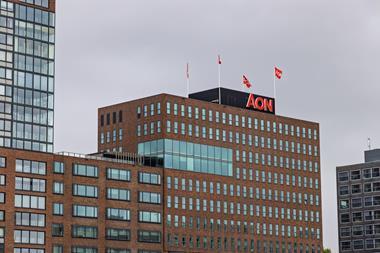
That was according to Aon’s Climate and Catastrophe Insight report, which said that while this was the lowest since 2015, insured losses remained elevated at $127bn (£93bn).
Severe convective storms resulted in $61bn (£44.6bn) in insured losses globally, while wildfires in California caused $58bn in economic losses and $41bn (£30bn) in insured losses.
“This year’s report highlights the growing need for collaboration among organisations, insurers, governments and communities,” said Greg Case, president and chief executive at Aon.
“The insurance industry is well-positioned to act as a strategic partner to help navigate these challenges, bringing record levels of capital to help clients respond to weather risks and build increasingly diverse alternative risk transfer solutions to strengthen resilience in the face of a changing climate.”
Increased resilience
The report revealed that alternative risk transfer is increasingly critical for providing the capital needed to help organisations mitigate risk and strengthen resilience.
Read: Frozen pipe warning after £560,000 damage claim at four-bed house
Read: Best strategic fit will win the day in broking M&A
Explore more insurer-related content here, or discover other news stories here
Parametric insurance products — which release funds automatically when specified trigger conditions are met — proved critical during events such as Hurricane Melissa, enabling rapid recovery for affected communities.
Jamaica, for instance, secured more than $650m (£475m) in liquidity within two months of landfall as a result of catastrophe bond protection with a parametric trigger.
The report also calls for increased resilience via smarter technology and stronger infrastructure, better forecasting, resilient building standards and modernised infrastructure to reduce long-term damage and assist communities and businesses to recover faster.
“Resilience today must be both physical and financial,” said Michal Lorinc, head of Aon’s catastrophe insight and author of the report.
“Organisations are urged to embed adaptation into their workforce and location strategies, invest in predictive analytics and encourage cross-functional approaches to weather risk. As climate events continue to affect people and property, the opportunity lies in using data to strengthen preparedness, rethink risk management strategies and build partnerships that support faster recovery and long-term resilience.”

His career began in 2019, when he joined a local north London newspaper after graduating from the University of Sheffield with a first-class honours degree in journalism.
He took up the position of deputy news editor at Insurance Times in March 2023, before being promoted to his current role in May 2024.View full Profile




























No comments yet