








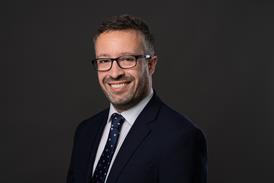










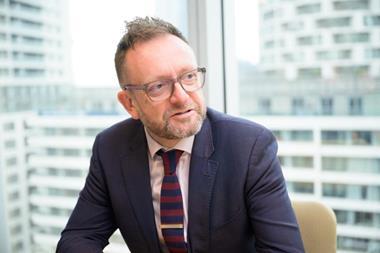
After more than three decades in the claims world, Marsh VP and senior claims consultant John Toms has handled everything from major fires and business interruption losses to theft and subsidence. But, for him, the job still comes down to being there when a client needs help
For John Toms, the appeal of working in insurance claims has never simply been about the size of the loss.
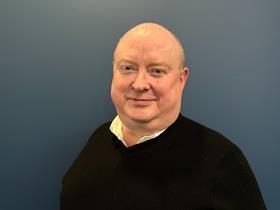
It is about what happens when something goes wrong – and whether the person on the other side of the insurance policy feels that somebody is actually there to help.
That philosophy has followed Toms through more than three decades in the insurance industry, from his early days as a trainee loss adjuster to his current role as vice president and senior claims consultant at Marsh.
He joined Marsh in January this year (2026), taking on responsibility for major losses in Scotland, where he is the most senior consultant on major loss sites.
The move, he says, was driven by the opportunity to use his experience to help customers through some of the most difficult moments they will face.
“From my point of view, accepting this role and moving to Marsh all because I can definitely see how I can help Marsh’s customer base receive a good claim service,” he says.
That motivation might sound straightforward, but Toms’ route to Marsh has been anything but.
From trainee to major loss
Toms began his career as a trainee loss adjuster, initially handling lower-value work and local authority claims before moving into higher-value losses.
Read more: FCA secures bankruptcy order against broker that faces embezzlement charges
Read more: ‘Where does the money flow’ – AI insurance recommendations face trust test
Explore more broker related content here, or discover more news here
In 1998, he was assigned his first major loss – a £2m fire in Glasgow. The scale of the claim was daunting, but it was also the moment that Toms says helped define the direction of his career.
He was walking along Glasgow’s Gordon Street when he saw flames coming from a building. His phone rang. A broker asked whether he knew about the fire.
“I’m actually standing here now looking at it,” Toms remembers replying.
It was the broker’s client. When the broker asked if he could take on the claim, Toms said yes.
What followed was a distinctly pre-digital exercise in claims handling. He called his office, arranged for a colleague to bring a camera and began documenting the damage.
He spent the day assessing the loss before returning early the following morning to continue work.
At the time, Toms was not thinking about where the experience might take his career.
“I was just thinking, ‘I hope this client thinks I’m doing the right thing,’” he says.
The broker’s reaction gave him the answer.
“This is exactly the kind of service we need,” he was told. “People are on it. People think about the claim.”
For Toms, that was the beginning of a career philosophy that remains central to his work today.
Thinking ahead
Over the years, Toms worked across specialist claims disciplines before becoming a regional manager covering northern England, Scotland and Ireland.
After briefly stepping away from the industry following a business sale, he returned during Covid, drawn by the scale and complexity of business interruption claims.
Since then, he has continued to seek out complexity, handling major losses including a £22m claim alongside a number of multimillion-pound theft and impact losses across the UK and internationally.
“I’ve probably been guilty of looking for more of a challenge each time,” he says.
But the experience has also reinforced his belief that the technical side of claims is only part of the job.
He argues that people dealing with major claims need confidence that someone is taking ownership of the process rather than being passed between different parts of a system.
“You phone me, I’ll answer my phone,” he says. “You email me, I’ll email you back.”
Putting the customer first
That approach is particularly important when dealing with catastrophic losses, where the insurance claim may be just one of a long list of problems facing a business owner.
Toms says his first question to a client is often not about the claim itself, but about what is causing them the most stress.
“My 10 things might be irrelevant,” he says. “They might have one thing that they mentioned that’s so critical to them.”
Sometimes, that concern is whether staff or customers will find out what has happened to their business. His role, therefore, is not simply to respond to problems as they arise, but to anticipate them.
“I’m thinking ahead for them,” he says. “They don’t need to think about it.”
That can mean arranging payments early, securing documentation or dealing with potential pinch points before they become bigger problems.
“If you’re not thinking proactively and projecting ahead to look at things, I don’t think you’re thinking the claim through for the client.”
It is also why Toms sees collaboration as central to the claims process. He talks repeatedly about a “claims community” – bringing together brokers, insurers, adjusters, engineers, surveyors and other specialists around a shared objective.
“Why can’t we say, ‘We’re both here to help you. We’re going to work as a team of people to help you out with this claim’?” he asks.
For a client at their lowest point, he says, there is reassurance in seeing a team of specialists arrive with a clear purpose.
A different idea of growth
That philosophy also shapes how Toms views Marsh’s growth.
Rather than focusing solely on growth metrics, he believes the priority should be continually improving the quality of service.
“It’s almost like almost constantly polishing the product to get it to be the best that it can be,” he explains.
For Toms, that means bringing together experienced claims professionals, forensic accountants, engineers and surveyors to give customers a more joined-up service.
His own career ambitions are similarly understated. After only nine months at Marsh, he is not looking beyond his current role just for the sake of progression.
“I’m not looking to radically advance what I’m doing at the moment,” he says.
“If someone said, ‘I’m doing this for the next 10 years,’ I’d be delighted with that, strangely enough. I’m just happy to do what I’m doing.”

With a background in local journalism, she has previously worked as a freelance reporter covering community stories and gaining valuable on the ground experience.View full Profile


























No comments yet