





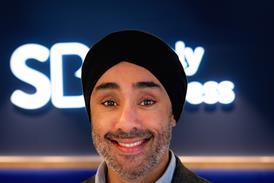


















Mike Edgeley, group chief executive at Clear Group, explores whether the market’s understanding of the value of AI is starting to bear fruit – and what that means for the importance of human connection in an increasingly tech-focused insurance sector
In my column earlier this year, I wrote about my concern at the financial market’s immediate and almost allergic response to the news, published in February 2026, that insurance shopping platform Insurify had launched a new AI-driven tool using ChatGPT.

The announcement triggered investor concern about potential disruption and disintermediation within insurance broking, with far reaching consequences for the valuations of the large strategic brokers listed on the New York stock exchange.
At the time, I debated what many of us in the industry were thinking – that AI is not an existential threat to broking, but a genuine opportunity for brokers to redefine what great broking looks like.
The more considered view, in my opinion, is that firms that invest deliberately in AI and embed it into the core of their operating models have the potential to deepen, rather than diminish, their competitive advantage.
So, what’s changed?
Firstly, from a personal perspective, my weekly diary now contains far more meetings with our AI, automation, technology, operations and change teams than it ever did before.
This simply reflects the increased focus on the potential benefits of moving the dial in these areas, ultimately, improving our proposition to clients and colleagues.
Secondly, the recently announced transaction, which saw the Baldwin Group in the US being acquired from public listing by Sequence and DFO – Michael Dell’s family office – has been a welcome antidote.
The transaction, at an ebitda multiple in the 20x range, is significantly above valuations at which some of the large strategic brokers were trading following the markets reaction to the AI announcement in February.
What makes this particularly interesting is who the acquirers are. Sequence is a technology-oriented investor group, which has an explicit interest in using AI and engineering capabilities to improve service businesses.
This arguably represents a very different interpretation of the AI thesis. That AI can increase the value of a broker platform, rather than threaten its existence.
AI as an enabler
So does this mean that brokers should now focus on AI above all the other traditional elements of their operating model? I don’t think so.
Read: The ‘Peace Dividend’ and its insurance equivalent
Read: Why brokers in 2026 should be judged on quality – not just price
Explore more broker-related content here, or discover other briefing articles here
I spend a lot of time with my colleagues looking at how we operate and, importantly, how we can continuously improve. Technology is clearly an important part of that conversation
When we first started thinking seriously about the potential impact of AI and automation, our mantra was simple – how do we support our colleagues so that they can do five days’ work in four?
Removing time consuming administration and using data and technology to improve and enrich workflows allow our colleagues to spend more time providing existing and new clients a better service.
But we shouldn’t lose sight of the human component.Improving collaboration, driving performance and better service are also fundamentally people issues.
People need to connect
At the beginning of September, our London based retail and central service teams moved to a single new floor of a newly renovated building on Monument Street, overlooking the Monument itself. It is a modern, sustainable working environment that, crucially, was designed to promote collaboration through its layout.
Our office attendance is now at its highest level for several years and there is a real buzz about the place. People are seeing colleagues that they might have otherwise just had a Teams call with and conversations are happening spontaneously.
This energy and spark is, for me, magic. I love that technology has made our lives easier. Remote working, and the tools that support it, have been far from a mistake. For us, they have been a significant enabler of the scale and margin we have today. But perhaps the lesson is that technology is an enabler and a central component of our people strategy, rather than a separate strategy altogether.
It is perhaps no different from the advice I often give when it comes to email. Sometimes picking up the phone and speaking to someone is far more effective than pinging emails back and forth. The interactions we have with colleagues and clients build trust, familiarity and culture. They turn people from names on a screen into relationships.
Closer together
Perhaps even more important when considering the operating models of the future is how client-facing and technology-focused employees interact.
Our previous office was split over two floors on Great Tower Street. In a more traditional layout, the first floor tended to consist of central services, including our finance, IT and data teams.
In our new office, however, those teams are on the same floor and embedded alongside colleagues dealing directly with our clients. The interaction between users of data and technology and those responsible for implementing it is now more immediate and integral to day-to-day life. The design has been intentional and reflects the need and importance of continuous and timely interaction.
Physical human interaction continues to generate something that technology cannot fully replicate. Fast-growing businesses like Clear need to be deliberate in this regard.
We are creating opportunities that don’t happen in structured meetings. Collaboration becomes easier. Relationships develop naturally. People start to understand more about what colleagues across the wider group actually do.
As we head into 2027, I will continue to champion the building of relationships across the business, because those relationships will help create the ideas and opportunities that will shape our next stage of growth.
And perhaps that is the irony. As technology becomes ever more important to our businesses, the human part becomes more important too.
Insurance has always been a people business. I don’t see AI, technology or new ways of working changing that.
If anything, they are simply becoming increasingly important tools in helping us get the best from our people.

Before entering the insurance world, Edgeley spent 17 years in the military. Following that, he was chief operations officer and managing director at A-Plan, managing director at Capita and held various leadership roles at BGL Group prior to joining Clear Group.View full Profile


























No comments yet