








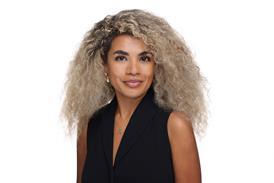















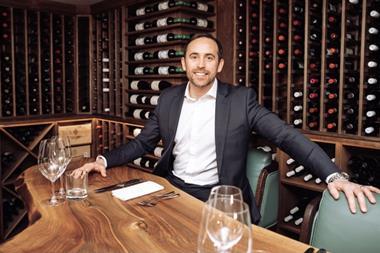
Daniel Lloyd-John, chief executive and founder at HNW broker Broadway Insurance Partners, discusses how the rise of AI may not fundamentally change insurance broking as much as expected
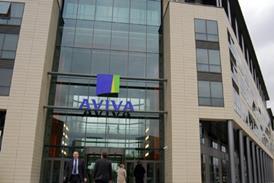
I entered the insurance industry in 2010, joining Aon Global in central London with no formal risk or insurance experience.

I was thrown in at the deep end and expected to build relationships with FTSE 100 organisations while learning a new industry, Aon’s value proposition and operating model and earning the confidence of colleagues who were far more experienced than I was.
It was both a challenge and an opportunity. I had to research prospective clients, understand the risks associated with their industries, identify traditional and emerging exposures and find a way to get in front of decision-makers before their next insurance renewal.
Looking back, the attributes I relied on most were not technical. They were curiosity, hard work, teamwork and empathy. I believe those characteristics remain fundamental to successful insurance broking today.
Technical knowledge, qualifications and experience can be developed through professional examinations and real-world learning. That creates confidence, clarity and momentum – and momentum matters. It takes effort to generate and must be protected if people are to keep developing.
Development is a shared responsibility. Individuals need to be curious, courageous, coachable and willing to learn quickly. Employers need to provide opportunity, structure, coaching and time.
Hard-working colleagues should be trusted with responsibility, encouraged to try something for the first time and given the chance to gain experience.
But that raises an important question for insurance professionals – are you getting the opportunities you need to develop and are you working for an organisation prepared to coach you?
The more things change…
So, have the characteristics of a successful insurance broker really changed over the last 15 years? I think we are about to find out.
Read: AI will not replace specialist brokers – but it will define the exceptional ones
Read: AI and commercial insurance broking – existential threat or strategic opportunity?
Explore other broker-related content here, or discover other briefings here
The introduction of artificial intelligence (AI) represents an important crossroads for our industry, but I do not believe it will replace the craft of insurance broking. Broking is fundamentally a relationship business. Customers with complex risks still need people who understand their circumstances, navigate difficult decisions, negotiate with markets and apply experienced human judgement.
The customer journey is rarely linear. It requires judgement, context, empathy and trust – qualities that are not easily commoditised.
What will change is how brokers access information, analyse risk, prepare advice, communicate with clients and execute the processes surrounding those relationships.
AI should therefore be viewed as a culture, not simply a technology. The organisations that benefit most will not necessarily be those that buy the most tools, but those prepared to redesign their operating models around what AI makes possible.
That requires change from both the top down and the bottom up.
At leadership level, we need to ask ’if we were designing an insurance broker from scratch today, with AI available to us, would we build it in the same way?’
For individuals, the challenge is equally significant. The gap between those that embrace AI-enabled operating models and those that do not could widen rapidly as greater leverage drives higher productivity.
This is both a threat and an opportunity. AI can give emerging talent faster access to risk insight and intelligence, shortening learning curves that traditionally took years. A young broker should be able to understand an industry, identify its risks and access relevant information far faster than was possible when I started.
Talent is vital
That AI can speed up learning and working processes does not mean we need less talent, however. It means we may need different talent.
I expect broking organisations to place increasing value on all-rounders – relationship-led, commercially minded, empathetic producers who are curious, adaptable and comfortable using technology.
Deep technical expertise will remain important, but the ability to combine knowledge with judgement, relationships and technology will become even more valuable.
There are also three things at the heart of insurance broking that I do not believe AI will commoditise – proprietary data, the marketplace and community.
Broking organisations possess vast information about clients, risks, claims, markets and outcomes. They operate in a marketplace built on relationships with insurers and capital providers, while benefiting from communities of clients, colleagues and professional connections.
The opportunity is to move from static to dynamic insight, using AI to unlock greater value across all three.
But technology alone will not deliver that transformation. Talent strategies must evolve alongside operating models, including recruitment, training, coaching, career development and leadership.
We must also avoid removing the experiences through which future brokers develop judgement. If AI undertakes more groundwork, organisations will need to create opportunities for people to observe, experience and understand complex client and market situations.
The broker is not disappearing. Quite the opposite.
If we get this right, AI should make brokers better informed, more responsive and more productive, while allowing them to spend more time doing what customers genuinely value – building relationships, understanding complexity, solving problems and exercising judgement.
The next 15 years of insurance broking could look very different from the last 15. The fundamental attributes of a successful broker may not have changed as much as the tools available to them.
Our challenge is to ensure our people, culture and operating models evolve together.
Because AI may change how we broker insurance. But it does not change why clients need a broker.





















No comments yet