























As artificial intelligence takes on routine tasks and experienced claims professionals leave the market, industry leaders say the challenge is no longer teaching technical knowledge but ensuring the next generation develops the judgement and expertise that underpin specialist claims handling
The London market faces a growing challenge – how to preserve the specialist claims expertise that underpins its reputation as artificial intelligence (AI) reshapes workflows and experienced professionals approach retirement.
While AI promises to reduce administrative workloads and free claims handlers to focus on more complex work, industry leaders warn it could also remove some of the traditional routes through which expertise has been built.
Insurance Times was the only press outlet at last week’s Focus on the Future: Building Skills conference, an event designed for claims professionals with one to five years’ experience.
Hosted jointly by the London and International Insurance Brokers Association (Liiba), the International Underwriting Association (IUA) and the Lloyd’s Market Association (LMA), the conference brought together early-career talent from across the market for skills workshops, industry insight and networking opportunities.
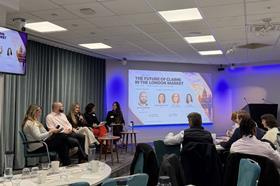
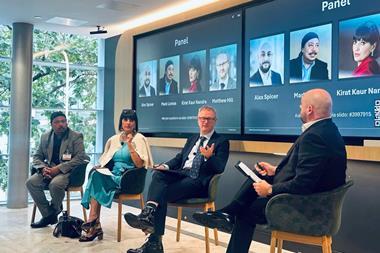
Speaking during a panel session titled The Future of Claims in the London market, senior claims leaders warned that expertise could become increasingly difficult to replace as experienced practitioners retire.
The panel featured Steven Crabtree, claims manager at QBE Europe, Shanaz Ferreira-Cooper, divisional director of claims operations at Howden, Kirsty Coates, head of claims at Carbon Underwriting, and Amy Eaves, deputy group head of claims at The Fidelis Partnership.
Janine Powell, claims director at the LMA, told Insurance Times that the market was already feeling the impact of experienced professionals leaving the industry.
Powell said: “We know we need to do something to backfill that gap pretty quickly because people are retiring faster than we can give up and coming professionals the experience they need to become those experts.”
The concern, she added, is not simply whether younger professionals understand insurance principles. The bigger challenge is ensuring they develop the judgement needed to interpret policy wordings, negotiate outcomes and manage complex customer interactions.
For a market that prides itself on specialist expertise, those capabilities remain critical.
Learning the craft
AI is increasingly being deployed to process documents, manage data and gather information, raising questions about how future claims professionals will learn their trade.
Read: Opinion: Milburn’s report is a spotlight – but UKGI must brainstorm the answers
Read: Brown and Brown UK launches retail graduate programme
Explore more talent-related content here, or discover other news analysis stories here
Coates believes automation should remove lower-value work and allow handlers to focus on more complex claims.
“We need to look for ways to eradicate that so we can spend more time handling the complex claims, which is what we’re here for,” she said.
However, she warned against focusing solely on efficiency gains.
Coates said: “I think we just need to be just be conscious that we’re not creating a career path for [talent] of the future, that in 10 years’ time it’s not created a knowledge gap within the market.”
Others argued that administrative tasks were never an effective way to develop expertise. Crabtree said he spent much of his early career carrying out low-value work that offered limited learning opportunities, for example.
“I would say don’t learn like I did. I spent probably nearly five years doing admin, very low value. There was nothing in there to learn at all,” he said.
Instead, he believes expertise is developed by observing experienced practitioners, understanding how they approach problems and watching them navigate difficult conversations.
Crabtree explained: “The only way to learn is by osmosis.”
His comments highlight a challenge for employers. If AI removes routine work, organisations will need to become far more deliberate about creating opportunities for younger professionals to develop judgement and decision-making skills.
Beyond theory
Powell argued that one of the industry’s biggest challenges was recognising that technical knowledge alone is insufficient.
She said: “Because it isn’t just good enough to know your topic, you have to know how to apply your topic.”
That means exposing developing professionals to real-world claims scenarios, customer interactions and policy interpretation.
Powell said: “Theory is fine. Creating the opportunity for them to practice, to put that knowledge into practice, to understand how they convert that knowledge into engaging with the customer, to working with the broker, to interpreting that policy wording, to having that difficult conversation about negotiating a claim. It doesn’t come overnight.”
She added that younger professionals increasingly favour practical, collaborative learning over traditional classroom-based training.
“The next generation tell us all the time, make it fun, make it interactive. Don’t just sit us down and lecture us. Make us work together. Make it realistic,” she said.
Jackie Girow, executive director at LIIBA, said AI introduces another challenge – ensuring less experienced professionals have the expertise needed to assess whether AI-generated outputs are accurate.
Girow said: “I think there’s a big role that we’ve got to do in this technical knowledge transfer.”
As AI handles simpler tasks, she argued, claims professionals will increasingly be left managing the most complex cases, making expertise and judgement even more important.
Girow added: “We can’t make assumptions about things. We have to do that research and incorporate that into how business changes.”
Failing to address that challenge now, she warned, risks storing up bigger problems for the future.
Building the pipeline
The three market associations have spent several years working together to improve awareness of careers in claims and address retention challenges.
Powell said the initiative began after emerging concern about both attracting new talent and keeping professionals within the London market.
“We knew we needed to address that,” she added.
One programme developed as part of that effort is a partnership with Forage, which provides online job simulations designed to give prospective candidates an insight into claims careers. Originally focused on claims roles, the initiative has expanded into underwriting, risk and operations and has attracted more than 5,000 enrolments.
Creating networking opportunities has also become a priority.
Ela Metalia, underwriting and claims executive and IUA Futures lead, said claims professionals have historically had fewer opportunities than brokers and underwriters to build industry connections.
Metalia added: “It’s really nice to just have an event that’s purely focused on claims and giving them an accessible opportunity to actually network with people in the market and also in a similar field to them.”
The associations are also exploring how experienced practitioners can transfer knowledge before they leave the sector. According to Metalia, there is strong interest among senior professionals in supporting the next generation through activities such as policy wording masterclasses and specialist workshops.
However, Girow cautioned that subject matter expertise alone does not automatically translate into effective mentoring.
She said: “What is the difference between mentorship and sponsorship?”
She added the associations are exploring how they can support professionals approaching retirement, including helping experienced practitioners develop the skills needed to train and mentor others, ensuring valuable expertise is not lost as senior talent leaves the market.
More than a cost centre
The pressure to develop claims expertise is increasing as the role of claims evolves.
Ferreira-Cooper argued that technology is enabling claims teams to move beyond administration and play a more strategic role within insurance businesses.
“Claims is really rich in all the data we have, the documents and systems. But with AI and all the tools that we have, we can actually harness that data now and actually collect all these data and insights,” she said.
Those insights can help identify emerging loss trends, improve risk management and inform future decision-making.
As a result, she believes perceptions of claims are changing.
Ferreira-Cooper added: “I think we’ll become less of a cost centre and basically more of a source of insight.”
Powell said research due to be published by the LMA next year explores how organisations value claims and how they can unlock more of its strategic potential, from product development and pricing to customer retention and broader business strategy.
Yet despite advances in technology, panellists agreed that human judgement will remain at the heart of specialist claims handling.
As Girow put it: “It’s being able to pick out from a set of data what’s important to whom.”
As experienced claims professionals retire and AI takes on a growing share of routine work, the market’s challenge is becoming increasingly clear.
The next generation will need more than technical knowledge. They will need the judgement, relationships and practical expertise that have long defined specialist claims handling, and the industry must find new ways to help them develop it before that experience is lost.

With a background in local journalism, she has previously worked as a freelance reporter covering community stories and gaining valuable on the ground experience.View full Profile


























No comments yet