























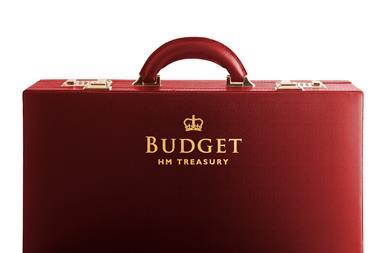
Ahead of the Autumn Budget on 28 October, UK general insurance firms reveal what government priorities would be at the top of their agenda
James Dowling, managing partner, Negotient
Great chancellors set the tone for the whole government.

When I first joined the treasury in 2006, John Healey was my minister. I saw a lot of him and liked him very much – but he is not one of life’s showmen.
I can’t imagine Healey ever offering the political theatre of a Brown or Osborne Budget.
The current occupant of number 10 probably doesn’t want to share the limelight like Cameron or Blair did.
But if Healey could emulate the style of Alastair Darling – a sober voice in difficult times – we could do far worse.
First, fiscal credibility. Andy Haldane recently warned that the government resembles “a traditional tax-and-spend socialist government with better TikTok videos”.
Countering that perception is the precondition for everything else – if the markets take flight, Burnham could go the way of Truss.
Next, I have been mystified by the new prime minister’s focus on cost of living but not its cause.
Squeezed incomes are a legacy of long-term near-flat growth.
Recent GDP numbers are more promising, but the government urgently needs to spell out a convincing theory of growth and then back it with conviction.
That means partnership with the private sector.
With this government, devolution is priced in. Yet growth in every postcode needs serious offers of and opportunities for private investment.
If mayors get extra money and powers, they need to be required to create the conditions and certainty that encourages private investment.
Here is the opening for insurers and other investors – offer a deal worth signing and Healey won’t need the theatre.
Malcolm Cooke, managing director, C&C Insurance Brokers

My biggest ask of the chancellor is simple – give businesses the confidence and breathing space to grow.
Entrepreneurs create jobs, invest in people and generate substantial tax revenues, but there comes a point when increasing the burden on employers becomes counterproductive.
The rise in employers’ national insurance contributions is a prime example.
At C&C, it’s added more than £200,000 to our annual costs. That’s £200,000 which could otherwise have been invested in recruiting people, developing talent or expanding the business.
Multiply that across thousands of UK employers and the impact on growth and job creation is considerable. I’d welcome a serious rethink.
I’m pleased that the government has recently provided some reassurance on corporation tax.
Stability and predictability are hugely important to entrepreneurs, particularly those like us who are making long-term investment decisions.
From an insurance industry perspective, I’d strongly urge the chancellor to leave insurance premium tax (IPT) alone. Insurance is about protecting businesses, livelihoods and families.
Making that protection more expensive risks discouraging people from taking out the cover they need, at a time when resilience has never been more important.
The recent PHP issue is a perfect reminder of just how vulnerable businesses can be.
Finally, I’d welcome a more sensible approach to inheritance tax, particularly where family businesses are concerned.
People who have spent their working lives building successful businesses should be encouraged to pass them on, rather than face additional financial obstacles.
Ultimately, a thriving business community benefits everyone. Let us get on with creating jobs, investing and growing and the treasury will inevitably benefit too.
Graeme Trudgill, chief executive, Biba
What I heard from chancellor of the exchequer John Healey at the Labour party conference recently was recognition of the changes that his predecessors made to national insurance, minimum wage, regulation and legislation and how they have been challenging for businesses and families.

“Therefore,” he said, “this would be a breathing space budget, giving respite.”
Taking that on board, I view this as a budget that should support stability in our sector, but I am always a glass-half-full person.
So ahead of the budget, Biba’s primary ask of government is clear – do not increase IPT and provide certainty by committing to maintain current IPT rates for the remainder of this parliament.
Higher IPT would increase the cost of essential insurance products for households and businesses at a time when affordability, economic growth and financial resilience remain key priorities.
IPT receipts are already at record levels, so maintaining the current rate would continue to generate significant revenue for the treasury without placing additional pressure on consumers and firms.
It is also important that government avoid creating any upward pressure on the overarching rate of inflation.
We would also like government to use the budget to promote greater economic resilience.
One practical measure would be a time-limited IPT exemption for SME cyber insurance policies, helping more small businesses access protection against one of the fastest-growing risks facing the UK economy.
This should be accompanied by wider action to improve awareness of cyber risk and access to specialist advice.
Finally, we want to see continued progress on delivering more proportionate regulation and investment in skills, making it easier for firms to grow, innovate and attract the next generation of insurance professionals.
John Miller, director, Miller and Partner
Miller and Partner, like every broker in the country, has got a short list of wants from John Healey.

First, leave IPT alone or – even better – cut it down.
IPT sits at 12% and his majesty’s government collects billions from it every year already.
When you’re finding it hard enough to stay afloat in business and your premium is already higher than your neighbour’s, adding 12% on top punishes the businesses least able to absorb it and every rise in the tax pushes more small firms towards underinsuring or going without insurance altogether.
Secondly, cut benefit spending. To have a benefit bill that is higher than the government gets from income tax is a disaster waiting to happen.
Incentivise people to work, especially young people. Raise the income tax threshold to give people more money in their pockets. At the moment there is no incentive to work.
Unfortunately, this is exactly what a socialist government does, so I don’t see it changing any time soon and its small businesses, like mine and my clients, that pick up the bill.
Third, make good on the promised business rates reform. Our clients run workshops, units and yards, not head offices. Relief for pubs and music venues is welcome, but small businesses with modest premises should also be helped.
Matthew Connell, director of policy and public affairs, Chartered Insurance Institute
A key element of any budget is the chancellor’s vision for economic growth.

We would like to hear the chancellor build on the treasury’s artificial intelligence (AI) strategy for financial services by stressing that technology – including AI – enables organisations and individuals to serve a purpose, but adopting AI is not an end in itself.
The chancellor should address that successful adoption of technology involves highly skilled people to manage and govern change at every level of a firm.
He should also address that these necessary human skills must be articulated in a rigorous and detailed way, for example, through ‘maps’ of desired behaviour and skills that have been developed by professional bodies.
Second, we would like the chancellor to acknowledge the role insurance has to play in maintaining growth by keeping people in work and away from welfare dependence.
In his review, Keep Britain Working, Charlie Mayfield said that he wanted to ”amplify, expand and improve the availability of Workplace Health Provision”, adding, “We know that good, practical solutions exist, they just need to be more prevalent”.
He expressed concern that ”only 25% of all surveyed respondents have private medical insurance for all employees – as high as 40% for large private sector employers, 20% for SMEs and 7% to 11% for the public and non-profit sectors respectively”.
Fiscal policy should be designed to make it easier for employers to provide insurance, such as income protection and private medical insurance, that keeps Britain working.
Increasing tax on insurance provision would be a false economy.
Polly Sayers, associate and insurance market analyst, HCR Law
My ask would be for the chancellor to give the market the certainty it needs to fund, defend and insure the growing wave of group litigation.

Collective redress is developing at pace, driven at least in part by third-party funding.
The talc litigation against Johnson and Johnson and the pollution claim over the Rivers Wye, Lugg and Usk each involve thousands of claimants.
Growing scrutiny over PFAS suggests further claims of this size and scale are not far behind.
However, since the UK Supreme Court’s 2023 Paccar ruling, the enforceability of funding agreements remains unsettled.
For liability and after-the-event insurers alike, this makes group actions harder to reserve for and price and it leaves claimants unsure whether their funding will last.
The government has rightly committed to reform and the Budget is an opportunity to build on that.
The market would welcome a timetable for legislation addressing Paccar, covering existing as well as new agreements.
It would also welcome adoption of the light-touch statutory regime proposed in the Civil Justice Council’s 2025 final report including capital adequacy requirements and early disclosure of who is funding a claim.
While ambiguity over these funding arrangements remains, funded collective actions sit on uncertain footing.
Clarity would free the courts to deal with the substance of these claims, rather than spending time resolving disputes over the validity of funding agreements.
Certainty is not a barrier to justice, but a necessary part of it.

She joined the title after completing a Master's degree in Journalism in 2025, having previously graduated with a degree in English Literature.View full Profile

























No comments yet