
















’We’ll continue to work closely with our members and the government as it sets out more details on its plans to drive this forward,’ says ABI director general
The insurance industry has responded to John Healey delivering his first Budget as chancellor yesterday (28 October 2026).
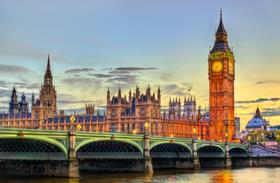
The new Budget aims to ease costs for households and businesses, as well as encourage investment in the UK.
”Against a backdrop of global uncertainty and pressure on household budgets, the Budget takes action on energy and motoring costs, backs wages and high streets, helps more people onto the housing ladder and supports British businesses to invest and grow – while strengthening Britain’s national security,” the government said.
Hannah Gurga, director general at the ABI, said the Budget ”has rightly focused on providing greater reassurance for households and businesses, while maintaining public finances and supporting the investment needed to drive long-term prosperity and resilience”.
She added: ”As major investors in the UK economy, insurers and pension providers help secure the homes, infrastructure, businesses and transport that support economic growth and national resilience.
”We agree that stability, certainty and proportionate regulation are essential to creating the right conditions for investment and economic success. We’ll continue to work closely with our members and the government as it sets out more details on its plans to drive this forward. As this agenda develops, it’s essential that the interests of savers remain at the heart of all investment decisions, in line with providers’ fiduciary duty to deliver good outcomes for the millions of people whose money they manage.”
Devolution and business rates
Among priorities in the Budget is setting out a roadmap to fiscal devolution.
Read: ABI sees ‘opportunity’ for UK’s G20 presidency to tackle protection gap after joining alliance
Read: August surge keeps Treasury on track to match record insurance tax year
Explore more market-related content here, or discover other news stories here
As part of this, all mayors will receive income tax assignment from 2028, while legislation will give all strategic authorities the power to introduce an overnight visitor levy.
Morgan Lyons, Zurich’s head of mid-market, said that “giving local leaders greater control over funding and investment can help strengthen regional economies and support sustainable growth”.
”Our regional broker network gives us a deep understanding of the businesses and communities we serve across the UK and we see first-hand the value of investment and opportunity being spread across the country,” he added.
Warren Dickson, chief executive for commercial and schemes at Howden, said: ”The chancellor focused much of his support on high street businesses, recognising the important role they play in giving communities across the country their ‘character’.
”With 20% of business rates revenue going to local mayors to reinvest in local economies, the government hopes to boost regional jobs, investment, footfall and viable local businesses. Ultimately, success will depend on whether that funding translates into visible improvements for businesses and communities on the ground.”
Meanwhile, the Budget also announced an increase of small business rate relief from £12,000 to £18,000, which means 70,000 businesses will be taken out of paying business rates altogether.
Dickson said: ”The chancellor has made clear his support for small British businesses, raising the threshold for small business rate relief from £12,000 to £18,000, while freezing rates for other firms in these sectors in real terms. This should provide much-needed relief for businesses facing continued cost pressures.”
Nikki Lidster, Zurich’s head of SME, added: “Small businesses are at the heart of local economies, creating jobs, driving innovation and supporting communities across the UK.
”Today’s measures on business rates will provide some much-needed support for small businesses facing continued cost pressures, helping give SMEs the confidence to invest, recruit and plan for the future. Creating a more supportive environment for small businesses will help reduce uncertainty, encourage entrepreneurship and unlock sustainable growth.”
IPT
Notably, there was no mention of insurance premium tax (IPT) in the Budget.
IPT is a tax on the price of an insurance product and functions as an indirect tax on consumers and businesses that is collected by insurers and paid to HMRC.
The standard rate currently sits at 12%.
Biba chief executive Graeme Trudgill welcomed stability with no change in IPT, but called on the chancellor to go further with commitment to a freeze.
He added: “The Chancellor has not mentioned that IPT will be changed, which will be a relief to households and businesses already under pressure.
”But at 12p in every pound of premium it remains a tax on protection and we want the Chancellor to commit to freezing it for this Parliament and subsequently reduce it, so that cover stays affordable in every postcode.”

His career began in 2019, when he joined a local north London newspaper after graduating from the University of Sheffield with a first-class honours degree in journalism.
He took up the position of deputy news editor at Insurance Times in March 2023, before being promoted to his current role in May 2024.View full Profile



























No comments yet