






















New research from Liiba suggests that while AI is poised to radically reshape digital trading in the London market, the ‘trust, personal relationships and human judgement’ that the sector was built on remain as important as they were 340 years ago
Artificial intelligence (AI) is going to “radically reshape” the way the London insurance market does business – but “trust, personal relationships and human judgement” will persevere as the key pillars that have made the sector so successful over the past 340 years.

This is the headline finding of extensive new research from the London and International Insurance Brokers’ Association (Liiba), released today (21 September 2026) in a study entitled The Trust Imperative – How digital trading can revolutionise client outcomes but why humans must stay in control.
The study found that while market participants felt that digital trading will change the way risks are assessed and placed in the London market, the majority were sceptical that their firms would allow such technology to make decisions autonomously where reputation and client outcomes are at stake.
Indeed, the “ability to take informed decisions without perfect information” was identified as an important feature of the London market – a facet which relies as much on trust, long-term relationships and human judgement as it does on AI-powered calculations.
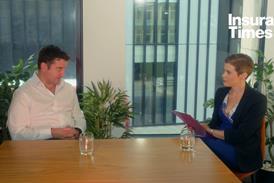
Christopher Croft, chief executive at Liiba, told Insurance Times: “The focus of brokers will be more than on business development and client relationship management – [they will be] getting ever better at risk analysis, understanding their clients’ risk and developing the right mitigation approach.”
Croft also explained that as improvements in digital trading help “erode some of the issues that stop people buying insurance, particularly cost”, brokers can try a new approach to business development.
“The huge opportunity – as one of our board members said – is for brokers to become ‘hunter gatherers’ and to try and penetrate parts of the world where London traditionally hasn’t be particularly successful [such as] Latin America, Asia and Africa,” he said.
Evolving roles
While Liiba’s research strongly supported the idea that brokers will continue to play an important role in placing complex risk, it also identified several areas in which changes in roles or skillsets would be likely as technological support evolves.
Read: HDI Global receives approval in principle for new Lloyd’s Syndicate
Explore more London market-related content here, or discover other news stories here
In particular, it suggested that as the market moves away from static annual renewal cycles and towards “dynamic and real-time assessment of risk”, brokers will need to become more adept at working with large volume datasets to create niche financial instruments.
To enable this, it said, frontline traders will need to work closely with the outputs of risk assessing AIs, providing a layer of human expertise to outputs to help identify incomplete or incorrect information.
“There will be more of a focus on getting new business in and, if that’s successful, then the overall size of the pie will hopefully grow and the number of people employed will grow because we’ll become a bigger market,” Croft concluded.
“Will there be administrative roles that fall away as part of that? You assume that’s kind of inevitable in any technological advance.”

He graduated in 2017 from the University of Manchester with a degree in Geology. He spent the first part of his career working in consulting and tech, spending time at Citibank as a data analyst, before working as an analytics engineer with clients in the retail, technology, manufacturing and financial services sectors.View full Profile
























No comments yet