





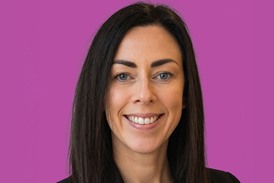














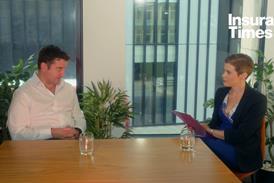

Durling added that people “want to be what you see” and that when there are few ”strong women senior technical roles”, women are less likely to picture themselves in that position.
Director says that without structured advocacy, ’talented women can remain technically strong but commercially invisible’
To be a senior or technical underwriter, women should not have to feel that they must take the traditional route and “tick every box”.

This was according to Kathleen Durling, director of underwriting at Jensten Underwriting, who spoke during the firm’s International Women’s Day panel (9 March 2026).
Starting her career in claims handling before moving into a position as an underwriting assistant at Chaucer Insurance where she learnt the trade, Durling confessed that she did not have the traditional background for a senior technical underwriter role.
From her experience and personal mission to differentiate her role, she said that she firmly believes “you can shape that role to what you want it to be”.
It therefore becomes a “self-fulfilling prophecy” that more women do not put themselves forward for these positions, she added.
London market statistics
The disproportionate number of female senior and technical underwriters in comparison to men is perhaps most notable in the London market.
In a Lloyd’s Market Association (LMA) snapshot survey, 52% of 128 female respondents cited a “male-dominated leadership environment, leading to a lack of inclusivity’” as the primary root cause of the decreasing female talent in the underwriting pipeline.
Speaking to Insurance Times, Jacqueline Girow, executive director at the London and International Insurance Broker Association (LIIBA), noted that this gender imbalance in senior roles is historical to the London market.
To raise women up the ranks, Girow stressed the need for a more holistic approach to inclusion rather than siloing issues such as gender, ethnicity or neurodiversity.
For example, LIIBA runs social mobility initiatives which pair insurance leaders with education leaders for peer-to-peer mentoring.
She continued: “If females within an organisation have been identified as having the right qualities for leadership but lack technical skills through no fault of their own, [most likely] because they have been discriminated against within their early careers, then offer them the right training and networking opportunities that involve everyone.”
Presence pressure
When Sam Thomas, head of retail underwriting at Zurich UK, joined the insurer, she was working on a compressed four-day week arrangement, allowing her to juggle parenting her two young children and her position as a senior leader.
Read: Gender pay gaps at UK insurers revealed – the best and worst performers
Explore more diversity and inclusion-related stories here, or discover more news analysis here
For Thomas, without this flexibility she believed that her role “simply wouldn’t be accessible” to her at this stage in her life.
Despite this progress, for women hoping to land senior technical roles, Thomas admitted that this accessibility is a steeper climb.
Thomas explained that cultural expectations still play a significant role, especially when it comes to the “legacy of presenteeism” and intense childcare responsibilities.
She said: “There are more ways to develop through technical pathways than the traditional ‘time served’ approach and businesses need to be bold and creative in the way they think about career pathways.”
Changing this approach is no mean feat, especially as the industry rarely redesigns senior technical roles intentionally around output and accountability over presence.
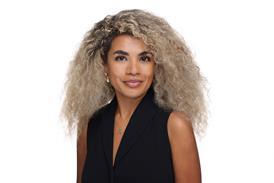
This is what Sarah Vaughan, director at Angelica Solutions, noted as she told Insurance Times that flexibility is often “paid lip service” with “more exceptions than rules when it comes to working times and urgent actions”.
Recruitment processes increasingly “favour visibility”, she explained, including “active LinkedIn profiles, uninterrupted employment histories and constant professional presence”.
She continued: “These filters are efficient but they disadvantage individuals whose careers include breaks or nonlinear progression which statistically affects more women.
“Informal relationship-building and after-hours events, travel heavy roles and social networking all still influence career velocity. When progression relies partly on attendance at these forums, exclusion becomes embedded but unacknowledged.”
‘Widening the criteria’
Noting that senior and technical talent does not simply progress on merit alone, Thomas told Insurance Times that “opportunities must be created, backed and actively sponsored”.
Fundamentally different from mentoring, she explained, “sponsorship can support the climb” up to senior and technical roles.
She said: “A mentor will advise, but sponsors advocate for you when you’re not in the room.
“For years, women’s careers have been disproportionately shaped by whether they had access to sponsorship, having someone who opens doors, championing their visibility.”
The hesitation to self-promote their abilities and take the next career step is not about a woman’s capabilities, she added.
Rather, it is about “a system that has not always been designed with their realities in mind”.
For Vaughan, without structured advocacy “talented women can remain technically strong but commercially invisible”.
She explained that addressing these systems comes back to the same disciplines that insurance firms use to “analyse price systems” or “governance structures in forensic detail”.
For example, reviewing how job specifications are written, analysing progression velocity, mapping sponsorship patterns and measuring the demographics that attend informal decision-making forums.
“This isn’t about lowering standards – it’s about widening the criteria through which we assess capability and leadership potential,” she concluded.

Harriet is a reporter at Insurance Times. With over a year under her belt, she has an interest in digging into emerging and underreported markets as well as a particular enthusiasm for risk management, talent and regulatory trends.
She joined the title after completing a Master's degree in Journalism in 2025, having previously graduated with a degree in English Literature.View full Profile
She joined the title after completing a Master's degree in Journalism in 2025, having previously graduated with a degree in English Literature.View full Profile






























No comments yet