

























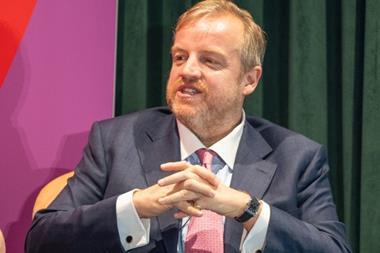
‘We don’t start people there as apprentices or let them learn from the bottom up – and that’s probably a thing that could be done,’ says director
While the sector has long relied on experienced professionals that have “worked their way into fraud from other areas”, a growing chorus of voices is calling for a shift – one that brings young people directly into fraud departments from the start of their careers.

Speaking at the latest quarterly Fraud Charter roundtable on 9 December 2025, hosted by Insurance Times and sponsored by law firm Carpenters Group, counter fraud leaders discussed the need to reshape recruitment strategies and engage with younger generations who bring fresh perspectives, digital fluency and values driven motivations to the fight against insurance fraud.
The pathway into counter fraud roles has historically been circuitous. Investigators and analysts typically begin their careers in claims handling or underwriting before gradually transitioning into fraud-focused positions – a process that can take years and excludes those who might otherwise bring valuable skills from outside the industry.
Donna Scully, director at Carpenters Group noted: “Historically, because it is a difficult area, it requires expertise, so people have kind of worked their way into fraud from other areas where we don’t start people there as apprentices or let them learn from the bottom up. And that’s probably a thing that could be done.”
Formal apprenticeship programmes in fraud investigation do exist, offering pathways that help people develop investigative skills without first having to work in unrelated roles.
Davies Talent Solutions, for example, operates a 21-month Level 4 counter fraud apprenticeship framework that trains participants in investigative techniques, legislative context, communication and stakeholder handling – preparing them for roles such as senior fraud investigator or financial crime specialist.
Yet despite options such as this existing, insurance firms still struggle.
A compelling story
Jonathan Head, director at DWF Law highlighted how younger generations – particularly Gen Z and Gen Alpha – are increasingly motivated by purpose and social impact, values that align naturally with counter fraud work.
With this in mind, he noted how the insurance industry could better market this to under 25s as “a positive message [about] the good that the industry does”.
Read: Destination Insurance – Leader warns industry is not hiring enough young talent
Read: Briefing – A day in the life of a new Ifed detective after graduate scheme success
Explore more talent related content here, or discover other news analysis stories here
Indeed, the dual narrative of the counter fraud sector – protecting vulnerable claimants while holding fraudsters accountable – provides a compelling story for recruitment. As Scully put it: “Insurance is great when you need it and it can really help you. You don’t need to mess with it.”
Concrete examples of successful youth engagement emerged during the roundtable discussions too. James Burge, group head of fraud and recoveries at Hiscox shared a story that illustrated the immediate impact such initiatives can have.
He explained: “One individual had done a degree in criminology and was wondering how to get into [the counter fraud] environment. So he [shadowed] me for a couple of days and reached out to [Ifed detective chief inspector Nik Jethwa] and also spoke to people in the Insurance Fraud Bureau (IFB).
“The feedback from this individual was immense in terms of the benefits – he now knows a direction that he wants to go in.”
The City of London Police’s Insurance Fraud Enforcement Department (Ifed) has also noticed a shift in attitudes.
Jethwa explained: “What we found is that we’re starting to engage with a lot more younger adults now, just through the education piece. The door has opened a little bit, not just into a career in policing, but understanding the insurance sector a bit better and what the opportunities are there.”
A barrier to attracting young talent remains the industry’s image problem. Counter fraud leaders at the Fraud Charter acknowledged that many people outside insurance hold narrow, often unflattering views of what careers in the sector involve.
Scully pointed to a podcast series as a potential recruitment tool: “The diary of a claims handler – every young person should hear that podcast, because so many people on there fell into it by mistake, didn’t go to university and worked their way up.
”Some of the jobs are interesting and exciting and I think that’s the bit where you’re trying to get them, to say ’there’s so much potential depending on what you do’.”
Opening the door
Beyond filling roles, young recruits offer distinct advantages to companies that more experienced hires may not. For example, delegates highlighted the value of fresh perspectives and a willingness to provide candid feedback.
“Young people bring a lot to the table,” Scully said. “We’ve just brought in a young woman – she goes and gives the feedback on how the apprentices are feeling, how it’s working and what’s missing. You get much more openness.”
This feedback loop can help organisations identify gaps in their training programmes and workplace culture that might otherwise go unaddressed.
Recognising that individual initiatives alone will not solve the talent challenge, industry bodies are working to bring together disparate efforts into a cohesive strategy.
Ursula Jallow, executive director at the IFB, outlined ongoing work: “We are looking at apprenticeships – how do we do more education training, going out to industry. Some insurers already do education with the public and have already got other things in place. So how do we bring that all together so that it benefits everybody?”
As fraudster methodologies become more sophisticated and criminal networks increasingly exploit technology, the need for skilled counter fraud professionals has never been greater.
The insurance industry’s response cannot simply be to compete harder for the same pool of experienced talent – it must expand that pool by creating accessible entry points for motivated young people.
The building blocks already exist – formal apprenticeship frameworks, industry talent charters and a generation eager to find purpose in their work. What remains is the will to connect them and the recognition that the fraud investigators of tomorrow need not follow the same winding path as their predecessors.
For an industry battling ever-evolving threats, the question is no longer whether to invest in young talent, but how quickly it can open the door.

































No comments yet