





















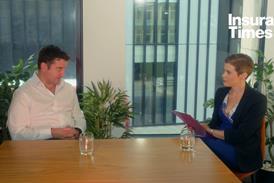

Allianz’ director for UK markets lays out why the insurer is doubling down on mid-market motor trade, where AI is reshaping underwriting discipline and how broker expectations are driving a major service overhaul
When Graham Stait speaks about Allianz, he talks like someone who has genuinely grown up inside the insurer.
“I joined Allianz 17 years ago on one of our graduate schemes. I have grown up in this place, I would say,” he says.

But his route into insurance was influenced by family – and by curiosity.
“At that time, my uncle was a major complex loss adjuster, and talking to him about what he did just sounded fascinating.”
Across claims, transformation, digitalisation and now trading, Stait has carved out a reputation at Allianz as a problem-solver with an eye for operational friction points.
He spent time in Munich in Allianz’s digital factory “where we started that looking at the flow, at the foundational stages, in terms of digitalisation of the insurance value chain,” before moving into underwriting, which he described as “an opportunity really to do something different”.
In Summer 2025, he stepped permanently into the role of director of UK markets.
Now he finds himself tackling one of Allianz Commercial’s trickiest but strategically valuable segments – mid-market motor trade.
A segment under pressure
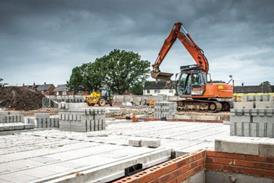
Motor trade has long been part of Allianz’s commercial backbone, but the market has been turbulent and competitors have pulled back, with claims inflation remaining stubborn.
“Allianz, for decades, has established itself as a leader in the motor trade insurance segment and there’s been a lot of things that have contributed towards that,” Stait says.
EY analysis, for example, shows that UK motor insurers are expected to only break even in 2025 and move into losses in 2026.
Meanwhile, GlobalData figures from 2023, although dated, show that Aviva overtook Allianz to claim the top spot in commercial motor market share – a clear signal that Allianz had territory to reclaim.
Internally, Stait felt the pinch too. He says: “First of all, as a smaller segment, it probably hasn’t had the investment over the years that our core lines of business have.
“Customer demands are changing rapidly – you’ve seen a lot of consolidation in the motor trade market for a number of reasons.
Some insurers have stepped away from the line entirely, too, which Stait is direct about.
He says: “Despite some of our competitors exiting this market because of the challenges, we remained committed to it.”
The message from Stait was clear – commit, simplify and modernise.
The overhaul
Where Stait has moved most quickly is in renewal design.
Read: Broker feedback drives Zurich’s latest SME fleet eTrade update
Read: Aviva makes multiple senior underwriting hires to expand London trading office
Explore more motor-related content here, or discover other news stories here
“For renewals, for example, we have simplified. We’ve gone back to front and removed a number of referrals and trigger points and simplified it,” he explains.
“We’ve also leveraged AI and automation to allow you to ingest a lot more risk information, to again, simplify the customer journey, but also augment the underwriting decisions for them.
“You create more headspace to make more effective decisions by digitally ingesting risks and actually removing the administrative burden.”
The goal is not to replace underwriting judgement, but to free it. Brokers, he says, asked for one thing above all – consistency.
He explains: “Their demands on this were around consistency. From a service point of view. We have a very strong proposition, they tell us, and we have a decent service, but there is variation.
“How can you provide a more consistent, seamless service, particularly on those more voluminous cases which they put with us?”
The first reaction to the redesigned proposition was encouraging. He adds: “The initial response was one of relief and, increasingly, what we’re getting back is a sort of optimism and expectation.”
And, as Stait puts it, brokers originally wanted reassurance above anything else: “The first concern was looking for reassurance that we remain committed to the motor trade market, which we absolutely do.”
Allianz is adding new coverage elements too. Stait says: “We introduced a number of enhancements in our product last year to reflect the changes in the motor trade market.”
This is particularly relevant for electric vehicles. Allianz has already warned the market about EV battery fires after more than £6m in recent losses across motor trade facilities, including individual claims of £5m and £1.5m.
It is a market where one fire can wipe out a year’s profit. And yet Allianz is still leaning in.
Easy to do business with
Alongside the segment-specific work on motor trade sits Allianz’ broader commercial ambition.
Stait is honest about where Allianz has fallen short: “We haven’t always been seen as being easy to do business with. Sometimes our size has worked against us.”
But, Stait plans to keep what brokers value – and shed what slows them down.
“This is about retaining the bits which have historically made us strong, our technical expertise, our regional presence and remaining committed to long standing broker relationships,” he adds.
“But then increasingly looking for ways of simplifying the way that we operate to deliver better, more consistent outcomes for our customers.”
Stait points to a more substantial physical footprint too, with Allianz now operating with “more physical presence across the UK” than it’s ever had.
He adds: “Our broker footprint has increased significantly and we’re trading more actively and in person.”
This all feeds the same agenda – consistency, responsiveness and clarity.
The new Allianz
Stait is candid that the motor trade is a segment with thin margins and heavy volatility. Some rivals have moved away. But Allianz sees opportunity in staying put.
For the insurer, the mid-market motor trade update is more than product optimisation. It is a symbol of a cultural pivot – a move to sharpen execution, invest properly in overlooked segments and rebuild confidence in areas where brokers said service has been too uneven.
Seventeen years into his time at the insurer, Stait sees the next phase as grounded in people, as much as process.
He is still energised by the same idea that first drew him into insurance after conversations with his uncle – relevance when things go wrong.
And now, with the UK commercial motor market set for another tough cycle, Stait is leading one of the insurer’s most strategically sensitive segments not with defensiveness, but with momentum.
As he puts it: “Despite some of our competitors exiting this market because of the challenges, we remained committed to it.”

































No comments yet