






















A fast-growing fraud trend involving fake insurer portals designed to deceive frontline police officers prompted fresh concern among counter fraud leaders attending latest quarterly roundtable
A new breed of insurance fraud involving fake online portals designed to fool police officers by mimicking real digital insurer platforms has been confirmed by the City of London Police’s Insurance Fraud Enforcement Department (Ifed).

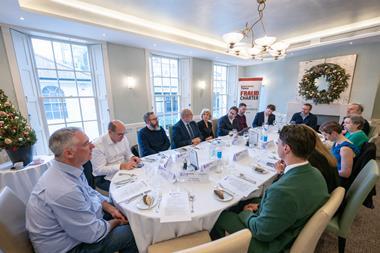
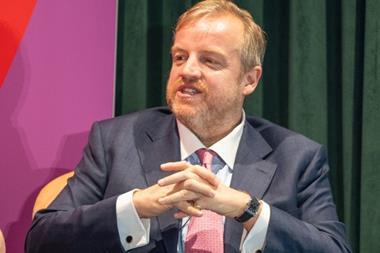
Speaking at the latest quarterly Fraud Charter roundtable on 9 December 2025, hosted by Insurance Times and sponsored by law firm Carpenters Group, Ifed head and detective chief inspector Nik Jethwa warned that the so-called “ghost portals” being seen by his policing unit represented a significant evolution beyond traditional ghost broking, with the critical difference being that criminal groups are selling these fake insurance platforms to other fraudsters.
Jethwa told Fraud Charter delegates that although ghost broking “still remains one of our key crime types” that Ifed investigates and handles, the rise of ghost portals has been a marked change in criminal behaviour over the past year.
He explained: “[Previously, I have spoken] about how we’re seeing ghost brokers train other ghost brokers. That still continues, but what we’ve seen more recently is a number of fake portals coming up, which is relatively new, but it’s causing us a real issue.”
Unlike ghost broking – where victims are usually unaware they have been sold fraudulent insurance – ghost portal purchasers understand precisely what they are buying. The fraudulent platforms charge users between £200 and £300 for access to an insurer style app that displays fake policy documentation.
Jethwa said: “What happens is, you’re a fraudster, you create a fake portal and then you’re paid £200 to £300 to [provide] access to this fake portal, [which is] advertised as ‘this will fool every police officer’.”
Describing how these portals work in practice, Jethwa continued: ”You get stopped by the police and you say ‘I do have insurance’. Then you log into this [fake] app and it will show that you have a policy, which is totally ridiculous.”
The scale of this problem has been growing, with individual portals attracting significant user bases. Jethwa noted: “Hundreds, if not nearly 1,000 people are signed up to these portals.”
According to Jethwa, fraudsters are increasingly using artificial intelligence (AI) and modern website building tools to create convincing fake websites and documents, making such scams easier to execute and more scalable.
Easy moneymaker for fraudsters
Unlike traditional ghost broking, these new fake portals are typically purchased by people who understand the product is fraudulent.
Read: Sector must ‘start again’ to tackle ‘different beast’ of commercial fraud
Read: One in four believe not disclosing information to an insurer is not fraud
Explore more fraud related articles here, or discover more news content here
Donna Scully, director at Carpenters Group, reinforced this point: “It’s different in the sense of the people here know it’s not genuine – whereas with ghost broking, it’s innocent people [that are affected].”
Jethwa added: “Anyone that’s buying into [these portals], the strapline on these websites is ‘this can fool any police officer’, so they know straight away what they’re doing.”
What also particularly concerned Fraud Charter attendees upon hearing Jethwa’s feedback is the criminal ecosystem surrounding these sites. While some builders of ghost portals may be opportunistic individuals with technical skills, others have direct ties to wider criminal networks.
Jethwa said: “What we’re also seeing is links [to] other criminality as well. This then facilitates some of the organised crime groups.”
The financial model driving this type of fraud is straightforward and lucrative. Jethwa added: “What we haven’t seen is a link between all these portals, but it’s clearly a growing trend and people understand that this is an option and it’s a really easy way to make money.”
Proactive enforcement
Ifed has scheduled a dedicated intensification month targeting ghost broking and ghost portals in February 2026.
Jethwa said: “This is a really good opportunity for us because where we are traditionally quite reactive to referrals coming in, we’re now going to pivot and become a bit more proactive.”
This action will include identifying website operators and approaching technology firms that host or enable fraudulent portals.
Jethwa warned: “The portals are branded by specific insurance companies, so there is a reputational risk for those companies as well.”
This creates frustration for insurers about the reputational damage that can be caused when their branding is copied by criminals, raising risks both for customers and insurers whose names are being cloned to underpin ghost portals.
Mark Allen, head of fraud and financial crime at the ABI, added that greater collaboration with technology platforms is essential for tackling insurance fraud across the board, as fraud is increasingly perpetrated online. He said: “Most of [the technology sector] is US-based. Digital services tax is a thing in the UK, but maybe more needs to be done on this.”
The UK’s digital services tax (DST), introduced from April 2020, is a 2% tax on the revenues of large multinational companies that provide social media platforms, search engines and online marketplaces to UK-based users.
As ghost portals expand the reach of insurance linked criminality, the sector’s counter fraud community is primed to intensify its collaborative efforts in 2026 – with a renewed emphasis on early intelligence, digital takedowns and targeted enforcement.
























No comments yet