
























‘The real risk isn’t in us competing with one another with a client. It’s in the further commoditisation of insurance,’ says president
Insurance products risk becoming increasingly difficult to differentiate as insurers invest in technology and efficiency, according to Chubb’s EMEA president Ana Robic.
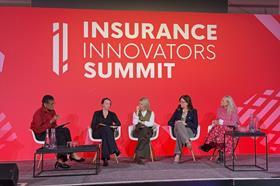
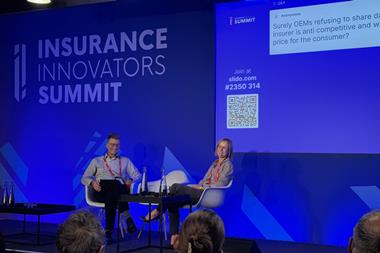
Speaking at the Insurance Innovators Summit last week (4 November 2026), Robic warned that if insurers focus on standardisation rather than customer-specific solutions, customers could increasingly view insurance products as interchangeable and make decisions based on price alone.
“The real risk isn’t in us competing with one another with a client. It’s in the commoditisation, the further commoditisation of insurance,” she said.
To illustrate the challenge, Robic cited figures suggesting 50% of UK homeowners believe home insurance products are essentially the same, alongside 89% of motor customers and almost 60% of small commercial customers.
She said the industry’s growing investment in technology and efficiency could unintentionally worsen this trend if it leads to increasingly uniform products and services.
“If we get too focused on the efficiency and all the amazing technology, and the goal is to just bring it all to uniformity and efficiency and price becomes the champion, [then] all of us lose,” Robic said.
Robic argued insurers should instead use technology to deliver solutions that are more relevant to individual customers and their changing needs.
Beyond ‘repair and replace’
Robic said insurers could differentiate themselves by moving beyond a traditional “repair and replace” approach and focusing more heavily on predicting and preventing losses.
Read: Private equity’s insurance love affair – can value outlast the deal?
Read: Briefing: ‘Growth Britain’ needs resilience in every postcode
Explore more market-related content here, or discover other news stories here
“You need to be there all the time talking about predicting and preventing losses,” she said. “The best insurance is no insurance at all because you never need to use it until you predict it or prevent those losses.”
She added that insurers needed to be known for prevention rather than “just a repair and replace offering”.
Robic pointed to Chubb’s recently launched parametric product with Airbnb as an example of how technology could be combined with customer needs to create a different proposition.
Under the product, customers renting an Airbnb property can receive an automatic payment if rainfall exceeds a certain level during their holiday, removing the need to make a traditional claim.
Robic said: “You don’t put in a claim, it rains during your holiday at a certain amount, here’s your cash in your account.”
She argued that technology should ultimately help insurers create more tailored propositions rather than push the market towards greater uniformity.
“We need all the technology to help us get there, but we need solutions that are relevant for each individual customer, so avoiding commoditisation,” Robic added.

With a background in local journalism, she has previously worked as a freelance reporter covering community stories and gaining valuable on the ground experience.View full Profile






























No comments yet