


























Insurance firms are ’hardening’ negotiations and ’pushing on existing vendors’ to demonstrate how they can deliver long-promised transformation, says chief executive
Traditional long-term business process outsourcing (BPO) contract models could become “very short-lived” as insurance firms push vendors to demonstrate how artificial intelligence (AI) can transform operations.
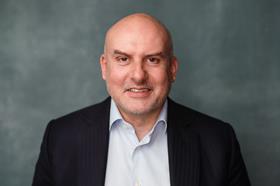
This is the overarching view from Martin Henley, chief executive at mea Platform, who spoke to Insurance Times following the findings from ISG’s latest report entitled The State of Insurance Operations, published on 16 September 2026.
Commissioned by mea Platform, the research revealed that some 86% of insurance buyers of outsourced operations would renegotiate for AI efficiency or completely rework terms and service levels if those contracts renewed today.
It also revealed that AI-led innovation fell below expectations for 49% of business process outsourcing (BPO) users, which was the largest shortfall among the nine dimensions assessed.
The study surveyed 150 insurance decision makers in August 2026 across 20 operational activities in North America, Europe and Asia.
Henley said that insurance firms are increasingly “pushing the boundaries” of what their technology and outsourcing providers can deliver as interest in the potential of AI grows.
Despite uncertainty over how far AI will ultimately transform insurance operations, he explained that the “tide is rising for everyone” and there is a risk of being “left behind”, as well as a desire to be ”at the top of the rising tide”.
He believes that this has led to a “hardening of negotiations” and “pushing on existing vendors” to demonstrate how they can deliver long-promised transformation.
In turn, Henley said that he expected the traditional commercial model for BPO contracts to be “very short-lived”.
He continued: “[People are becoming less used to] signing up for long, multiyear, big commitments and more used to buying something that’s very instant, [where] you’re only paying for what you’re using at that moment.
“I’m not saying BPO contracts will go that far, but we’re going to end up with something quite soon that will be much more transactional and much more focused on the value you’re getting. [It will be very] transparent between the price and the value that you’re achieving.”
Beyond cost reduction
Henley also explained that the traditional outsourcing model has delivered limited cost reductions for insurance companies.
Read: Martin Schultheiss – Uinsure ‘redefines’ culture as AI produces ‘significant productivity gain’
Watch: Insurance Times’ making agentic AI work for the investigator webinar
Explore more artificial intelligence-related content here, or discover more news here
But he said that there is an opportunity for AI to increase the speed of processing submissions that firms can handle, which is hindered by the lack of people.
This is exacerbated by the renewal cycle in the current model, he explained, which requires firms to “ramp up” staffing for manual work and “ramp them down again at different points in the year”.
“Where people are seeing the opportunity is, and maybe AI is one of the tools to help make it happen, but it’s [whether there is] a way we can manage the up and down better and process much faster,” he continued.
“[Is there a way the industry can] build better relationships either with our clients or our brokers depending on who you are in the chain and grow the business. That’s really the lever here over and above the cost-reduction point.”
However, this shift presents a dilemma for incumbent BPO providers, whose traditional business models have relied heavily on supplying manual resource.
He said that mea Platform is currently speaking to multiple BPO providers who want to partner and embed its platform.
He continued: “BPO providers work based on how many heads can I sell? How much manual work can I sell or have done previously?
“But they see the threat if they don’t do that and they can’t move their own internal organisation fast enough that they end up without the client at the end anyway.”

She joined the title after completing a Master's degree in Journalism in 2025, having previously graduated with a degree in English Literature.View full Profile






























No comments yet