



















’We have redefined our culture as a business. It used to be suits and trainers, we now call it suits, trainers and cool tools,’ says chief executive
Since launching an artificial intelligence (AI) lab earlier in 2026, Uinsure has seen “significant productivity gain” and “redefined” its “culture as a business”.

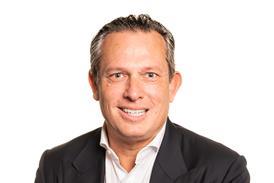
This is according to Martin Schultheiss, group managing director at the insurtech, who spoke to Insurance Times after securing board approval to launch a new AI lab.
The concept was first explained to Insurance Times in February 2026. Back then, Schultheiss said that it would work as “a side by side”, sharing the company’s “technology road map” with other firms that have “not come from our technology world” to encourage speed to market competition and efficiency.
He also said the lab would also operate as an innovation hub, where Uinsure can build on its existing “plug and play” infrastructure to see how else AI can be incorporated.
Several months later, Schultheiss explains that he has seen two key changes at Uinsure. The first is that the business has moved on from measuring quarterly.
“We used to set quarterly 90-day objectives and key results. We have now moved from 90 days to six weeks,” he says.
“The speed has transformed the way we measure the business.”
He adds that of those six week outcomes, “there are clear stepping stones per week” and that “what we would achieve in a quarter, we could probably achieve in a week [with AI]”.
Productivity gains
These comments come following Mea Platform’s new The state of insurance operations report, which was published on September 16, revealing how AI is helping businesses.
Read: Uinsure appoints ex-Markerstudy leader as new chief trading officer
Read: Uinsure launches ‘UK first’ home insurance monitoring service
Explore more insurtech related content here, or discover more interviews here
The report said that where AI is already running in operations, 61% of respondents reported productivity improvements and 51% reported faster cycle times. Operating costs are expected to fall by 16% over two years.
Schultheiss notes that given AI is helping with speed, it is also contributing to productivity gains.
“We’ve seen a significant productivity gain and what we’ve learnt is that [while] the underlying assumption people still have is [AI] is going to take everyone’s job, that’s not what our experience has been,” he continues.
“In fact, we have redefined our culture as a business. It used to be suits and trainers, we now call it suits, trainers and cool tools.
“What [AI] does do is it allows that subject matter expert just to go significantly faster than they had to go before.”
He adds that AI is a “job enhancer”, with it allowing “several things to happen”.
“One is your high performers just can go faster and quicker,” Schultheiss says.
“Your middle 60% of people that are essentially the most important in your business get the efficiency gains, capability [and] skills sets that allows them to do the work they really want to do and you can automate a lot of the mundane work.”
He adds that across the industry, if firms do not move across to AI, then job losses could happen.
Schultheiss explains: “You get three categories of people. One is your high performers who grab it, run with it and adopt it. It’s a big career advancement if people grab it early and you can significantly differentiate yourself.
“Then you get a group of people who are scared of AI, but are open to AI, and that is because they just don’t know how to use AI.
“So, there is a training element, which we are now deploying in our business, where we’re training everyone on AI.
“Then there is a third group of people – the group that didn’t believe in Excel, Powerpoint and Microsoft and stayed in Dot Matrix – and over time that becomes extinct.
“There will be a group of people that won’t move across to AI and that’s where, potentially, the job losses might happen.”
Insurance monitoring service
Schultheiss also speaks about Uinsure’s new home insurance monitoring service, which it claims is a UK first.
The service allows a customer’s policy to be compared against live quotes from Uinsure’s panel of seven UK insurers several times a year, not just at renewal.
It alerts them when similar cover is available for less, or better cover for a similar cost, regardless of who the policy is currently with.
Quotes are matched to the customer’s current cover, including any add-ons or specified items, so it’s a like-for-like comparison rather than a generic quote.
Schultheiss says: “They are not guessing what the customer might be on, they know what the customer is on.
“It’s a multiyear service that will hopefully lead to disrupting how our customers purchase home insurance, move them away from a price comparison websites (PCWs) and move them back to the place that we believe they belong, which is our partners.”
Schultheiss does admit that PCWs are the “dominant force” in the UK market and that “you’d be pretty naïve if you thought you are just going to change consumer behaviour overnight”.
However, he notes that PCWs “require you to fill in [around] 60 questions” and believes “consumer behaviour [will] change as AI and these types of digital tools arrive”.
“[This is] because customers can’t be asked to go [to PCWs] because they have to go there,” he says.
“The real question is if there is an alternative, if it’s really fast, if it’s one click and it’s with you all the time.
“Our platform is a pre-emptive platform, so we know you need home insurance before you’ve thought about needing home insurance.
“The question is, can you get to that customer before the customer considers alternatives? We believe that is yes.”

His career began in 2019, when he joined a local north London newspaper after graduating from the University of Sheffield with a first-class honours degree in journalism.
He took up the position of deputy news editor at Insurance Times in March 2023, before being promoted to his current role in May 2024.View full Profile

























No comments yet