
- Home
 Agentic AI removes ‘barrier’ for fraud investigators across different insurance lines
 Cobra Network boss joins Acrisure as UK retail chief executive
 Top 50 Insurers 2026: Aviva retains table title despite GWP dip
 Top 50 Insurers 2026: Berkshire Hathaway International tops IDL’s 2026 underwriting gold awards
- News
- Analysis
- Destination Insurance
- Brokers
- Insurers
- Ratings
- Research
- Fraud Charter
- Topics
- Events
- Expert Views
- Edition











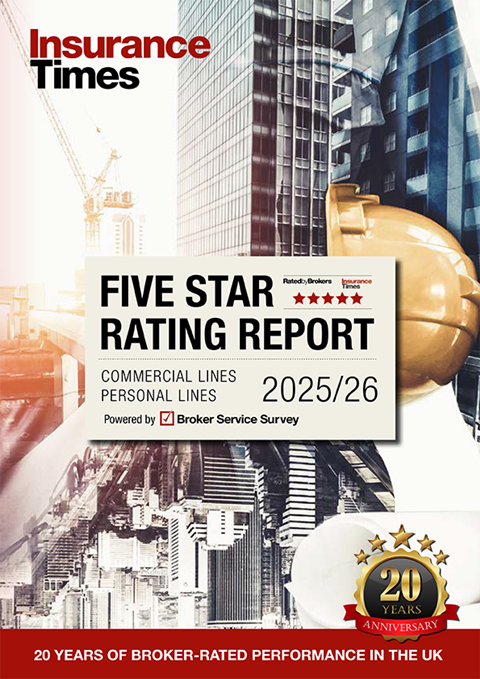







Five Star 2026 Personal Lines Overall Ratings
Insurance Times has carried out its annual Broker Service Survey (BSS) for 20 years, making this the 20th‑anniversary edition—a significant milestone for the UK market. For the seventh consecutive year, the BSS includes a five‑star rating system linked to performance scores. This framework helps brokers assess insurers more simply and enables insurers to benchmark their service more clearly against peers.
The broker service survey ran from October to December 2025, inviting UK brokers to identify and rate the insurers with whom they have regularly placed business over the preceding 12 months. Around 850 brokers participated, reflecting thoughtfully on many aspects of service delivered by their insurer partners.
Service factors assessed
The BSS focuses on five service factors, with brokers rating insurers on each of the following:
- Overall claims experience
- Overall relationship management
- Overall quality of cover
- Overall underwriting experience
- Overall policy documentation
For insurers seeking advanced in-depth analysis, broker segmentation analysis and feedback, which can be used to improve business, the 2026 Commercial Lines Data Insight Book can be purchased. To discuss the contents of the 2026 Commercial or Personal Lines Data Book or to get a view of last year's content page, please contact Aisha Roberts:

Aisha Roberts
Commercial Director
+44 (0)20 7618 3408
The personal lines survey was open to UK brokers throughout October to December 2025. Brokers across the UK were asked to identify and rate insurers with which they have regularly placed business during the past 12 months. Brokers were also asked to answer a range of questions on service, claims, underwriting, relationship management, quality of cover, products and much more.

News
Home insurance premiums continue to fall
’Competitive home insurance premiums are almost 17% below their level two years ago and are still falling,’ says director

News
Allianz Partners signs five-year deal with travel insurance provider
’We want to be where our customers are, offering them the quality and service they’d expect from the UK’s number one travel insurer, however they choose to buy,’ says chief sales and distribution officer

News Analysis
Top 50 Insurers 2026: Aviva retains table title despite GWP dip
Insurance Times content director Katie Scott reviews the headline findings of this year’s Top 50 Insurers report, flagging where firms are winning, losing – and battling the soft market

News
Which? calls for ban on insurers profiting from monthly payment ‘poverty premium’
‘The prime minister has pledged to create more breathing space for consumers and that’s why we’re urging him to use the upcoming budget to announce a ban on two-tier pricing,’ says director


Part of the Insurance and Risk group of Newsquest Specialist Media



Published by Newsquest Media Group Limited,
registered in England & Wales with number 01676637
at The Echo Building, 18 Albert Road, Bournemouth,
England, BH1 1BZ - a USA Today company
registered in England & Wales with number 01676637
at The Echo Building, 18 Albert Road, Bournemouth,
England, BH1 1BZ - a USA Today company
Site powered by Webvision Cloud