























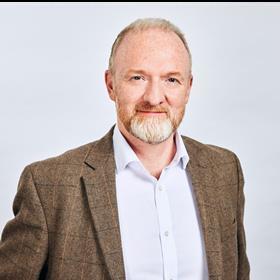
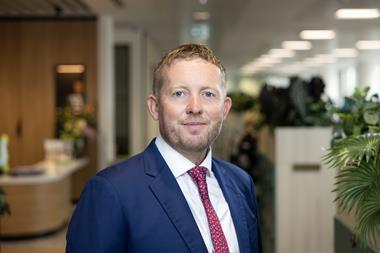
Lee Anderson, group deputy chief executive at Specialist Risk Group (SRG), pinpoints the real differentiator of artificial intelligence use for brokers
A few weeks ago, three colleagues from Specialist Risk Group (SRG) entered Microsoft’s Agent-a-thon learning experience.
Their brief wasn’t to build the next groundbreaking AI platform or create technology for technology’s sake. It was refreshingly simple – identify a genuine business problem and solve it using artificial intelligence (AI).
Over the course of a single afternoon, they developed an AI agent that could analyse huge volumes of online information, identify what really mattered and produce an actionable intelligence report in around five minutes.
A task that previously consumed six hours of valuable time had been reduced to minutes.
Against teams from a range of organisations, they won. The technology itself was impressiv, but it wasn’t the technology that stayed with me.
What struck me was how naturally experienced insurance professionals approached the challenge. They didn’t start by asking, “what can AI do?”.
They started by asking, “what problem are we trying to solve?”. Once they’d defined that properly, the solution became remarkably logical.
For me, that perfectly captures the future of specialist insurance. The headlines would have us believe that AI is coming for our jobs. I disagree.
AI won’t replace specialist brokers. It will expose the difference between average ones and exceptional ones.
Every major technological advance has prompted predictions about the end of intermediaries. Email was supposed to replace meetings. Comparison websites were going to eliminate brokers. Digital trading platforms would make relationships obsolete.
Yet specialist broking has continued to thrive because our value has never been built on transferring information. It has been built on interpreting it.
That distinction has never been more important.
The more things change…
AI will undoubtedly transform our industry. It will draft submissions, review policy wordings, summarise claims, interrogate datasets and automate countless administrative processes. Brokers that ignore those opportunities will quickly find themselves at a competitive disadvantage.
Read: The power of gratitude in recognising continuity
Read: Specialty versus specialist insurance – and why the London market matters more than ever
Explore more broker-related content here, or discover more briefing articles here
But none of those activities represent the true value of a specialist broker.
Exceptional brokers don’t simply arrange insurance. They understand businesses. They identify risks clients haven’t yet recognised. They know which insurers have genuine appetite rather than theoretical capacity. They challenge assumptions, navigate complex negotiations and provide confidence when clients are making difficult commercial decisions.
Those qualities aren’t disappearing because AI has arrived. They’re becoming more valuable.
As technology makes information increasingly accessible, information itself becomes less of a differentiator. Competitive advantage shifts to interpretation, judgement and experience.
That’s why I believe AI won’t narrow the gap between brokers. It will widen it.
The average broker may use AI to produce documents more quickly. The exceptional broker will use the same technology to spend more time with clients, ask better questions, deliver deeper insights and solve more complex problems.
One becomes more efficient – the other becomes more valuable.
The companies that will lead our profession over the next decade won’t be those with the biggest AI budgets. They’ll be the ones with the strongest culture of curiosity, those prepared to experiment, challenge established ways of working and continually ask how technology can improve client outcomes.
Watching our own people build a genuinely useful solution in a matter of hours reinforced exactly that point. The competitive advantage wasn’t the software. Microsoft Copilot is available to thousands of organisations. The advantage came from experienced people applying technology to a real business challenge with imagination and commercial understanding.
That’s a lesson that extends well beyond one hackathon. Insurance has always been, and will remain, a people business. Trust cannot be automated. Judgement cannot be downloaded. Relationships cannot be generated by a prompt.
AI will undoubtedly change how we work.
But the brokers that embrace it intelligently won’t become less human. They’ll become more so, because their people will spend less time on administration and more time doing the things that clients genuinely value.
The future of specialist broking is not humans versus AI. It is humans with AI outperforming humans without it.
And as that happens, the difference between average and exceptional brokers will become impossible to ignore.






















No comments yet