


























Insurance Times’ latest Destination Insurance webinar explored how the industry can collaborate to create clearer career pathways, retain emerging talent and build the skills needed for an increasingly technology-driven market
The insurance industry must look beyond recruitment and collaborate to create clearer career pathways if it is to build a sustainable talent pipeline.
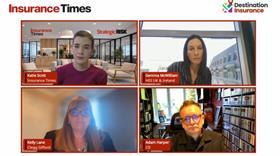
This was a key message from the recent Insurance Times Destination Insurance webinar, How can the insurance industry build sustainable talent pipelines?, which examined how insurers, brokers, professional bodies and other market participants can work together to support careers in the sector.
The discussion formed part of the Destination Insurance Talent Charter, which currently has 24 organisational signatories spanning insurers, brokers, MGAs, trade associations and service providers.
One of the charter’s five commitments asks participating organisations to collaborate with another UK general insurance or London market business, trade body or membership organisation at least every two years to promote and support insurance careers.
Gemma McWilliam, chief people officer at HDI UK and Ireland, Kelly Lane, operations director at Clegg Gifford, and Adam Harper, executive director of strategy, advocacy and professional standards at the Chartered Insurance Institute (CII), joined Insurance Times content director Katie Scott for the discussion.
Beyond recruitment
Harper warned against viewing the industry’s skills and talent shortage simply as a recruitment problem.
Read: Insurance ranks last for career appeal among young people
Read: Briefing: The bare necessities – why insurance strategy should be simple
Explore more talent-related content here, or discover other news analysis stories here
He highlighted the large number of existing initiatives across employers, professional and trade bodies, apprenticeship providers, regional networks and careers programmes, but said these did not always form a connected pathway for people attempting to enter and progress through the profession.

“The problem is that, from an individual’s perspective, those pieces don’t necessarily join up,” he explained:
“Someone can become interested in insurance but not necessarily know what to do next. They can complete work experience without necessarily seeing a kind of clear route into a role. They can enter the profession without properly understanding how they can build a career from from there.”
Harper described the missing element as the “connective tissue” between attracting people into insurance, gaining experience and competence and subsequently progressing through the profession.
Meanwhile, Lane stressed that once talent entered the insurance industry, businesses also needed to focus on retention and making it easier for employees to move between different parts of the market.
She said skills could be transferable between areas such as claims and underwriting, but that employees did not always move between these disciplines.
Don’t let talent slip away
The panel also explored how collaboration could prevent promising candidates from leaving the sector after being unsuccessful in securing a role with one particular employer.

McWilliam suggested larger insurers with the infrastructure to process significant numbers of early careers applications could help redirect suitable candidates towards other firms.
She asked: “Wouldn’t it make for a much nicer outcome for individuals that aren’t selected to be then saying ’the opportunity here isn’t right, but we feel you have something, this industry feels like it’s right for you. What about a conversation with X, Y and Z?’”
Such an approach could also benefit smaller organisations that lack the infrastructure to run large recruitment campaigns themselves, she added.
Harper suggested an “opt-in referral route” could provide another solution, allowing strong candidates who want to remain connected to the profession to be introduced to opportunities at other participating employers.
This issue was reinforced by an audience contribution from a specialist recruiter, who said he received more than 20 applications each week from junior candidates wanting to enter insurance but was unsure where to begin or which part of the market would suit them. Some were consequently being drawn towards insurtech, software-as-a-service and other sectors offering clearer routes into employment.
Lane said this growing interest was encouraging considering the industry’s previous concerns about attracting young people.
She added: “We now need to do the next part of it, which is make the routes to market clearer for them, as well as how they get there and which area they want to be in.”
The panel also challenged the industry’s tendency to describe insurance as a profession people simply “fall into”.
Lane said the market could be its “own worst enemy” by repeatedly using this phrase, while Harper argued that the objective should instead be to encourage people to make an active decision to pursue an insurance career.
Collaboration versus competition
However, greater collaboration creates a potential tension for firms that are simultaneously competing to recruit and retain the best employees.

McWilliam argued that continuing to compete over a limited pool of existing employees was ultimately unsustainable.
She said: “If we continue to compete in the way that we are, our talent pool that is shrinking or staying the same at best, all we will continue to do is recycle that talent around the industry.
“That is not a way forward for any of us. Our only way to expand the number of people that are choosing a career in insurance is to collaborate more.”
Harper, meanwhile, said collaboration and competition should be viewed as complementary rather than opposing concepts.
Potential areas for collaboration discussed by the panel included shared apprenticeship learning and mentoring, regional work experience programmes and cross-market secondments.
Harper suggested brokers, insurers and loss adjusters could, for example, provide reciprocal visits, case discussions and structured shadowing, allowing employees to see how decisions made at one stage of the insurance journey affect another.
He also proposed shorter placements of between two and 12 weeks as another option for SMEs that might struggle to commit to traditional six-to-12-month secondments.
McWilliam highlighted employee resource groups as another potential area for cross-market collaboration, particularly for smaller firms that may lack the critical mass needed to establish their own networks.
She pointed to HDI UK and Ireland, where just over 40% of the workforce is aged under 35 and its young professionals committee has sought opportunities to engage with peers beyond the insurer.
AI and the junior pipeline
Artificial intelligence (AI) was also highlighted as a potential challenge for the industry’s future talent pipeline.
Lane said there was concern that AI would have the greatest impact on entry-level roles and warned against removing too many junior opportunities.
She explained that junior employees entering insurance today would ultimately become its next generation of technical experts and leaders.
McWilliam said the issue was “not unique to the insurance industry” and stressed that employers would need to demonstrate continued investment in reskilling and upskilling as roles evolved.
Alongside technical capabilities, she highlighted critical thinking and curiosity among the “power skills” that would continue to be valuable as technology reshaped jobs.
Harper added that investing in technology at the expense of learning and development would be “a real mistake”.
Although some tasks would be automated, he said future professionals would need the ability to question outputs, exercise judgement and apply their perspective to work augmented by technology.
Ultimately, Harper said meaningful collaboration meant creating a route that individuals could “actually travel”, from discovering insurance and securing an opportunity through to developing competence and seeing a long-term future in the profession.
He concluded: “My challenge to those who were on the webinar is to identify one barrier you cannot remove alone, find a partner and agree one practical pilot with a named owner and a measure of success.
“We should compete to be great employers, while working together to build the professional capability on which customers’ trust depends.”
Webinar action points:
-
Create clearer routes into insurance by joining up careers outreach, work experience, apprenticeships and entry-level opportunities so candidates can see how to move from initial interest into a long-term career in the profession.
-
Keep promising candidates within the industry by exploring opt-in referral arrangements that allow employers unable to offer someone a role to connect them with opportunities elsewhere in the insurance market.
-
Collaborate to grow the talent pool, rather than simply recycle it by using initiatives such as cross-market mentoring, shorter secondments, reciprocal shadowing and shared employee networks to develop skills and improve mobility across the sector.
-
Invest in people alongside AI by protecting routes for junior talent and developing critical thinking, judgement and other skills employees will need as technology changes insurance roles.

With a background in local journalism, she has previously worked as a freelance reporter covering community stories and gaining valuable on the ground experience.View full Profile






























No comments yet