





















Having established Countrywide Hearing 14 years ago, the managing director reflects on the ‘clear gap in the market’ that left customers ‘not getting any support from their insurance company’
The insurance sector is built on the promise that it will be there when you need it.
But, even with this commitment to understand the needs of its customers, some demographics can still fall through the cracks when accessing that service.
According to the FCA’s Financial Lives survey in 2024, 14% of UK adults showed characteristics of deafness or partial hearing, with 35% reporting that dealing with customer services over the phone was confusing or difficult.
While speaking over the phone remains a cornerstone of insurer-customer communication, it is not always suitable – especially for customers with such hearing difficulties.
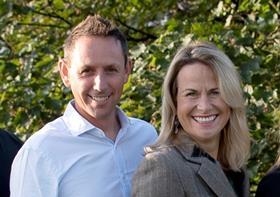
This was an issue that Trine Davies, co-founder and managing director at Countrywide Hearing, became aware of when she helped her husband Ben Davies, director and lead audiologist at the firm, in his independent audiology practice following her redundancy.
With a baby on the way and a need to make ends meet, Davies tells Insurance Times that she became aware of individuals losing hearing aids and “not getting any support from their insurance company”.
She says that most of these people “didn’t know what to do” and found communication with the insurance company “extremely difficult”.
As she helped some of these customers navigate the claims process, Davies also identified that there were bigger audiologist companies “down the road selling the exact same hearing aids for twice as much” as her husband’s independent practice.
She continues: “We contacted a few insurance companies and hubs and nobody had a solution.
“Nobody was even aware of the spend. It had just managed to slip through – and it was the same story with each and every one that we went to after that.”
Alongside her husband, Davies set up Countrywide Hearing in 2012 to address a “clear gap in the market” amd handle specialist end-to-end claims for hearing aid losses.
‘Customer at the heart of everything’
Fast forward 14 years and the firm has grown from what Davies describes as “two phones on the one desk and a baby under the other”.
Read: Briefing – How to build the best claims team in the industry
Read: James Nicholson – What to keep an eye on in the claims sector for 2026
Explore more claims-related articles here, or discover other interview stories here
The team currently handle between 4,500 and 5,000 claims a year, Davies explains, and provide insurers with significant savings per claim through accurate, clinically-led validation.
Offering this fair pricing for insurance companies and their customers was a key motivator for the firm and a “small win” for independent audiologists, she says.
The claims specialist has a network of independent audiologist across the UK, she explains, with the same values as her husband’s previous practice to “put the customer at the heart of everything and be able to look at a range of solutions to enable them to hear as well as they can”.
These services include offering customers specialist support and like-for-like hearing aid replacement instead of simply receiving cash.
And, this specialist support is particularly crucial when customers lose their hearing aids, Davies asserts, as “communication is almost impossible for them at this point”.
She continues: “When claimants lose their hearing aids, they are often reliant on their usual audiology practice to decide what they will be replaced with.
“That’s not necessarily the right thing for them because what they were prescribed five years ago wouldn’t be right for them now.”
Further, Davies says that she does not want these clients to have to speak to a “generic claims handler and explain the specifics about their hearing aid loss” when they “won’t necessarily appreciate what that information means”.
She explains that all of the firm’s call handlers undergo a training programme to understand specialist terminology and ways of phrasing sentences that are “more helpful” for those suffering from hearing loss.
The firm also offers video calls and text messaging as well as sending its audiologists to validate claims at the client’s homes, workplaces, care homes or the hospital, she added.
“Beyond that we’ve got a lot of clients who are also partially sighted or live alone and we’re able to make sure that those claims happen much faster,” she continues.
“We’ve got other processes in place where we have issued loan aids with our audiologists in the country so that they can go out to these clients straight away, get them fitted with a temporary aid while their bespoke hearing aids are made to ensure that these people are looked after.”
Promising access
For Davies, the value of its service for insurers hinges on how its model can take the client from the first notification of loss and commit to “holding the hand” of its customers all the way through the claims journey.
Looking ahead, she says that the future of the business relies on continuing to onboard new insurers and “exceed expectations”.
With little knowledge of the insurance industry prior to founding the firm, she explains that their strategically measured approach to growth has been crucial to its success.
Despite being “very conscious of not over-promising”, she is also set on ensuring that all customers making hearing aid claims can access the support which they provide.
She finishes: “What we’d like is for every hearing aid claim in the UK to result in that client speaking to Countrywide Hearing because that would ensure that that client has the right device and level of cover.”

She joined the title after completing a Master's degree in Journalism in 2025, having previously graduated with a degree in English Literature.View full Profile



























No comments yet