

























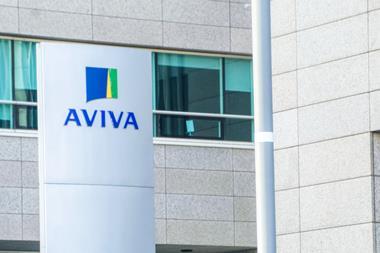
UKGI chief executive acknowledges that AI is ‘changing our business’, with staff headcount just one of many considerations the insurer is working through as part of its ongoing AI adoption
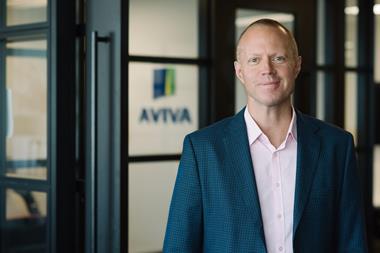
Jason Storah, chief executive of Aviva’s UK and Ireland general insurance business, said the insurer is exploring “how many people we need to grow this business going forward versus how many people we would have needed over the last five years” as the firm continues to invest in artificial intelligence (AI) tools.

Amid Aviva’s 2026 half-year financial reporting last week (14 August 2026), the insurer made numerous references to its ongoing commitment to embedding AI within its business and operational practices.
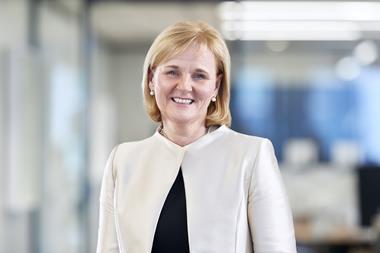
Group chief executive Amanda Blanc, for example, commented that Aviva has “a significant opportunity to apply artificial intelligence to deliver an even better service to customers, meet more of our customers’ needs over their lifetime and drive even more value for our shareholders”.
The half-year report itself additionally detailed where Aviva planned “to deploy AI at scale across the group”, with a “virtual assistant” and “AI enabled claims agent” both on the cards to be launched later this year.
It said: “We continue to invest in the business to support long-term growth, capture opportunities across our markets and accelerate transformation through artificial intelligence and data.
“Our multichannel distribution, scale, extensive proprietary data assets and single customer view underpin our unique customer advantage and provide strong foundations to deploy AI at scale across the group.
“We are already delivering tangible benefits from AI – from faster review times in medical underwriting to automated quality assurance in [our] wealth [division].
“There is more to come later in the year as we are set to launch our virtual assistant, as well as rolling out our AI enabled claims agent. Both of these solutions will be able to support our customers.”
Aviva has already sought to be on the front foot with AI by launching a ChatGPT app for its home insurance proposition in March 2026, which Storah believes gives the insurer a first mover advantage.
“We’ve got fantastic learnings and customer insights having launched that before anybody else,” he added.
However, linked to increased AI utilisation across the company, is Aviva considering potential job cuts or redundancies as technology ups its workload within the business, putting people efficiency and productivity under greater scrutiny?
Undefined AI and people balance
Speaking exclusively to Insurance Times, Storah is tight lipped and even scathing about the possibility of an AI related talent fallout – but he does not write off the notion either, noting that Aviva is “not making big calls and predictions about what [AI usage is] going to do structurally to our business”.
He said: “There’s lots of narrative and noise out in the market. Apparently everybody’s an expert and knows what’s going to happen in five years’ time.
“We want to keep growing as a business. We want to keep investing in making our people and our teams more effective, more efficient. In claims, for instance, AI means that 24 hours a day, a person who’s got a claim can call in and speak to somebody – whether it’s a person or a virtual assistant enabled by AI.
“We’re not making big calls and predictions about what [increased AI usage is] going to do structurally to our business. We know it’s changing our business. We know there are things that will be very different in the future. I don’t think it’s for us to make big proclamations to what the future is going to look like.
“What we care about is where do we see [AI] improving customer experience? Where do we see it making our people more efficient? Where does it mean that we get better cost outcomes, better indemnity outcomes? How many people do we need to grow this business going forward versus perhaps how many people we would have needed to grow over the last five years?
“We’re looking at those things, but we see benefits across the enterprise from AI.”

Since joining Insurance Times, Katie has successfully obtained a number of industry accolades. At trade body Biba's 2025 Journalist and Media Awards, for example, Katie was named the overall winner and received the Journalist of the Year trophy, alongside the Best Thought Leadership Award for her briefing article on reproductive health MGA Juniper and how insurance can be used to positively impact taboo subjects.View full Profile




























No comments yet